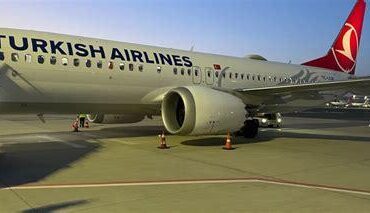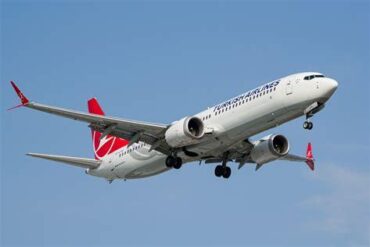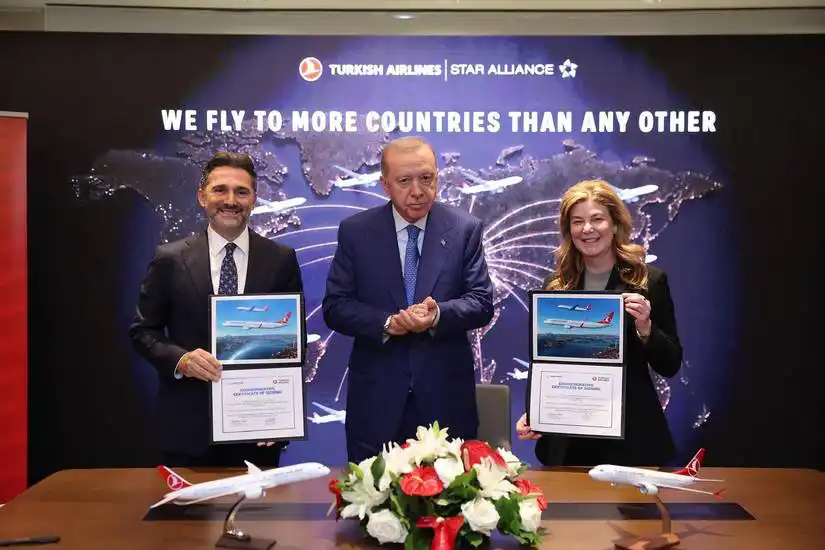
Turkish Airlines has confirmed a major narrowbody commitment to Boeing’s 737 MAX family, ending months of uncertainty over whether the carrier would remain with Boeing or shift part of its future fleet strategy toward Airbus. The agreement covers 100 firm Boeing 737-8 aircraft, with options for another 50 737 MAX jets, creating a potential 150-aircraft deal that represents one of the most significant narrowbody commitments in the airline’s recent expansion.
The agreement is part of a much larger fleet procurement strategy that also includes 75 Boeing 787 Dreamliners, reinforcing the importance of Boeing aircraft to Turkish Airlines as the carrier continues expanding its global network. Based on Boeing’s published list prices and current currency rates, the potential value of the 150-aircraft narrowbody agreement is estimated at more than $30 billion, although actual transaction values are typically substantially different from list prices because of commercial discounts and other contractual considerations.
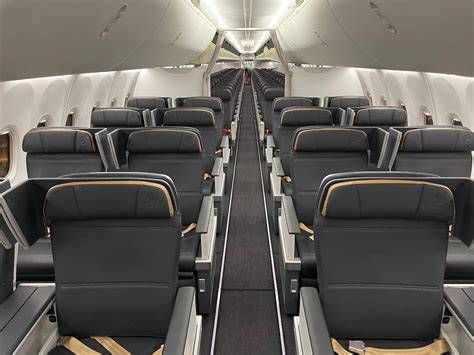
The decision is particularly notable because Turkish Airlines had openly considered switching its narrowbody order to Airbus A320neo-family aircraft. The dispute centered not primarily on the airframes themselves, but on the economics surrounding the engines expected to power the new Boeing jets. Turkish Airlines had been negotiating with CFM International over pricing, maintenance arrangements and related commercial terms for LEAP engines, and airline executives made clear that the outcome could determine which manufacturer received the order.
Turkish Airlines Nearly Switched From Boeing to Airbus
The possibility of an Airbus alternative became unusually public for a major airline order. Turkish Airlines Chairman Ahmet Bolat said last year that the carrier would continue with Boeing if CFM offered economically acceptable terms, while warning that the airline could instead choose Airbus if negotiations failed.
That threat mattered because the Airbus A320neo family gives airlines a choice of engine suppliers, including CFM International and Pratt & Whitney. The Boeing 737 MAX, by contrast, uses the CFM LEAP family exclusively. For an airline managing a rapidly growing fleet, that difference can become strategically important because engine acquisition costs, maintenance contracts, spare-engine requirements and long-term support can have a substantial effect on the economics of operating an aircraft over several decades.
The precise commercial terms of the dispute have not been publicly disclosed. However, the eventual agreement indicates that the parties were able to reach a compromise that addressed the issues important to Turkish Airlines, including engine pricing and maintenance economics. The settlement also reportedly involved questions surrounding repair risks, local industrial participation and additional investment in infrastructure.
Boeing 737-8 Becomes the Core of the Narrowbody Order
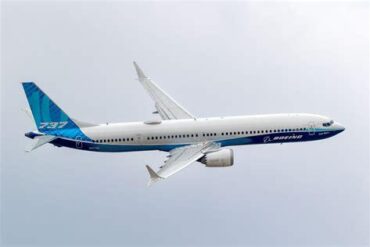
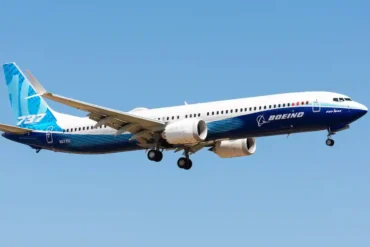
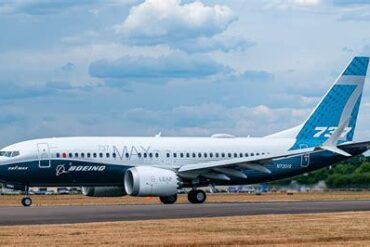
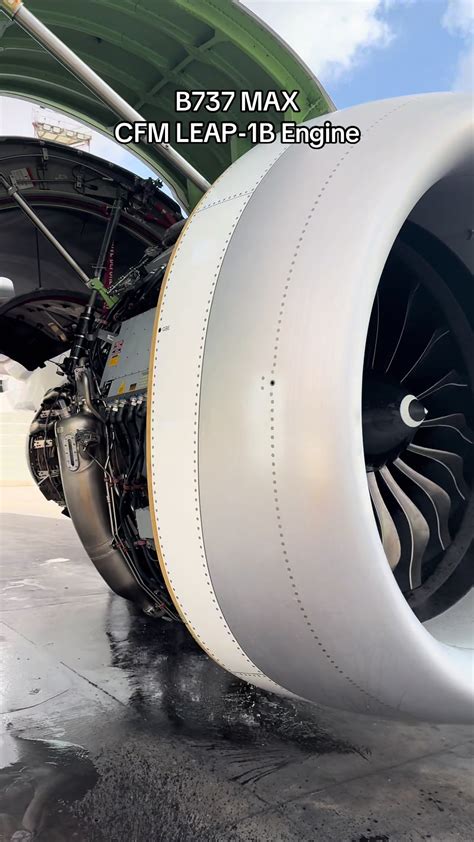
The firm portion of the agreement consists of 100 Boeing 737-8 aircraft, the variant more commonly known as the 737 MAX 8. Turkish Airlines will also have options for another 50 Boeing narrowbodies, giving the carrier substantial room to expand the fleet without immediately committing to all 150 aircraft.
The structure provides Turkish Airlines with a useful combination of capacity and flexibility. The 737-8 sits in the middle of the MAX family and offers a balance of range, passenger capacity, fuel efficiency and operational flexibility that makes it suitable for a wide range of missions. For an airline with an extensive international network, that versatility is especially valuable because the same aircraft type can serve domestic routes, regional markets and longer international sectors.
The optional aircraft also carry an additional strategic benefit. Turkish Airlines has secured the ability to substitute the larger 737 MAX 10 for aircraft within the 50-jet option portion of the agreement. The MAX 10 is the largest member of the 737 MAX family, offering additional passenger capacity compared with the MAX 8, although its certification and production timetable remains a key factor in determining when airlines can actually receive the aircraft.
Turkish Airlines Already Has a Large Boeing Fleet
The new order builds on an existing relationship rather than creating a new one. Turkish Airlines and its subsidiary AJet already operate more than 200 Boeing aircraft across several families, including the 737 MAX, 737 Next Generation, 777, 777 Freighter and 787 Dreamliner.
Adding another large batch of 737-8 aircraft therefore allows Turkish Airlines to expand around an aircraft family it already understands operationally. Commonality can simplify pilot training, maintenance planning, spare-parts management and crew scheduling, while additional aircraft of the same type can make it easier to allocate capacity across a rapidly changing network.
LEAP Engine Maintenance Is Part of the Bigger Strategy
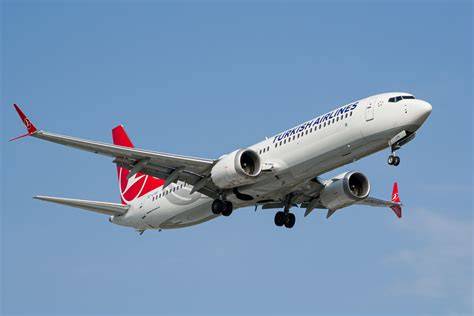
One of the most interesting aspects of the agreement is the attention given to LEAP engine maintenance capability in Turkey. According to the reference reporting, Turkish Airlines has a strategic interest in expanding its own ability to support LEAP engines domestically.
That ambition could become increasingly important as the airline grows its 737 MAX fleet. Engine maintenance represents a major component of an aircraft’s long-term operating economics, and developing additional local capability could potentially give Turkish Airlines greater control over maintenance capacity and reduce dependence on external facilities.
For Boeing, meanwhile, retaining Turkish Airlines as a major 737 MAX customer protects an important long-term relationship in one of the world’s fastest-growing aviation markets. The agreement also strengthens Boeing’s position across Turkish Airlines’ fleet, where the 787 and 777 families already play important roles.
A Major Boeing Commitment From Turkish Airlines
The final agreement therefore represents more than a straightforward purchase of 100 aircraft. It resolves a dispute that had created a credible possibility of a major Airbus order, while giving Turkish Airlines up to 150 additional 737 MAX aircraft and flexibility over the larger MAX 10.
For Turkish Airlines, the deal provides additional narrowbody capacity for its expanding network while preserving commonality with a large existing Boeing fleet. For Boeing, it secures a major customer commitment at a time when large airline fleet decisions increasingly involve not only aircraft prices, but also engine economics, maintenance support, industrial participation and long-term fleet flexibility.
With the firm 737-8 order now settled and the option for another 50 aircraft still available, Turkish Airlines has effectively kept Boeing at the center of its narrowbody growth strategy—after negotiations over the engines nearly pushed the carrier toward Airbus.