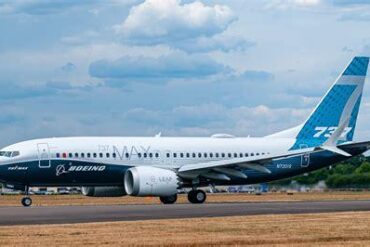
Boeing is reportedly close to resolving a dispute that had placed Turkish Airlines’ planned order for 150 Boeing 737 MAX aircraft at risk, potentially rescuing one of the manufacturer’s largest recent narrowbody opportunities. Four people familiar with the matter told Reuters that Boeing is nearing a final agreement with the airline, with a deal potentially being signed as soon as next week. Boeing, CFM International, and Turkish Airlines have not publicly confirmed the reported development.
The dispute has centered not on the capabilities or commercial positioning of the 737 MAX itself, but on the long-term economics of supporting its engines. Turkish Airlines and CFM International have been negotiating issues involving engine pricing, maintenance arrangements, repair costs, and access to maintenance capabilities, illustrating how increasingly important aftermarket support has become when airlines make major fleet commitments.
The 150 aircraft form part of a much larger agreement announced in September 2025. Under that package, Turkish Airlines agreed to acquire up to 75 Boeing 787 Dreamliners and committed to purchasing up to 150 additional 737 MAX aircraft. The overall agreement was closely watched because of its scale and its connection to the carrier’s ambitious fleet-growth strategy. The MAX portion, however, subsequently became uncertain as negotiations with CFM over engine support continued.
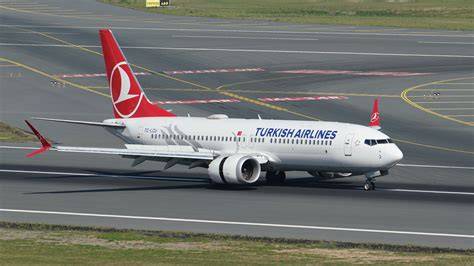
CFM LEAP-1B Engine Maintenance Dispute Put 737 MAX Deal At Risk
The central issue involves the CFM International LEAP-1B engine, which powers the Boeing 737 MAX. CFM International is a joint venture between GE Aerospace and Safran, and the LEAP family has become a major part of the modern narrowbody market. For an airline ordering potentially 150 additional aircraft, however, purchasing the airframes is only one part of the financial calculation.
According to industry sources cited by Reuters, Turkish Airlines wanted to develop a “premier” maintenance facility that would give it a higher level of involvement in servicing LEAP engines. Such an arrangement could provide the airline with broader maintenance capabilities and faster access to newer repair technologies as its MAX fleet expands.
The negotiations also reportedly involved the question of who would carry the financial burden of rising engine repair costs. Engine maintenance has become an increasingly significant concern for airlines because spare parts, shop visits, labor, and limited maintenance capacity can materially affect the cost of operating an aircraft over its lifetime. These expenses can become particularly important for a carrier planning hundreds of aircraft.
The exact status of the proposed maintenance facility remained unclear, but resolving that issue could remove one of the main obstacles to finalizing the MAX agreement. The situation demonstrates why modern aircraft contracts increasingly extend far beyond headline purchase prices. Airlines are examining the entire ownership ecosystem, including engine support, spare-parts availability, repair capabilities, and long-term maintenance exposure.
Turkish Airlines Already Has Boeing 737 MAX Experience
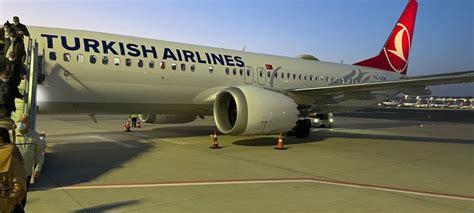
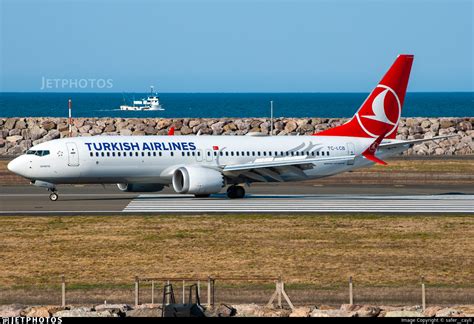
A 150-aircraft MAX commitment would fit naturally into Turkish Airlines’ existing narrowbody fleet strategy. The carrier already operates the 737 MAX 9, which entered service with Turkish Airlines in 2019. That means the airline has existing operational experience with the aircraft family and its LEAP-1B engines rather than having to introduce an entirely unfamiliar narrowbody platform.
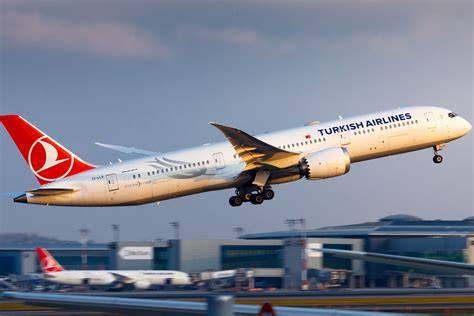
Turkish Airlines operates more than 400 Boeing and Airbus aircraft and has been pursuing substantial expansion. When Boeing announced the broader 2025 agreement, the manufacturer said the combined 787 and MAX commitments would help double Turkish Airlines’ Boeing fleet and support its stated objective of reaching 800 aircraft by 2033.
The scale of that ambition helps explain why engine economics matter so much. Adding 150 narrowbody aircraft would create a substantial installed base of LEAP-1B engines, making the maintenance agreement an important long-term component of the airline’s fleet economics. A favorable support structure could affect costs across thousands of future engine shop visits rather than only the initial aircraft transaction.
Turkish Airlines is also considering other aircraft types as it plans for future growth. A senior finance executive has said the carrier is evaluating regional aircraft such as the Embraer E2 and Airbus A220, while also considering larger aircraft including Boeing’s 777X and Airbus’ A350-1000. The airline’s strategy therefore extends across several aircraft categories rather than relying exclusively on the 737 MAX.
Boeing Has A Major Narrowbody Opportunity To Protect
For Boeing, preserving the Turkish Airlines MAX order would be commercially significant. A finalized agreement covering 150 aircraft would secure a substantial future production commitment and strengthen Boeing’s relationship with a carrier that already operates the MAX.
The situation also illustrates the importance of the relationship between an aircraft manufacturer, airline, and engine supplier. Although Boeing sells the aircraft, engine support economics can influence whether an aircraft deal ultimately moves forward. An airline may be satisfied with an aircraft’s range, capacity, efficiency, and fleet commonality while still demanding different commercial terms for the engines that power it.
The original 225-aircraft package also carried considerable visibility because it followed a meeting between Turkish President Tayyip Erdogan and then-US President Donald Trump. If the MAX portion had ultimately been abandoned in favor of Airbus aircraft, the change would have represented a notable reversal of a high-profile agreement. The reported effort to preserve the order therefore has significance beyond the aircraft delivery numbers alone.
Long-Term Engine Costs Are Becoming A Bigger Part Of Aircraft Deals
The Turkish Airlines negotiations highlight a broader shift in how airlines evaluate new aircraft. Purchase price and delivery slots remain important, but they are increasingly considered alongside the costs and practicalities of keeping aircraft flying for decades.
For a large airline, engine maintenance can represent a substantial portion of the long-term ownership equation. Access to repair technologies, spare parts, qualified maintenance facilities, and predictable pricing can influence fleet economics just as meaningfully as the aircraft’s fuel consumption or seating capacity.
That makes the reported negotiations particularly relevant to the 737 MAX program. If Boeing, Turkish Airlines, and CFM can finalize the outstanding arrangements, the airline could move ahead with a major expansion of its established MAX fleet while gaining greater clarity over future engine-support costs.
The immediate focus is therefore on whether Turkish Airlines and CFM can complete the maintenance agreement that has complicated the aircraft commitment. If they reach a final understanding, Boeing could be positioned to convert the long-delayed 150-aircraft commitment into a firm order, preserving a major narrowbody opportunity while giving Turkish Airlines a clearer framework for supporting the next stage of its fleet expansion.