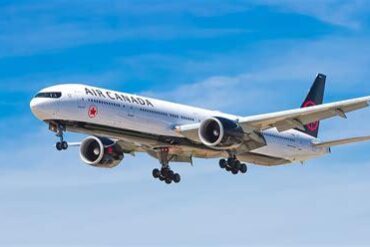
Air Canada is once again delaying the return of its Toronto–Dubai nonstop route, pushing back the planned January restart until March as ongoing geopolitical tensions continue to affect airline operations across the Middle East. The decision means the carrier’s only nonstop connection between Canada and the United Arab Emirates will remain suspended for longer than previously expected.
The route, linking Toronto Pearson International Airport (YYZ) with Dubai International Airport (DXB), represents a major long-haul service of roughly 14 hours in the eastbound direction. Air Canada had originally expected to restore the flight in January after withdrawing from the Middle East earlier in 2026, but the continuing uncertainty surrounding regional security and passenger demand has prompted another change to its schedule.
The delay is particularly significant because Air Canada is currently not operating its own nonstop service to Dubai, leaving Emirates as the only regular carrier connecting Toronto with Dubai. Emirates continues to operate the route daily with its Airbus A380, giving the Middle Eastern airline a substantial presence on the important Canada–UAE city pair.
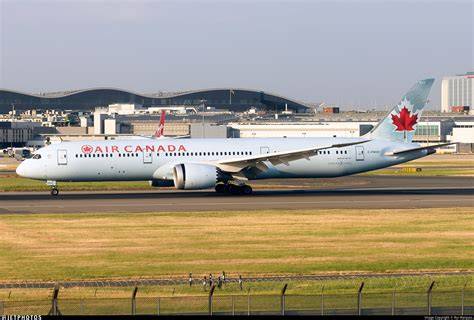
Air Canada Pushes Toronto–Dubai Flights Into March
Air Canada’s original plan called for AC76 and AC77 to return in January, but the latest schedule now indicates that the resumption has been pushed to March. The change reflects the difficult operating environment created by the continuing Iran crisis and broader geopolitical instability across the region.
Airlines have had to balance several competing factors when deciding whether to restore Middle Eastern routes. Passenger demand remains important, but airlines must also consider aircraft routing, crew safety, insurance exposure, airspace restrictions and the possibility that conditions can change quickly. For a long-haul carrier such as Air Canada, restarting a 14-hour service requires considerably more planning than simply placing the route back into a published timetable.
When the service eventually returns, Air Canada is expected to operate the route using a Boeing 787-9 Dreamliner. The aircraft provides the carrier with a more appropriately sized product for the route than a much larger wide-body aircraft while retaining the range required for the long transcontinental journey.
Toronto–Dubai Flight Schedule and Route Map
Once restored, the planned schedule will connect Toronto and Dubai overnight in one direction and return during the early morning in the other. Air Canada is scheduled to operate AC76 from Toronto to Dubai, departing YYZ at 10:45 p.m. and arriving at DXB at 7:45 p.m. the following day.
The return, AC77, is scheduled to leave Dubai at 2:00 a.m. and reach Toronto at 8:00 a.m. The timing gives passengers arriving from Canada an evening arrival in Dubai while allowing the westbound flight to depart during the early morning.
Air Canada’s published routing covers approximately 6,886 network miles, making it one of the carrier’s significant long-haul international services. The route also provides more than a simple point-to-point connection. Toronto Pearson serves as Air Canada’s largest hub, allowing passengers from cities across Canada to connect onto the Dubai flight.
Boeing 787-9 Brings 298 Seats To Dubai
Air Canada has 32 Boeing 787-9 aircraft in its fleet, and one of these Dreamliners is expected to operate the Dubai service. The aircraft can accommodate up to 298 passengers in a three-class configuration, consisting of 30 Business Class seats, 21 Premium Economy seats and 247 Economy seats.
The 787-9 is particularly well suited to routes such as Toronto–Dubai because of its combination of range, efficiency and passenger capacity. Rather than depending entirely on local Toronto–Dubai demand, Air Canada can fill seats with connecting passengers arriving from destinations throughout its Canadian network.
That connecting traffic is especially important for an international route of this scale. Dubai is not only a major business and tourism destination but also a global connecting hub, meaning Air Canada is competing for passengers who may ultimately be traveling beyond the UAE.
Emirates Retains A Major Advantage On Toronto–Dubai
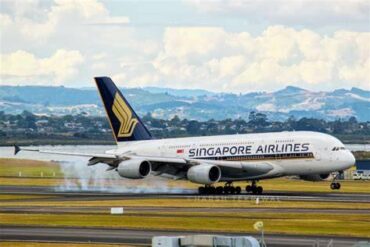
Air Canada’s return will place it directly against Emirates, which has maintained a continuous presence on the Toronto–Dubai route since 2007, apart from the disruption caused by the pandemic. Emirates operates the service with its Airbus A380, which can accommodate approximately 489 passengers depending on configuration.
The difference in aircraft size gives Emirates a considerable capacity advantage. The A380 allows the airline to offer more seats across multiple cabin classes, while its established presence gives it strong brand recognition among travelers between Canada and the Gulf region.
Emirates also benefits from its chauffeur-driven service for eligible premium passengers in Toronto, adding another competitive feature for high-value travelers. At the same time, Air Canada has an important advantage of its own through its extensive Canadian domestic network.
The two airlines also maintain a codeshare relationship, allowing passengers to combine flights across their networks on a single ticket. That relationship could become increasingly relevant once Air Canada’s Dubai service returns, even though both airlines will compete directly on the Toronto–Dubai segment.
Air Canada Also Plans To Restore Tel Aviv Flights
The Dubai delay comes as Air Canada gradually rebuilds its broader Middle East network. The airline plans to resume Toronto–Tel Aviv service on November 30, earlier than its previously planned January restart. Montreal–Tel Aviv flights are scheduled to return on January 18.
Air Canada remains the only airline currently offering nonstop service between Canada and Israel, following EL AL’s withdrawal from Toronto in 2022. The airline’s Middle Eastern network also includes its Montreal–Amman connection operated by Royal Jordanian, which can operate up to four times weekly during peak periods.
The shifting schedules demonstrate how quickly international airline networks can change when geopolitical conditions deteriorate. Although Air Canada now expects to restore Toronto–Dubai in March, the timetable remains subject to further changes if regional security conditions or demand develop differently. For passengers planning long-haul travel between Canada and the Gulf, the latest schedule is therefore worth checking carefully before making firm arrangements.