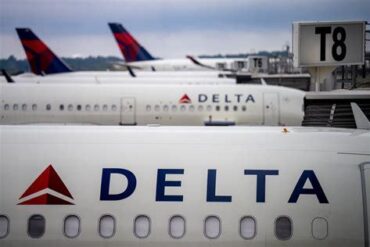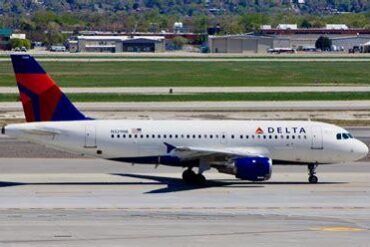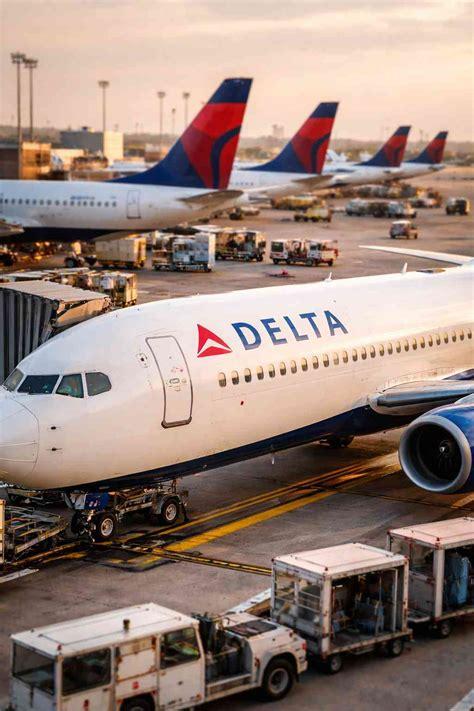
Delta Air Lines is preparing to end one of its longest-running and more unusual New York routes, with the carrier scheduled to operate its final New York JFK–Dallas/Fort Worth (JFK–DFW) service on January 3, 2027. The 1,396-mile (2,246-kilometer) route currently operates once a day in each direction using Delta’s 109-seat Airbus A220-100, but declining passenger demand has steadily weakened the case for keeping it in the schedule.
The decision is notable because Delta has maintained a presence on the JFK–DFW city pair for more than two decades across two separate periods. The airline originally operated the route from 1991 through 2004, during a much larger Delta presence at Dallas/Fort Worth. After restructuring its DFW operation, Delta dropped the service before bringing it back in 2007, just as it was building John F. Kennedy International Airport into a major international gateway.
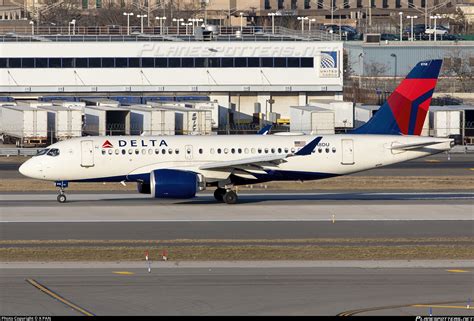
For years, the route had a purpose beyond simply carrying passengers between New York and North Texas. Delta used JFK as a major transatlantic hub, and the Dallas flight helped connect passengers from DFW into international departures at Kennedy. That strategy once gave the relatively small route a useful role inside Delta’s network. Today, however, the airline has a much larger domestic operation at nearby LaGuardia Airport, while JFK itself has developed a much broader network of connecting traffic.
Delta JFK–DFW Flights Will End in January 2027
According to the latest schedule data, Delta’s final JFK–DFW roundtrip is scheduled for January 3, 2027. Until then, travelers can still book the daily service in both directions.
The current schedule is built around two flights. DL454 departs Dallas/Fort Worth at 8:10 a.m. and reaches JFK at 12:59 p.m. The return, DL496, leaves JFK at 5:59 p.m. and arrives at DFW at 9:05 p.m. Both flights are scheduled to use the A220-100.
| Flight | Route | Departure | Arrival | Aircraft | Frequency |
|---|---|---|---|---|---|
| DL454 | DFW–JFK | 8:10 a.m. | 12:59 p.m. | A220-100 | Daily |
| DL496 | JFK–DFW | 5:59 p.m. | 9:05 p.m. | A220-100 | Daily |
The schedule also reveals why Delta historically valued the route. The midday arrival into JFK is well positioned for passengers connecting onto the airline’s afternoon and evening international departures. The evening return flight similarly allows travelers arriving from overseas to connect onward to Dallas.
That connecting role became particularly important after Delta announced plans in 2006 to transform JFK into a much larger international hub. The airline expanded its transatlantic network and added departure banks designed around international connections. When JFK–DFW returned in 2007, the route therefore fit into a broader strategy rather than simply competing for local New York–Dallas passengers.
Passenger Demand Has Fallen Sharply
The numbers now tell a different story. Delta’s JFK–DFW operation has gradually contracted over several years. In 2019, the airline operated three daily flights on the route, with schedules designed around its international connection banks. By last year, the operation had already fallen to 10 weekly departures.
It has now been reduced to only one daily roundtrip, and even that remaining service has struggled to fill its relatively small A220 cabin. US Department of Transportation T-100 data shows Delta carried fewer than 100,000 passengers in both directions during 2025, with an average load factor of about 75%.
That figure was already below Delta’s network-wide average of approximately 84%. More recent data makes the trend even clearer. During the first half of 2026, the JFK–DFW route averaged only 68% occupancy, falling to about 64% in February. With just 109 seats available on the A220-100, a 68% average load translates to roughly 35 seats remaining empty on an average flight.
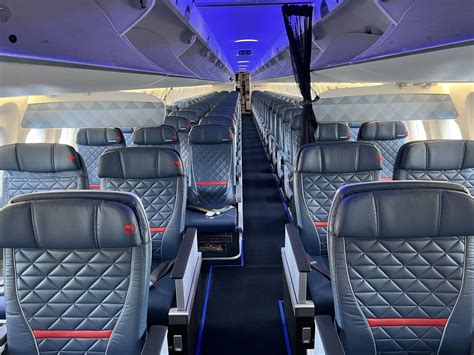
For an airline managing scarce aircraft and airport capacity, consistently weak loads create a difficult economics problem. The A220-100 is already Delta’s smallest mainline aircraft, meaning there is little room to reduce capacity further while retaining mainline service. Delta could theoretically consider shifting the route to Delta Connection, but the airline has evidently decided that the market does not justify preserving the flight in another form.
American Airlines Has a Structural Advantage at DFW
Competition is another major factor. American Airlines operates one of the world’s largest hubs at Dallas/Fort Worth, giving it a fundamentally different position on the market. American can use DFW as both an origin-and-destination market and a massive connecting hub, while Delta has to build a case for maintaining a comparatively small operation against that network.
American has operated up to six daily Boeing 737 flights between DFW and JFK, giving customers significantly more schedule flexibility. More importantly, American can connect Dallas passengers through its extensive domestic and international network at DFW.
Delta’s JFK service therefore faces a difficult proposition. A passenger simply traveling between Dallas and New York has several Delta flights available through LaGuardia, while an international passenger can often find a more direct or convenient routing through American’s DFW hub.
Delta Already Has a Stronger Dallas–LaGuardia Operation
The most important change may be Delta’s growing emphasis on DFW–LaGuardia. Delta currently operates five daily flights between DFW and LGA, or 35 weekly departures, using the larger Boeing 737-800.
The route fits Delta’s broader New York strategy particularly well. DFW is within LaGuardia’s 1,500-mile perimeter, and Delta is the largest airline at LGA. For passengers whose actual destination is New York, LGA is generally a more natural airport than JFK because of its proximity to Manhattan and Delta’s extensive presence there.
Delta has also invested heavily in LaGuardia, including the approximately $4 billion transformation of Terminal C. That investment gives the airline a stronger platform for serving high-volume domestic markets such as Dallas without needing to maintain overlapping capacity at JFK.
This creates a clear division within Delta’s network. LGA handles much of the local New York–Dallas demand, while JFK can concentrate its resources on international traffic and the domestic markets that most directly support its transatlantic operation.
Why JFK–DFW No Longer Fits Delta’s International Strategy
The original reason for maintaining JFK–DFW was closely tied to Delta’s international ambitions. Dallas passengers could fly to JFK and connect to a growing range of destinations across Europe and beyond. But Delta’s JFK network is now much larger and more diversified.
Delta operates more than 225 peak-day departures from JFK to nearly 100 destinations, creating a huge pool of potential connecting passengers. The international hub no longer needs a single daily Dallas flight to provide the same kind of feed it required during its earlier development.
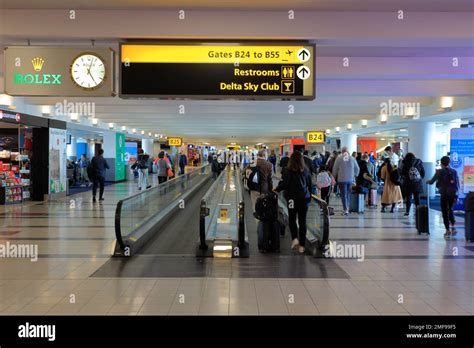
At the same time, Dallas passengers have more alternatives for international travel. American’s DFW hub provides extensive nonstop service to Europe and other global markets, while its network can funnel passengers through additional gateways when nonstop service is unavailable.
That makes a dedicated Delta connection through JFK less compelling. A Dallas passenger traveling to Europe may have little reason to add a connection at JFK when other one-stop and nonstop options are available through larger international hubs.
Delta Is Not Abandoning Dallas
The end of JFK–DFW should not be interpreted as Delta withdrawing from Dallas/Fort Worth. The airline continues to operate a substantial schedule from DFW, with approximately 193 weekly departures across its current network.
Atlanta remains the largest destination, with 42 weekly flights, followed by LaGuardia with 35. Salt Lake City receives 28, while Detroit and Minneapolis/St. Paul each receive 21. Delta also maintains service to Boston, Los Angeles, Seattle and JFK.
The JFK cancellation is therefore better understood as a network adjustment rather than a broader Dallas retreat. Delta is concentrating its Dallas capacity where it has a stronger local-market proposition, particularly at LaGuardia, while removing a route whose original international-feed purpose has become less important.
After more than 20 years across two periods of operation, the JFK–DFW route will disappear from Delta’s schedule in early 2027. Its history illustrates how airline routes can survive long after their original purpose changes—and how falling demand, overlapping airport capacity and evolving hub strategies can eventually make even an established route difficult to justify.