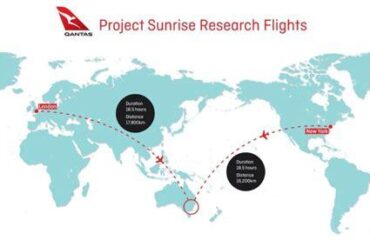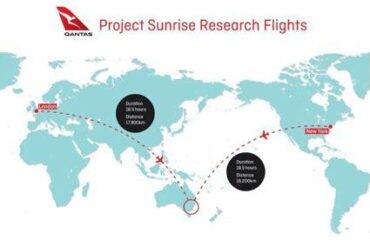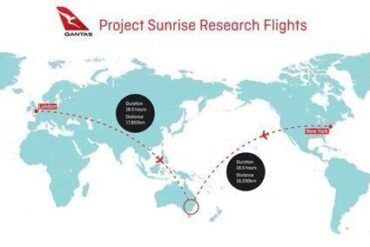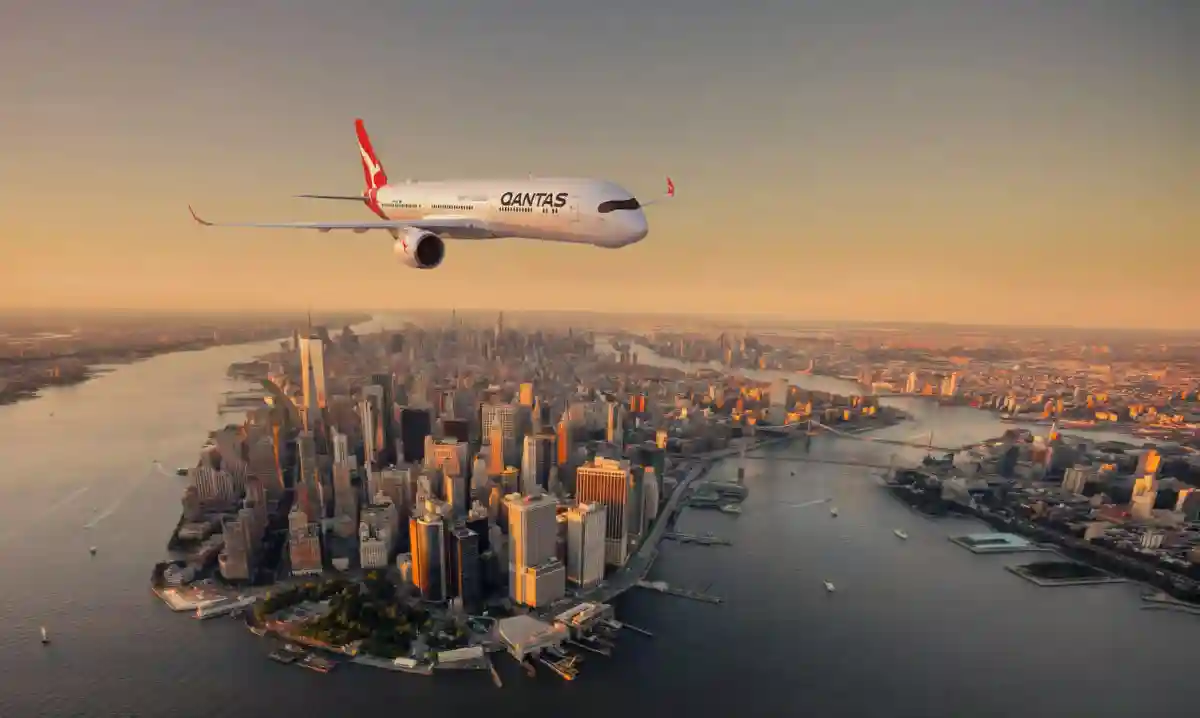
Qantas has confirmed a key milestone for its ambitious Project Sunrise program, announcing that tickets for its second ultra-long-haul nonstop route from Sydney to New York will go on sale in August 2027. The flights themselves are scheduled to begin in mid-2028, bringing the airline significantly closer to its long-standing goal of linking Australia with major Northern Hemisphere destinations without a stop.
The planned service will connect Sydney Kingsford Smith Airport (SYD) with John F. Kennedy International Airport (JFK), creating Qantas’ second Project Sunrise route after Sydney–London Heathrow. Both destinations are already served by Qantas, but today’s services require a stop, making the future nonstop operation a substantial change for passengers traveling between Australia and the United States.
For Qantas, the announcement is about more than adding another long-haul route. Project Sunrise represents a major investment in aircraft, cabin design, crew training and operational planning, all built around flights that can remain airborne for around 20 hours or more. The Sydney–New York service will therefore become one of the longest scheduled passenger flights in the world when it begins.
Qantas Sydney–New York Tickets Go on Sale in August 2027
Passengers still have some time to wait, but Qantas has now provided a firm date for the commercial launch of the route. Tickets for nonstop Sydney–New York flights will go on sale in August 2027, approximately 10 months before the planned start of service in mid-2028.
Qantas says growing demand between Australia and the United States is supporting the decision to introduce the new route. According to the airline, demand to and from New York has nearly doubled since 2023, while interest in nonstop ultra-long-haul travel has also increased.
The airline said that passenger intent to book ultra-long-haul nonstop flights increased from 58% to 70% since February, with the figure reaching 80% among premium travelers. Those figures help explain why Qantas is moving ahead with a route that requires highly specialized aircraft and a deliberately low-density cabin.
Qantas CEO Vanessa Hudson described reaching New York nonstop as the completion of a vision the airline had pursued for years. The route will also demonstrate whether the Project Sunrise concept can translate its technological and operational achievements into sustained commercial demand.
Airbus A350-1000ULR Will Make the Route Possible
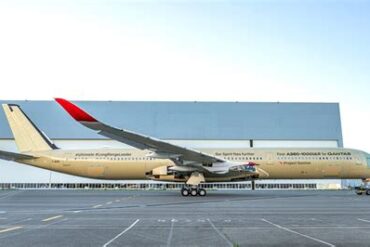
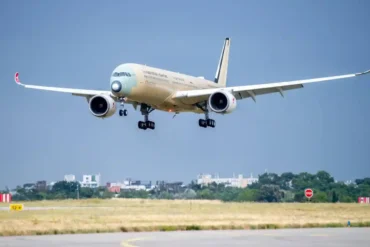
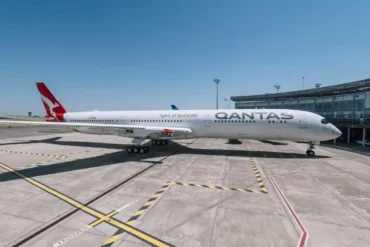
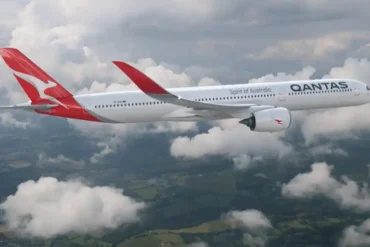
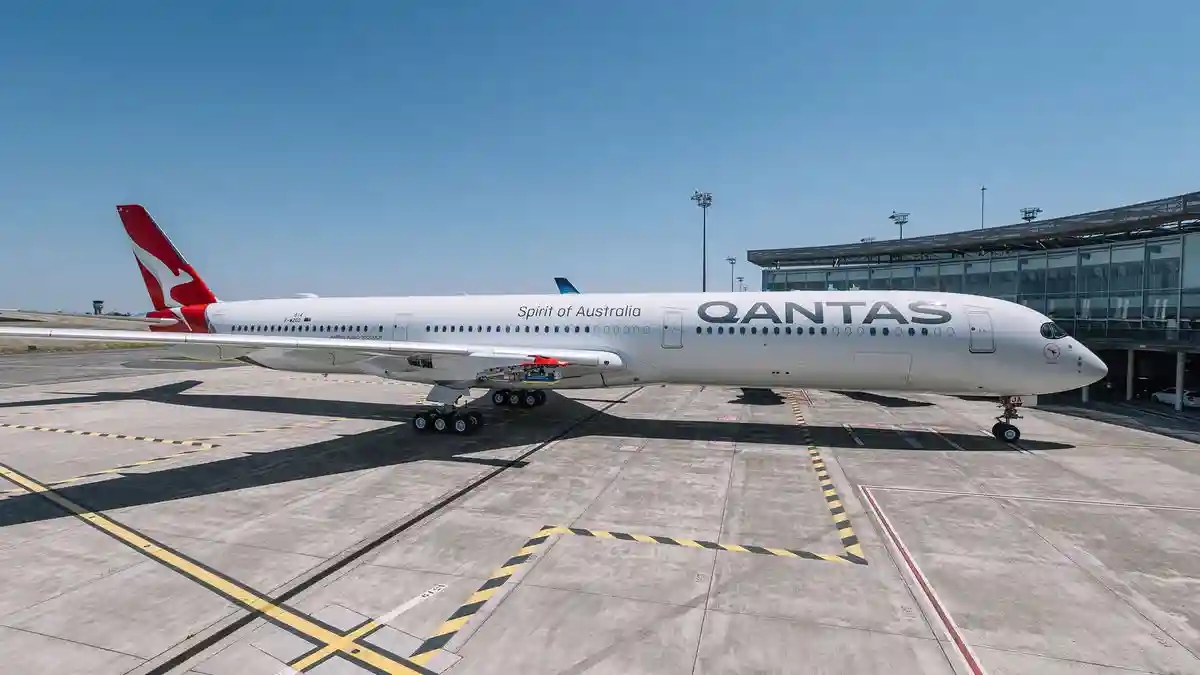
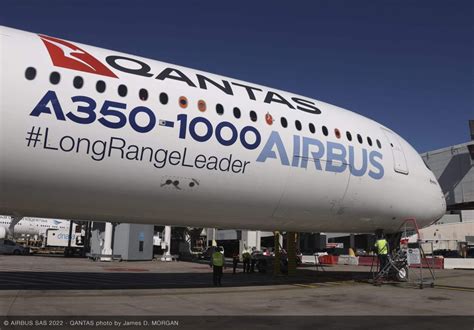
The aircraft at the heart of Project Sunrise is the Airbus A350-1000ULR, a specially configured version of the A350-1000 designed for extraordinary range. Qantas says its aircraft will feature an additional 20,000-liter fuel tank, giving the jet the capability to remain airborne for up to 22 hours.
That capability is crucial for Sydney–New York. Rather than simply adding more fuel to a conventional aircraft, Qantas has developed an aircraft and cabin configuration specifically around extremely long sectors. The airline has also reduced the number of seats significantly compared with a standard A350-1000.
Qantas’ Project Sunrise aircraft will accommodate only 238 passengers. That includes six First Class seats, 52 Business Class seats, 40 Premium Economy seats and 140 Economy Class seats. By comparison, Airbus says a typical A350-1000 can accommodate as many as 369 passengers in a high-density configuration.

The lower density is an important part of the strategy. A journey approaching 20 hours demands a different approach to passenger comfort than a conventional long-haul flight, and Qantas is using the additional cabin space to create a more premium environment.
One of the most distinctive features will be a Wellbeing Zone, which Qantas describes as a world-first feature designed specifically for ultra-long-haul travelers. The airline’s approach recognizes that surviving an exceptionally long flight is not simply a matter of adding larger seats. Lighting, movement, food, hydration and opportunities to leave the seat can all influence how passengers experience such a journey.
Sydney–New York Will Save Hours Compared With a Stop
The practical attraction of the new service becomes clearer when it is compared with Qantas’ current Sydney–New York operation. Qantas already operates daily flights between the two cities, but passengers currently travel through Auckland, requiring a connection before continuing to JFK.
On the existing Sydney–New York itinerary, Qantas flight QF3 takes around three hours to reach Auckland. After a scheduled 135-minute stop, the aircraft continues for approximately 15 hours and 55 minutes to New York. The resulting total journey time is about 21 hours and 10 minutes.
The return QF4 service is longer from an end-to-end perspective. The JFK–Auckland flight takes around 17 hours and 35 minutes, followed by a 110-minute stop and another three hours and 35 minutes to Sydney. The total scheduled journey is approximately 23 hours.
Project Sunrise is expected to reduce those overall journey times by more than three hours, according to Qantas. The benefit is not merely the time saved in the air. Removing the connection also eliminates the need for passengers to leave one aircraft, spend time in an intermediate airport and board another flight before completing their journey.
New York Joins London in Project Sunrise
Sydney–New York will become the second major destination in Qantas’ Project Sunrise network. Sydney–London Heathrow is planned as the first route, giving the airline a nonstop connection between Australia and Europe that has long been considered one of the ultimate challenges in commercial aviation.
New York adds another important piece to the network because the city is a major destination for Australian business, tourism and visiting-friends-and-relatives traffic. Qantas has been serving New York since 1958, although its earliest services involved multiple stops, including Fiji, Honolulu and San Francisco.
The transition from those historic multi-stop journeys to a nonstop Sydney–JFK flight illustrates just how dramatically aircraft technology has changed. Modern composite airframes, highly efficient engines, improved aerodynamics and carefully optimized cabin configurations have made journeys that once seemed impractical increasingly feasible.
Qantas Is Building a Dedicated Ultra-Long-Haul Operation
Project Sunrise also requires a substantial investment in people. Qantas says that by the time its 12th A350-1000ULR arrives, more than 360 pilots and 1,200 cabin crew will have been trained to operate the Project Sunrise fleet.
That preparation reflects the unusual demands of flights lasting close to an entire day. Crew scheduling, fatigue management, onboard service and passenger wellbeing all require careful planning when an aircraft can remain in the sky for more than 20 hours.
For travelers, however, the most visible milestone will come much sooner. August 2027 will be the point when customers can finally purchase seats on Qantas’ nonstop Sydney–New York service, ahead of the mid-2028 launch.
The route will therefore turn Project Sunrise from an ambitious aviation program into a growing commercial network. With London and New York planned as nonstop destinations from Sydney, Qantas will be testing how far modern passenger aircraft can connect Australia to the world while removing the traditional need for an intermediate stop.