The long-awaited New Terminal One at New York JFK Airport has reached a frustrating stage in its development: the project is substantially built, airlines have already committed to using it, and yet 14 widebody-capable gates are expected to remain unavailable well into 2027. What was originally supposed to be the beginning of a major transformation at JFK on June 1, 2026, has instead become a March 2027 target for the opening of Phase A.
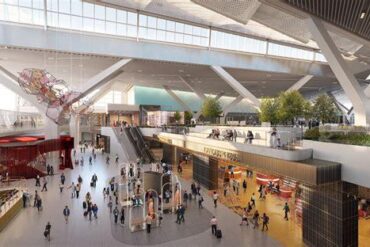
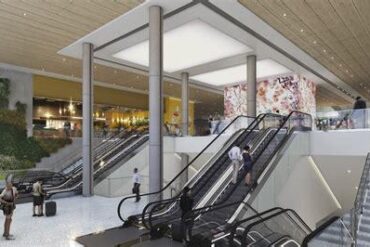
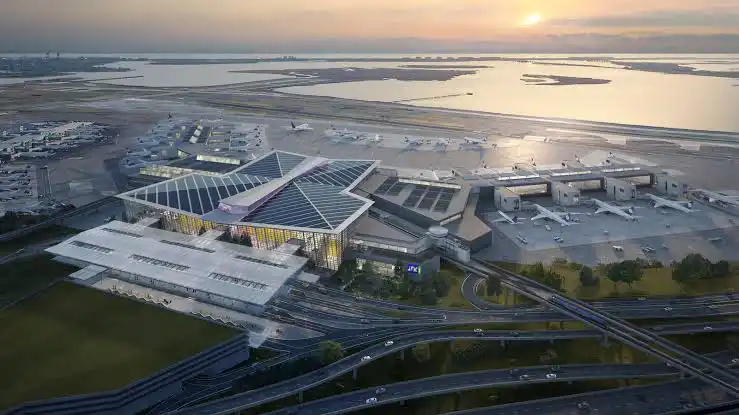
The delay matters because New Terminal One is not a modest terminal refurbishment. The $9.5 billion project is designed to eventually provide 23 gates, including 22 intended for widebody aircraft, across roughly 2.6 million square feet of terminal space. It is intended to replace older facilities and create a modern international gateway for a large group of airlines serving New York.
For passengers and airlines, however, the most important number in the near term is 14. Phase A was planned around 13 widebody contact gates and one temporary widebody gate. Until that portion of the terminal becomes operational, aircraft that were expected to move into the new facility will continue using existing terminals, while the new gates remain unable to generate the passenger, airline and commercial activity that underpins the project’s business model.
The JFK New Terminal One Opening Has Shifted To March 2027
The original schedule called for Phase A of New Terminal One to open on June 1, 2026. As construction continued, that date became increasingly difficult to achieve. Ferrovial, the Spanish infrastructure company involved in the project, had still been pointing toward a fall 2026 opening in its first-quarter reporting, but its second-quarter results confirmed that the June milestone had been missed.
The latest remedial plan submitted by New Terminal One uses March 2027 as the target for the Phase A opening. That does not necessarily mean the entire $9.5 billion terminal will be finished and operating at full capacity on that date. Instead, the initial phase is intended to bring the first group of gates and associated facilities into service before the entire 23-gate complex is completed.
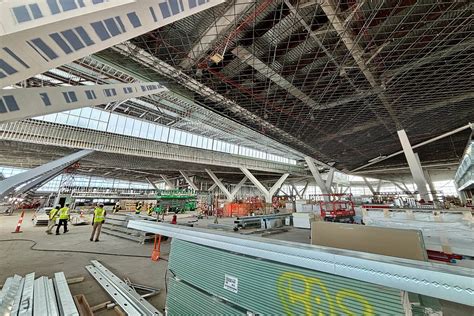
The distinction is important because an airport terminal cannot open simply because most of the visible construction has been completed. Ferrovial reported that the project was 92% physically complete by June 2026, but the remaining work includes some of the most complicated tasks in the entire development.
Systems integration, coordination among multiple stakeholders, testing, commissioning, operational readiness, activation and regulatory approvals all have to be completed before passengers can be processed reliably. A terminal can therefore look almost finished from the outside while still being months away from safely handling a full schedule of international flights.
The financing timetable adds another layer of pressure. The contractual framework used June 1, 2026, as the Phase A milestone but allows delays, with a maximum opening date of June 1, 2027. That leaves the project with only a limited amount of additional schedule flexibility. Every month between the missed milestone and actual opening therefore matters to both construction management and the project’s financial structure.
Why 14 Widebody Gates Matter So Much At JFK
The 14 Phase A gates are not simply empty parking positions waiting for aircraft. They represent the first revenue-producing portion of a new international terminal that was specifically designed to attract and consolidate widebody operations.
Phase A consists of 13 widebody contact gates and one temporary widebody gate. Once operational, these gates are expected to allow airlines to begin shifting flights away from existing JFK facilities and into the new terminal. The completed New Terminal One will eventually expand to 23 gates, with 22 capable of handling widebody aircraft.
That capacity is particularly significant at an airport where international airlines operate a large range of long-haul services. New Terminal One has secured agreements involving carriers including Air France, KLM, Korean Air, Turkish Airlines, Air Europa and Qatar Airways, while SkyTeam airlines form an important part of the terminal’s planned customer base.
Ferrovial reported 32 airline agreements by July, consisting of 24 confirmed agreements and eight letters of intent. Those commitments indicate that the terminal has continued to attract airline interest despite the construction delay. The problem is that an airline agreement does not generate terminal revenue until aircraft and passengers actually begin using the facility.
Until then, carriers remain in their existing JFK terminals. That means the airport continues to operate through the fragmented arrangement that New Terminal One was designed to help address, while the new facility’s first 14 gates sit outside the active passenger operation.
JFK’s Existing Terminals Will Have To Carry The Load Longer
The delayed opening effectively extends the life of JFK’s existing international facilities. Airlines that expected to move into New Terminal One must continue operating from their current locations, meaning the benefits of consolidation are postponed along with the opening.
That is particularly relevant for airlines that have already planned their future JFK operations around the new terminal. Moving an international operation is not simply a matter of changing a gate number. Airlines need to coordinate aircraft schedules, passenger processing, baggage systems, ground handling, airport access, staffing and connecting arrangements.
The delay therefore creates a period in which the existing terminals must continue supporting operations that were expected to transition into the new facility. At the same time, the consortium behind New Terminal One continues carrying construction and financing costs associated with a terminal that is not yet generating its intended operating revenue.
The situation is especially notable because Delta Air Lines remains the largest airline at JFK by market share, followed by JetBlue and American Airlines, according to the Bureau of Transportation Statistics data referenced in the project material. New Terminal One, however, is primarily designed around international operations rather than simply capturing the airport’s largest domestic operators.
The project’s value consequently depends heavily on the performance of international aviation. That makes the delayed opening more complicated than a conventional construction timetable problem.
Fitch And KBRA Have Raised Financial Concerns
The financial markets have already reacted to the combination of construction delays, rising costs and uncertainty over passenger demand. Fitch Ratings placed approximately $5.9 billion of New Terminal One special facilities revenue bonds on Rating Watch Negative in July.
Fitch’s concerns extend beyond the delayed construction schedule. The rating agency also identified cost overruns and slower-than-expected international passenger growth as factors affecting the project’s financial outlook. That combination is particularly important because New Terminal One is a privately financed infrastructure project whose revenues are closely connected to the performance of the terminal itself.
KBRA subsequently affirmed its BBB- rating while changing the outlook from stable to negative. Its assessment reflected the shift in the expected Phase A opening date from June 1, 2026, toward a window extending from December 6, 2026, through March 31, 2027, while also highlighting the execution risk involved in completing the remaining work and reaching stable operations.
The ratings actions illustrate why being 92% complete does not necessarily mean the financial problem is 92% solved. The remaining portion of the project contains work that must be completed before the terminal can unlock its full operational value.
Construction costs do not disappear while a terminal waits for certification. Financing costs continue, contingency resources can be consumed, and the expected revenue stream remains delayed. A few additional months can therefore have an impact far greater than the percentage of construction still physically outstanding might suggest.
International Passenger Demand Is Another Risk For JFK
The most difficult issue for New Terminal One may be the one that construction crews cannot control: international passenger demand.
Fitch has pointed to weaker international passenger growth and near- to medium-term pressure associated with geopolitical conditions. Conflicts in the Middle East and restrictions affecting US-China airline traffic are among the factors that can influence the long-haul markets New Terminal One was built to serve.
This creates an unusual situation. A construction delay can potentially be addressed through additional resources, revised sequencing or more intensive coordination. International demand cannot be solved with additional construction crews.
A widebody gate has value when a widebody aircraft uses it, passengers pass through the terminal and commercial activity takes place around those passengers. If international airlines reduce capacity or certain markets remain constrained, the terminal may open into a weaker demand environment than the project originally anticipated.
The airport’s international network illustrates the scale of the opportunity. Among the busiest destinations associated with JFK, London Heathrow, Paris Charles de Gaulle, Los Angeles, Santiago de los Caballeros and Rome Fiumicino are prominent markets. These routes connect JFK with some of the world’s most important international and long-haul travel flows.
Yet the presence of strong routes does not guarantee uninterrupted growth. Airline schedules respond to economic conditions, geopolitical developments, fleet availability and passenger demand. That makes the timing of New Terminal One’s opening particularly important.
Ferrovial Has More Than $1 Billion At Stake
Ferrovial’s own financial commitment demonstrates how significant the project has become. During the first half of 2026, the company completed its remaining €63 million contribution, equivalent to roughly $73 million, bringing its total investment in New Terminal One to more than €1 billion, or approximately $1.16 billion.
Ferrovial owns 49% of New Terminal One on an equity-accounted basis, while the broader consortium includes Carlyle, JLC Infrastructure and Ullico. The project’s financing combines sponsor equity with billions of dollars in capital-market debt.
That structure creates a straightforward requirement: the terminal eventually needs enough sustained aviation activity and commercial revenue to support its long-term financial obligations.
The timing could hardly be more important. Ferrovial was committing additional equity at the same time the original June 2026 opening milestone was being replaced by a March 2027 remedial target. In other words, the project is absorbing additional financial pressure while the asset itself remains unavailable for its intended passenger operation.
The consortium therefore faces two separate challenges. One is to finish, test, certify and activate the terminal before the contractual longstop date. The other is to ensure that the international aviation market provides enough traffic once the gates finally become operational.
Those challenges overlap, but they cannot be solved in the same way. The first depends largely on project execution. The second depends on airlines, passengers and global conditions.
Airlines Are Ready, But The Gates Cannot Produce Revenue Yet
The encouraging part of the situation is that airline interest has not disappeared. The agreements already signed indicate that carriers still expect New Terminal One to play an important role in their JFK operations.
For airlines such as Air France, KLM, Korean Air, Turkish Airlines and Air Europa, the terminal represents a planned future operating base rather than a speculative facility with no customers. Their continued commitment gives the project an important foundation when the gates eventually open.
But committed airlines do not remove the consequences of delay. Every month in which the new terminal remains closed is another month in which its new gates cannot handle passengers, generate common-use facility charges or produce the commercial spending associated with an active international terminal.
New Terminal One’s revenue model depends heavily on aviation activity, including common-use facility charges, while commercial operations provide an additional revenue stream. The longer the opening is delayed, the longer those potential revenues remain deferred.
That is why the 14 Phase A widebody gates have become such an important symbol of the project’s current position. They represent enormous future capacity, but capacity has no immediate financial value if it cannot be placed into service.
March 2027 Could Be The Beginning, Not The End, Of The Test
If New Terminal One reaches its March 2027 Phase A target, the most visible construction problem will begin to recede. Airlines will finally be able to start moving into the new facility, passengers will experience its new infrastructure, and the first 14 widebody-capable gates will begin doing the job they were designed to do.
But the financial test will then become more important, not less.
The terminal ultimately needs to transform physical infrastructure into sustained passenger traffic and revenue. The project must demonstrate that the new gates can support the international operations expected by the consortium while absorbing the costs associated with its construction and financing.
That means the opening date alone will not determine whether New Terminal One achieves its long-term objectives. The pace of airline migration, international passenger growth, commercial performance and operational stability will all matter once the doors open.
For now, the central reality at JFK is remarkably simple. Fourteen widebody gates are waiting for an airport terminal that is already 92% complete, but completion is not the same as operation. Until Phase A opens, airlines will continue using existing facilities, while the New Terminal One consortium carries the financial burden of a major asset that has not yet reached its revenue-generating stage.
The March 2027 target therefore represents more than another construction date. It is the next major checkpoint for a $9.5 billion terminal whose physical progress, airline commitments and financial exposure have all moved ahead of its ability to serve passengers. The gates are nearly there. The harder question is how quickly the traffic and revenue needed to justify them will follow.