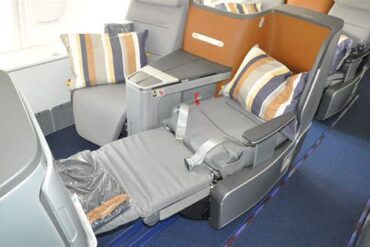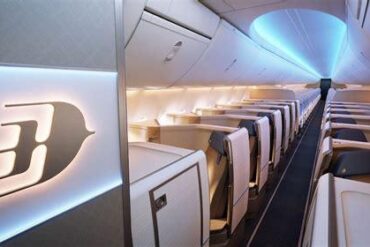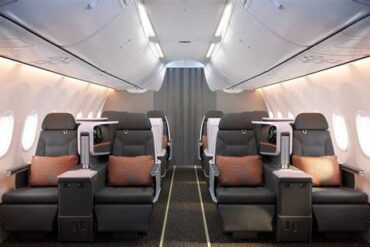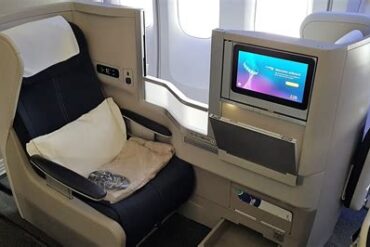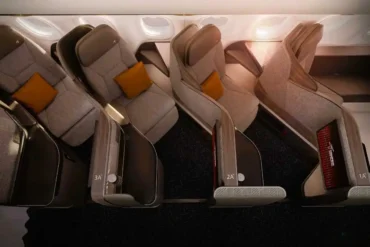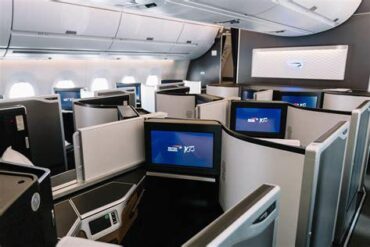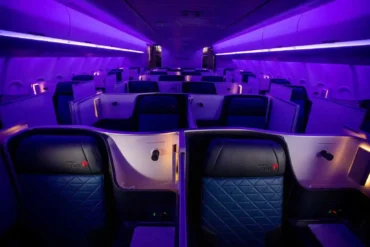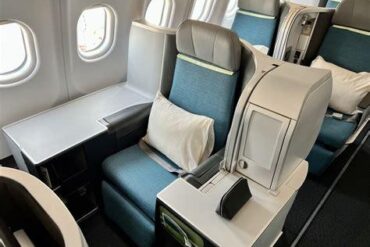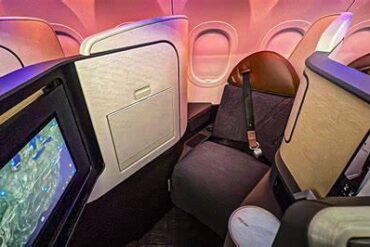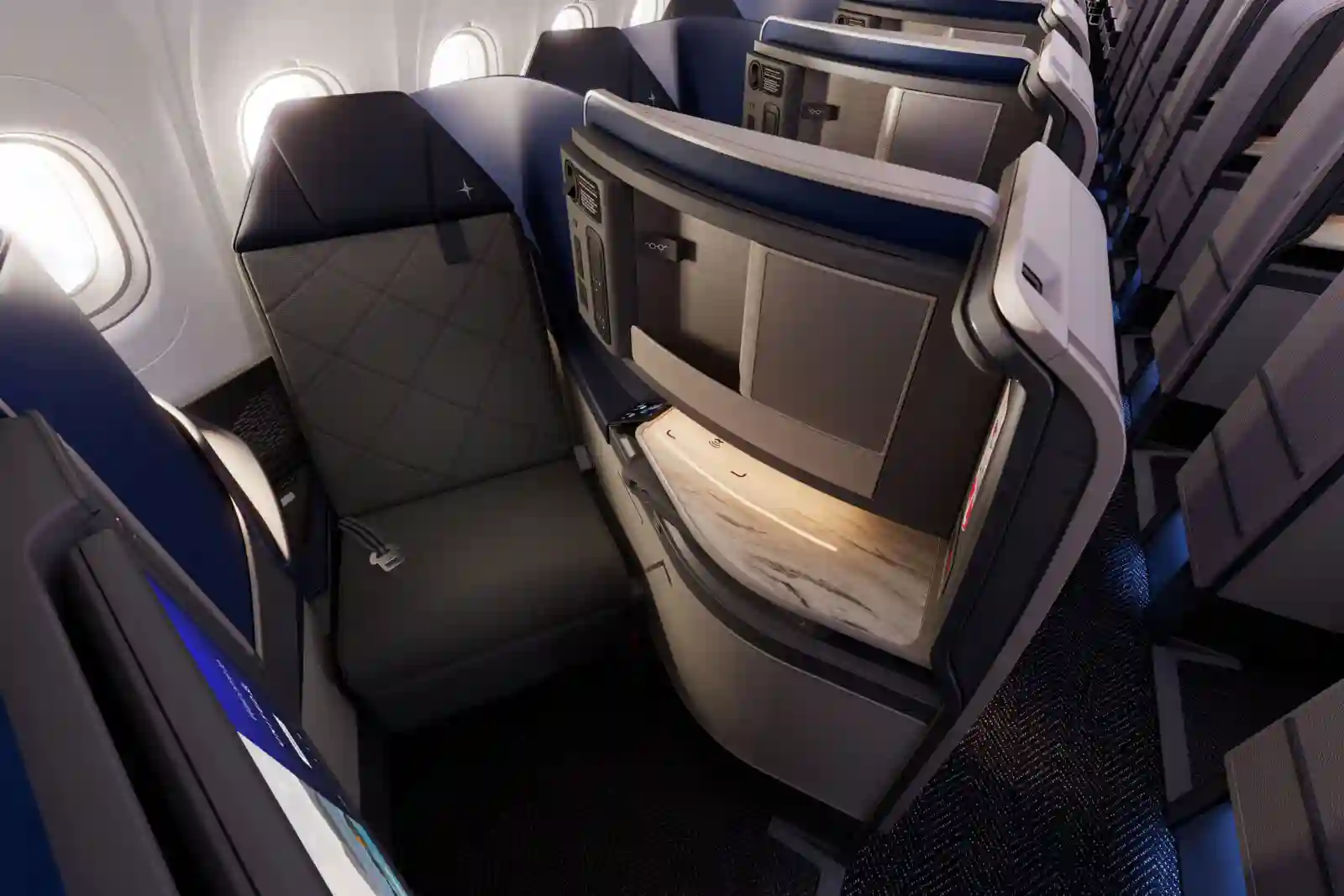
United Airlines is facing an unusual consequence of the Boeing 737 MAX 10’s prolonged certification delays: hundreds of expensive lie-flat business-class seats ordered years ago may no longer have a clear aircraft to call home. The seats were originally intended for a premium version of the MAX 10, but United’s strategy has changed substantially during the aircraft’s long development period.
The situation highlights how delays to a new aircraft can create problems far beyond delivery schedules. Cabin products are designed around specific aircraft structures, floor plans, electrical systems, weight limits, and certification requirements. As United’s fleet strategy has evolved, the carrier has discovered that its unused premium seats cannot simply be transferred to another narrowbody and installed without extensive engineering and certification work.
United’s 737 MAX 10 Lie-Flat Seat Problem
United CEO Scott Kirby recently acknowledged that the airline has hundreds of lie-flat seats sitting in storage. The carrier originally planned to install them on MAX 10 aircraft serving premium-heavy transcontinental routes, particularly from Newark Liberty International Airport and Washington Dulles International Airport.
Those plans made sense when United ordered the MAX 10 in 2017 and announced its premium cabin intentions in 2018. At the time, the aircraft was expected to provide United with a long, efficient narrowbody capable of carrying substantial passenger numbers while offering a premium product on strategically important domestic routes.
The certification delays changed that equation. United ultimately moved its premium transcontinental strategy toward the Airbus A321neo, creating a specialized fleet known as the Coastliner. These aircraft feature 20 United Polaris lie-flat suites, 12 Premium Plus seats, and 129 economy seats, producing a 161-seat configuration designed specifically for high-value transcontinental markets.
The Airbus A321neo Changed United’s Premium Strategy
United eventually plans to operate 50 Coastliner A321neos, with approximately 40 expected to be in service by early 2028. The decision effectively removed much of the original reason for putting lie-flat seats on the MAX 10.
That leaves United with an awkward inventory problem. As Kirby put it, the seats “don’t fit on other airplanes.” Premium aircraft seats are not interchangeable components in the same way that some standard cabin equipment can be moved between aircraft. Their dimensions, attachment points, weight, electrical architecture, emergency certification, and surrounding cabin structures all matter.
The problem is particularly significant because United’s original MAX 10 premium concept predates the airline’s United Premium Plus product. The airline therefore has fewer incentives to preserve the cabin configuration that was envisioned nearly a decade ago.
MAX 10 Could Become a High-Capacity Domestic Aircraft
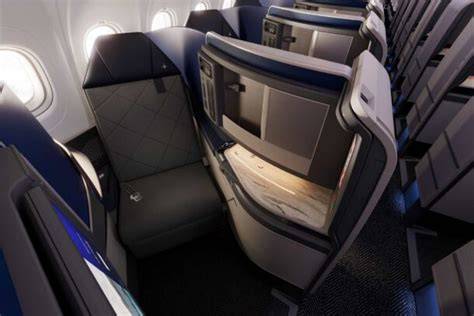
United has not formally disclosed the final MAX 10 cabin configuration, but current indications point toward a substantially different role. The aircraft could feature approximately 189 seats, including 20 United First recliners and 169 economy seats, with 64 of those economy seats designated as Economy Plus.
That configuration would make the MAX 10 much more of a high-capacity domestic workhorse than the premium transcontinental aircraft United originally envisioned. Its role would likely center on replacing older Boeing 757-300 aircraft while providing additional capacity and efficiency on domestic routes.
The change illustrates how airline fleet plans can evolve dramatically while an aircraft is still waiting to enter service. United first positioned the MAX 10 as a major competitor to the Airbus A321neo, but the carrier later ordered the A321neo itself and found a specialized role for it in premium markets.
Certification Delays Created a Seven-Year Gap
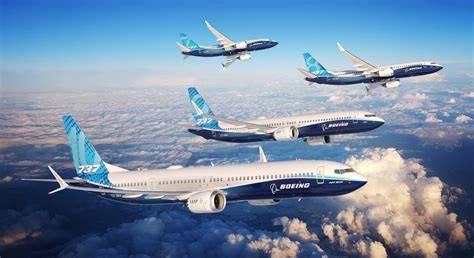
The Boeing 737 MAX 10 was initially expected to enter service around 2020. United now expects its first deliveries in summer 2027, with entry into service later that year. The airline has 167 firm orders, making it the aircraft’s largest customer, and could receive as many as 20 examples during 2027.
Boeing has completed more than 2,000 hours of MAX 10 certification flight testing, including the final planned certification flights in July. Much of the recent delay has been connected to changes involving the aircraft’s engine anti-ice system after concerns that extended operation in dry conditions could cause excessive heating around the engine inlet.
What Happens to United’s Unused Seats?
United now has several choices, but none appears particularly simple. The airline could retain the seats as potential future MAX 10 equipment, redesign the aircraft’s cabin around them if technically practical, or absorb the cost of storing and eventually disposing of inventory that no longer matches its fleet strategy.
The most important issue is that the MAX 10’s final mission has changed. United no longer needs hundreds of lie-flat seats to support the transcontinental strategy that originally justified them. If the MAX 10 becomes primarily a high-density domestic aircraft, installing a large premium cabin could undermine the capacity advantage the airline now expects from the type.
For United, the episode is a reminder that an aircraft delay can create secondary costs that never appear in the headline delivery figures. The 737 MAX 10 may finally be approaching certification, but the airline’s old cabin plans have already moved on.