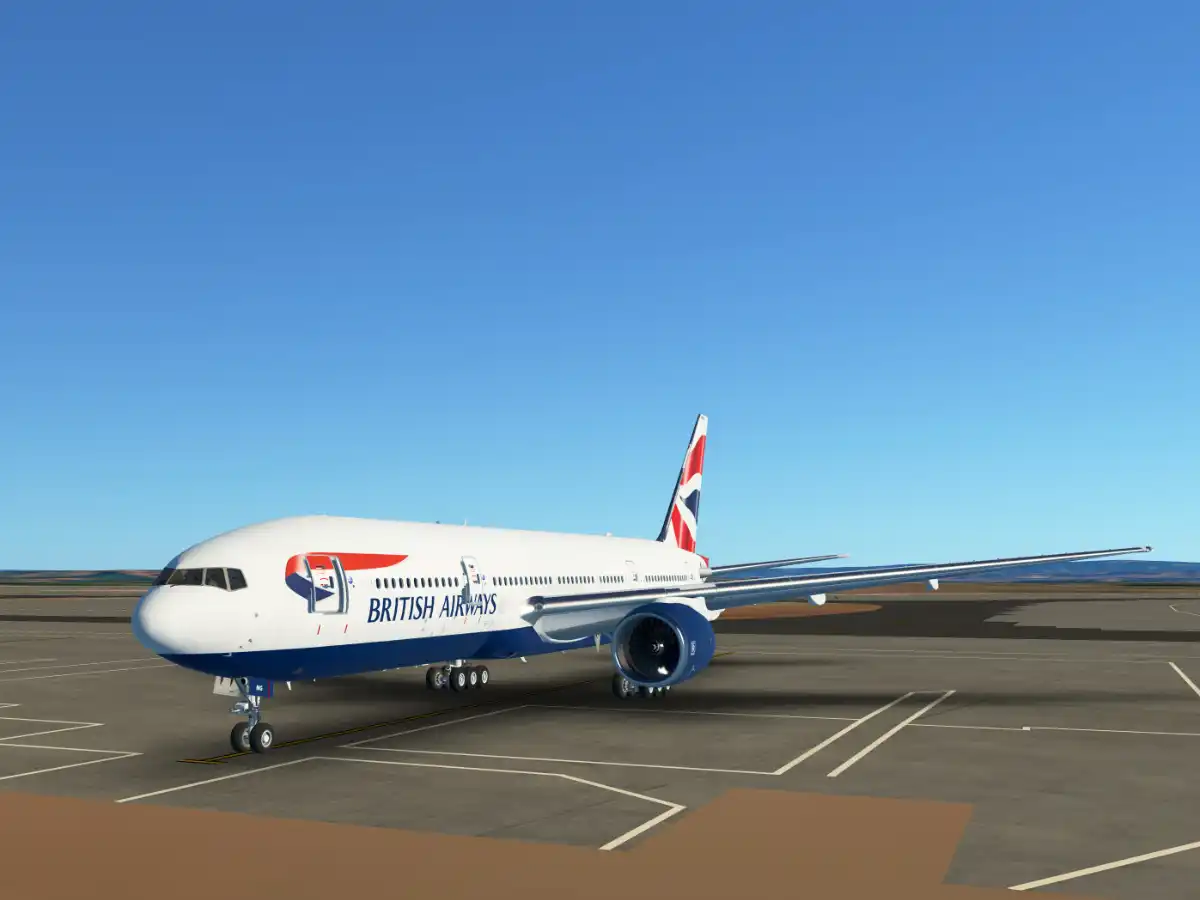
British Airways is preparing to launch a new nonstop service between London Gatwick and Colombo, Sri Lanka, with the first flight scheduled for October 23, 2026. The route will mark the return of Colombo to British Airways’ network from Gatwick, but with a major difference from its previous operation: passengers will now be able to fly between the UK and Sri Lanka without an intermediate stop.
The service is part of British Airways’ winter 2026–27 schedule, which takes effect as airlines adjust their networks for the new IATA winter slot season. Alongside the Colombo route, British Airways is making several other changes from London Heathrow Airport and London Gatwick Airport, including moving its existing services to San Jose, Costa Rica, and Tampa, Florida, between the two London airports.
The return of Colombo is particularly notable because British Airways has operated the Sri Lankan capital before, but its most recent Gatwick service was quite different. According to OAG data, the airline last operated between Gatwick and Bandaranaike International Airport (CMB) from 2013 to 2015, with flights in both directions stopping in Malé, the capital of the Maldives. The new service therefore represents a significant change in routing rather than simply the restoration of an old city pair.
British Airways London Gatwick to Colombo Route Details
British Airways will operate three flights per week between Gatwick and Colombo during the northern winter season. The first scheduled departure from London will take place on October 23, while the final departure of the initial seasonal operation is scheduled for March 26, 2027.
The westbound and eastbound schedules are designed around local departure and arrival times that give travelers a full nonstop connection between the two markets. Flight BA2045 will leave Gatwick at 5:30 PM on Mondays, Wednesdays, and Fridays, arriving in Colombo at 9:00 AM the following day. The scheduled journey time is approximately 10 hours.
The return flight, BA2044, will operate on Tuesdays, Thursdays, and Saturdays, departing Colombo at 11:00 AM and arriving at Gatwick at 5:00 PM. The westbound service is scheduled to take approximately 11 hours and 30 minutes.
That makes the route roughly 5,403 network miles, putting it firmly into British Airways’ long-haul category. More importantly, eliminating the stop in Malé should make the journey considerably simpler for passengers traveling between Britain and Sri Lanka.
Boeing 777-200ER Will Provide Most Flights
The new route will primarily be operated with British Airways’ Boeing 777-200ER, using the airline’s high-capacity Gatwick configuration. The aircraft has 332 seats, reflecting the carrier’s strategy of concentrating capacity in economy rather than building the aircraft around a large premium cabin.
The cabin includes 32 Club World seats, 48 World Traveller Plus seats, and 252 World Traveller economy seats. Club World uses a 1-2-1 layout, while World Traveller Plus is arranged 2-4-2 with a 38-inch seat pitch. The largest section is World Traveller, configured 3-4-3 with a 31-inch pitch.
This configuration tells an important part of the story behind the route. British Airways is not entering Colombo with an aircraft designed primarily around high-value corporate traffic. Instead, the airline is offering a relatively large economy cabin aimed at a market where leisure travelers and visiting-friends-and-relatives traffic are expected to form a substantial share of demand.
The aircraft strategy will eventually change. British Airways plans to replace its Gatwick Boeing 777s with Boeing 787-10s from 2029, meaning the Colombo operation could eventually see a different aircraft type if the route survives beyond its initial seasonal schedule.
Why British Airways Is Returning to Sri Lanka
British Airways’ decision comes as the airline continues expanding its presence in South Asia. OAG data for 2026 indicates that British Airways has almost 1.9 million round-trip seats available between London and South Asia, approximately 10% above its previous record, which was established in 2025.
Sri Lanka fits naturally into that expansion because tourism has recovered strongly since the pandemic, while international visitor demand has also benefited from improving perceptions of the destination.
Industry commentator and senior airline network planner Behramjee Ghadially has pointed to substantial growth in Sri Lanka’s intercontinental traffic. Passenger traffic from the country’s top 20 intercontinental markets was reportedly 22% higher than in 2019, reflecting the recovery of international travel and growing tourism demand.

Sri Lanka’s appeal also extends well beyond traditional beach holidays. Destinations such as Hikkaduwa and Unawatuna have attracted surfers, backpackers, and younger travelers, while the country’s broader tourism offering includes Yala National Park, tea plantations, historic Galle, and other cultural and natural attractions.
European visitors also tend to stay relatively long. Ghadially estimates an average European trip to Sri Lanka at around 10 days, giving airlines an opportunity to capture longer leisure journeys rather than short breaks.
London Provides a Large Existing Passenger Market
The strongest argument for the new British Airways route may be the size of the existing London–Colombo market.
Approximately 409,000 round-trip passengers traveled between London and Colombo during 2025, according to Ghadially’s analysis. That equates to more than 1,100 passengers per day when averaged across the year, although actual daily demand naturally varies by season.
London is also Sri Lanka’s largest European market by a substantial margin. Paris, the second-largest European market, handled approximately 176,000 passengers, while London traffic was around 15% higher than in 2019.
The market is not composed entirely of tourists. Sri Lanka has a significant diaspora in Britain, creating a large visiting-friends-and-relatives segment alongside leisure travel. SriLankan Airlines already connects Sri Lanka with London Heathrow, demonstrating the established demand between the two countries.
Gulf Carriers Create the Biggest Challenge
The key question for British Airways is therefore not whether people want to travel between London and Colombo. The more difficult issue is how much passengers are willing to pay for that journey.
Qatar Airways, Emirates, and Etihad have extensive one-stop networks connecting European cities with Colombo through their Gulf hubs. Their large networks provide enormous connecting capacity and allow passengers to choose from numerous departure times and fare levels.
According to Ghadially, these carriers dominate the one-stop European market and offer relatively low fares, while demand for premium cabins remains limited. That helps explain British Airways’ decision to base the service at Gatwick with a high-economy, relatively low-premium configuration.
The nonstop flight gives British Airways a product that the connecting carriers cannot replicate in exactly the same way. Passengers can avoid changing aircraft and airports in the Gulf, potentially making the journey more convenient even when connecting fares are competitive.

Can British Airways Make Colombo a Permanent Route?
The first winter season will be an important test. British Airways has scheduled only three weekly flights, a conservative frequency that gives the airline a way to measure demand without immediately committing a large amount of capacity.
The challenge is that Colombo already has substantial international capacity, particularly from Gulf airlines. A low-yield passenger base could make it difficult for British Airways to maintain the route if fares remain under pressure.
At the same time, the London market has demonstrated significant growth, and the return of nonstop service removes the inconvenience of the previous Malé stop. The combination of strong London demand, recovering Sri Lankan tourism, and nonstop convenience gives British Airways a clear basis for testing the market.
For now, October 23 will mark the beginning of a new chapter for British Airways and Colombo. The airline is returning to a destination it already knows, but with a fundamentally different proposition: a direct London Gatwick–Colombo service designed around high-volume leisure and visiting-friends-and-relatives traffic. Whether those passengers generate enough revenue to justify a second winter season will become clearer after the route has had time to establish itself.