Virgin Atlantic is preparing to make a major expansion into Southeast Asia, with the airline set to launch its first-ever nonstop service between London Heathrow and Phuket in October 2026. The new route will connect the United Kingdom with one of Thailand’s most popular resort destinations, giving travelers a direct alternative to the many one-stop itineraries currently dominating the market.
The service is scheduled to begin on October 18, 2026, shortly before airlines across the Northern Hemisphere transition to their winter schedules. Virgin Atlantic plans to operate the route three times per week during the winter season, using a Boeing 787-9. The move represents another significant step in the carrier’s evolving long-haul network after the launch of its London Heathrow–Seoul Incheon service earlier in 2026.
For Virgin Atlantic, the Phuket route is particularly notable because the airline has traditionally concentrated its long-haul flying around major business and leisure markets rather than directly serving Thailand’s largest resort gateway. Phuket International Airport is overwhelmingly associated with tourism, making the new service an important test of how much demand exists for a premium nonstop connection between London and southern Thailand.

Virgin Atlantic London Heathrow–Phuket Flights Begin October 18
Virgin Atlantic’s new London Heathrow (LHR)–Phuket (HKT) service will operate every Wednesday, Friday, and Sunday on the outbound journey. The Boeing 787-9 will depart Heathrow at approximately 3:45 p.m. and arrive in Phuket at 9:55 a.m. the following day, with a scheduled flight time of around 12 hours and 10 minutes.
The return service will operate on Mondays, Thursdays, and Saturdays. Flights are scheduled to leave Phuket at 11:45 a.m. and reach London at approximately 7:25 p.m., producing a longer westbound journey of roughly 13 hours and 40 minutes. The difference reflects prevailing winds and other operational factors affecting long-haul flights.
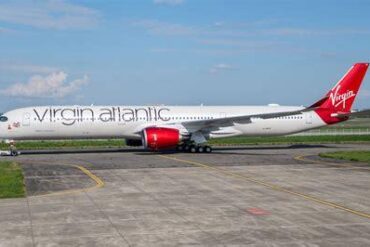
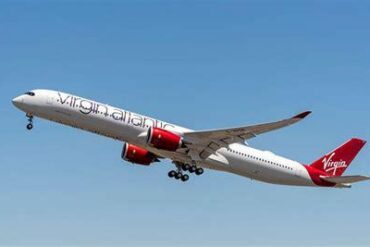
Virgin Atlantic will use its 258-seat Boeing 787-9 for the route, a sensible choice for a market where leisure traffic is expected to represent a substantial share of demand. The aircraft offers considerably more capacity than a smaller widebody while maintaining the efficiency required for a route that will not initially operate daily.
The timing is also strategically important. The route begins on October 18, exactly one week before the start of the Northern Hemisphere winter schedule on October 25. That places Virgin Atlantic’s new Phuket service squarely within the period when demand for Thailand typically becomes especially attractive to European travelers seeking warmer weather.
Why Phuket Is Such an Important London Market
Although Phuket is a leisure destination, the size of the existing London market makes Virgin Atlantic’s decision easier to understand. Booking data indicates that approximately 249,000 round-trip passengers traveled between London and Phuket in 2025. On an annualized basis, that represents close to 700 travelers each day.
London was the second-largest European origin market for Phuket after Moscow, which recorded substantially higher passenger volumes. More importantly for Virgin Atlantic, a large portion of London–Phuket demand was already associated with Heathrow, suggesting that the airline is entering a market with established customer demand rather than attempting to create an entirely new travel corridor.
Approximately 194,000 passengers traveled between Heathrow and Phuket in 2025, compared with around 49,000 involving London Gatwick and roughly 6,000 involving London Stansted. Those figures highlight the importance of Heathrow as the primary London gateway for travelers heading to the Thai island.
Virgin Atlantic’s decision to operate from Heathrow therefore gives it access to the largest existing pool of London–Phuket passengers. It also strengthens the airline’s position at its principal London hub, where it can potentially feed the route with connecting traffic from destinations across the United Kingdom and beyond.
Virgin Atlantic Enters a Market Dominated by Gulf Airlines
The competitive environment will be challenging. Etihad Airways carried the most passengers between London and Phuket in 2025, followed by Qatar Airways and Emirates. Singapore Airlines, Thai Airways, Air India, Malaysia Airlines, Oman Air, Turkish Airlines, and Air China also contributed significant volumes.
The dominance of Gulf carriers is hardly surprising. Emirates, Etihad, and Qatar Airways can connect London passengers to Phuket through their respective hubs, offering extensive schedules and numerous onward travel options. Together, the three airlines accounted for approximately 53% of London–Phuket passengers in 2025.
Their combined presence has become even stronger in 2026, with their networks offering as many as 12 daily services to Phuket at peak periods. Virgin Atlantic is therefore not simply launching another flight to Thailand; it is attempting to persuade passengers to abandon highly established one-stop networks in favor of a nonstop option.
That distinction could prove important. A nonstop flight eliminates the inconvenience of changing aircraft and passing through a connecting hub, while also reducing total journey complexity. For families, couples, and holidaymakers carrying substantial luggage, that convenience can justify paying a premium over connecting fares.
The Challenge: Phuket Is a Price-Sensitive Leisure Market
The biggest question surrounding Virgin Atlantic’s new route is profitability. Phuket attracts enormous visitor numbers, but it is not generally regarded as one of the highest-yielding long-haul destinations from London.
The average base fare between London and Phuket was approximately $438 each way in 2025, excluding taxes, additional charges, and fuel surcharges. That produced an estimated market base-fare revenue of about $109 million across all airlines and cabins.
Those numbers reveal both the opportunity and the risk. Passenger demand is substantial, but relatively modest average fares mean airlines must carefully manage capacity, aircraft utilization, and operating costs. A nonstop service also costs more to operate than an itinerary involving a connection through an established hub.
Virgin Atlantic will therefore need to capture enough passengers willing to pay for convenience rather than compete purely on price. Its brand, loyalty program, premium cabins, and nonstop proposition could help differentiate the service from connecting alternatives.
Could Phuket Lead to More Southeast Asia Expansion?
The Phuket launch could ultimately become more important than a single three-weekly route. Virgin Atlantic has already demonstrated a willingness to expand its Asian network, most recently with Seoul Incheon from Heathrow in March 2026.
That naturally raises speculation about whether other Southeast Asian destinations could follow. Bali is an obvious candidate because London–Denpasar demand is also substantial. However, a nonstop London–Bali operation would be significantly longer and would face intense competition from Gulf carriers offering multiple daily connections.
For now, Phuket appears to be the more measured choice. The route is long, but still manageable for the Boeing 787-9, while the existing London passenger base provides a strong foundation. Virgin Atlantic is effectively betting that a sufficiently large number of travelers will value one-seat convenience enough to choose its nonstop service.
What Virgin Atlantic’s Phuket Launch Means for Travelers
Virgin Atlantic’s new London–Phuket route gives travelers another option in one of the world’s busiest leisure markets. Instead of connecting through Doha, Dubai, Abu Dhabi, Singapore, or another international hub, passengers will be able to fly directly from Heathrow to Phuket.
The three-times-weekly schedule is modest compared with the extensive connecting networks operated by its competitors, but it gives Virgin Atlantic a foothold in a destination it has never previously served. If demand proves strong, the airline could have an opportunity to increase frequencies in future seasons.
For now, the key date is October 18, 2026. When Virgin Atlantic’s Boeing 787-9 leaves Heathrow for Phuket that afternoon, it will mark the beginning of a new chapter in the airline’s Southeast Asian network—and give London travelers a long-awaited nonstop route to one of Thailand’s most popular holiday destinations.