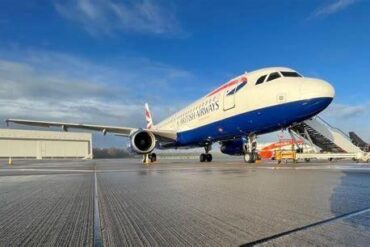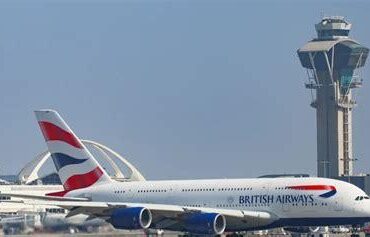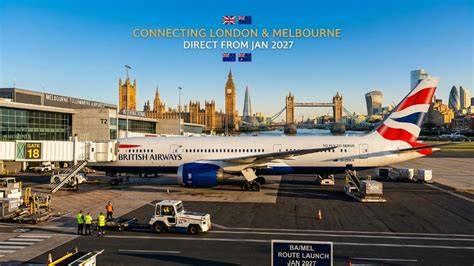
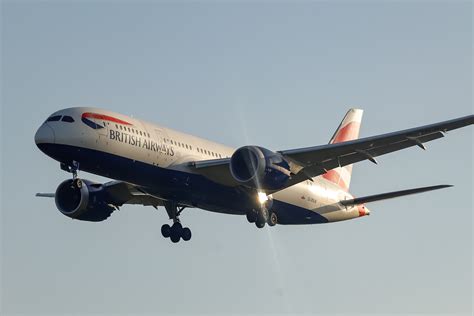
British Airways is preparing to make a major return to Melbourne, with a new daily service from London Heathrow scheduled to begin on January 9, 2027. The route will reconnect the UK and Victoria after a gap of roughly two decades, but the service will look very different from British Airways’ previous operation. Rather than flying nonstop, the new route will operate through Kuala Lumpur International Airport, creating a one-stop journey that will nevertheless use the same aircraft and flight number throughout.
The launch is particularly notable because the Melbourne–London market is one of the world’s most demanding long-haul corridors. British Airways will operate the service with the Boeing 787-9, while the schedule has been designed around overnight flying and early-morning arrival in the United Kingdom. For passengers traveling between Australia and Britain, the new service adds another major one-stop option at a time when airlines are reshaping their networks around longer flights, airspace restrictions, and strong demand for Australia.
British Airways confirmed its return to Melbourne in March 2026, ending years of speculation about whether the airline would restore the destination. The carrier last served Melbourne around 20 years ago, when its routing structure was different and flights stopped in Singapore. The new operation instead uses Kuala Lumpur as the intermediate point, with fifth-freedom traffic rights allowing British Airways to carry passengers between Malaysia and Australia.
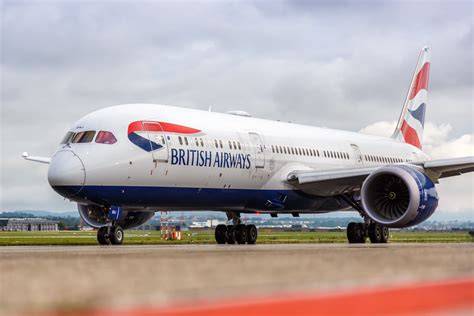
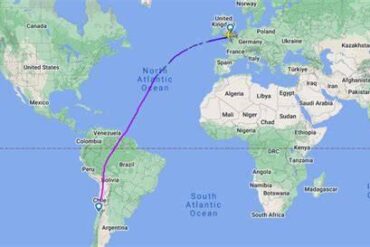
British Airways London Melbourne Route Schedule
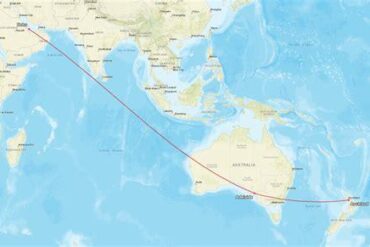
The new service will operate daily in both directions, giving Melbourne a direct connection to British Airways’ Heathrow network while avoiding the need for passengers to change aircraft at a Gulf or Asian hub. British Airways flight BA33 will depart Heathrow at 9:10 PM and arrive in Kuala Lumpur at 6:05 PM the following day. After a scheduled ground period, the same flight continues toward Melbourne at 7:45 PM, arriving at 6:40 AM the next morning.
The return service, BA34, will leave Melbourne at 4:35 PM and reach Kuala Lumpur at 9:35 PM. The aircraft will then depart Malaysia at 11:15 PM and arrive at Heathrow at 5:20 AM the following morning. The timing is important because it places the return flight into Heathrow early enough for passengers to connect onward to destinations across Britain and Ireland.
For business travelers, those timings could be particularly attractive. Overnight flying can allow passengers to use much of the journey for sleeping, while an early Heathrow arrival provides access to the extensive domestic and European connections available from the airport. The schedule also gives British Airways an opportunity to compete for premium passengers rather than relying exclusively on leisure traffic.
A Nearly 24-Hour Journey From Melbourne
The westbound journey will be exceptionally long. According to the planned January 2027 schedule, the Melbourne-to-London sector will have a block time of 23 hours and 45 minutes. That makes it British Airways’ second-longest scheduled offering, behind its Sydney-to-Heathrow service, which can reach approximately 24 hours and 25 minutes.
The unusually long block time reflects the operational realities facing airlines on flights between Europe and Australia. Headwinds, combined with the need to avoid Iranian and Russian airspace, can significantly extend journey times. The result is a route that approaches the 24-hour mark even though passengers remain on the same aircraft and flight number.
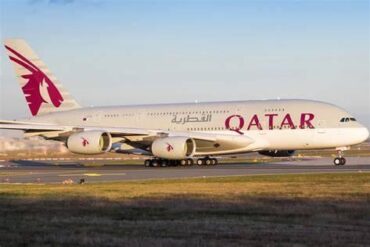
The new British Airways service will still rank among the faster one-stop choices between Melbourne and London. Several competitors can offer slightly shorter total journey times under favorable schedules, including SriLankan Airlines through Colombo, Emirates through Dubai, Singapore Airlines through Singapore, Etihad Airways through Abu Dhabi, and Qatar Airways through Doha.
However, the shortest advertised itinerary is not necessarily the most convenient. Very tight connections can leave travelers vulnerable to delays, missed onward flights, and additional airport stress. British Airways’ same-plane operation through Kuala Lumpur offers a different proposition, particularly for travelers who value continuity during an exceptionally long journey.
Boeing 787-9 Cabin Could Make a Difference
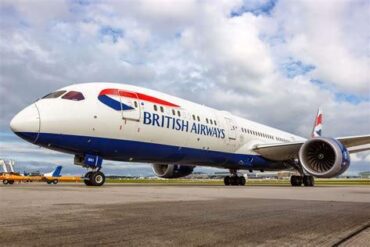
British Airways is expected to deploy both its 215-seat and 216-seat Boeing 787-9 configurations on the Melbourne service during its initial operating period. That distinction matters because the two aircraft do not offer identical premium cabins.
The 215-seat configuration contains eight First Class seats, 38 Club Suites, 39 World Traveller Plus seats, and 130 World Traveller seats. First Class and Club Suites are arranged in a 1-2-1 configuration, while World Traveller Plus uses a 2-3-2 layout and standard economy operates in a 3-3-3 arrangement.
The newer 215-seat aircraft therefore provides British Airways’ more modern Club Suite business-class product, giving passengers direct aisle access and substantially improved privacy compared with the airline’s older business-class cabin. Between January 9 and the end of July 2027, this newer configuration is scheduled to operate on 115 of the 204 departures covered by the reference schedule.
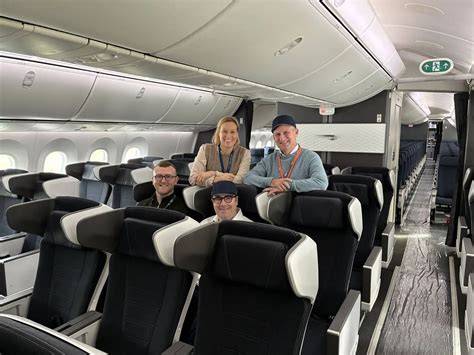
That premium capacity is significant for such a long route. More than one-fifth of the 215-seat aircraft’s seats are located in First Class and business class, indicating that British Airways expects meaningful demand from higher-yield passengers. On a journey lasting almost an entire day, cabin quality becomes far more than a luxury consideration.
Strong Europe Melbourne Demand Supports the Return
British Airways is returning to a market that already generates substantial passenger traffic. Booking data for the 12 months through June 2026 indicates that approximately 1.3 million round-trip passengers traveled between Europe and Melbourne. Ignoring seasonal fluctuations, that represents more than 3,500 passengers per day.
London Heathrow stands out as the largest individual European market. Around 264,000 passengers traveled between Heathrow and Melbourne during the period examined, equivalent to more than 700 passengers each day.
Until now, most of those travelers have had to connect through another international hub. Dubai, Doha, Abu Dhabi, and Singapore have been especially important, while Bangkok, Guangzhou, Hong Kong, Istanbul, Kuala Lumpur, and Shanghai have also captured significant connecting traffic.
British Airways’ return therefore targets an established market rather than attempting to create demand from scratch. Its biggest advantage could be the combination of brand recognition, Heathrow connectivity, premium cabins, and a same-aircraft routing through Kuala Lumpur.
British Airways Faces Growing Competition
The Melbourne–Europe market is becoming increasingly competitive. Turkish Airlines already offers a one-stop, same-plane, same-flight-number option between Istanbul and Melbourne via Singapore. Finnair is scheduled to begin daily Helsinki–Melbourne service via Bangkok from October 25, 2026.
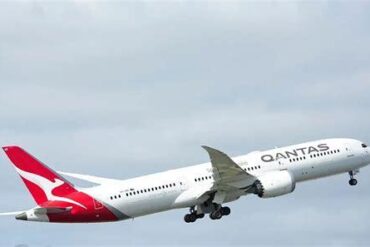
Qantas is also preparing to reintroduce its Melbourne–London service through Perth from February 1, 2027, although geopolitical conditions have complicated the carrier’s plans. Its London-bound operation is currently affected by airspace restrictions and may continue to route through Singapore instead of operating nonstop from Perth.
Against this backdrop, British Airways’ return gives travelers another major European airline option. The service will not be the fastest in every schedule, nor will it be nonstop, but its daily frequency and Heathrow connectivity could make it highly competitive.
For British Airways, Melbourne represents more than the restoration of a long-lost destination. It is a strategic return to one of the world’s most important ultra-long-haul markets, arriving at a moment when travelers have more routing choices but airlines face greater operational complexity. If demand develops as expected, the new London–Kuala Lumpur–Melbourne service could become one of British Airways’ most important Australia routes.