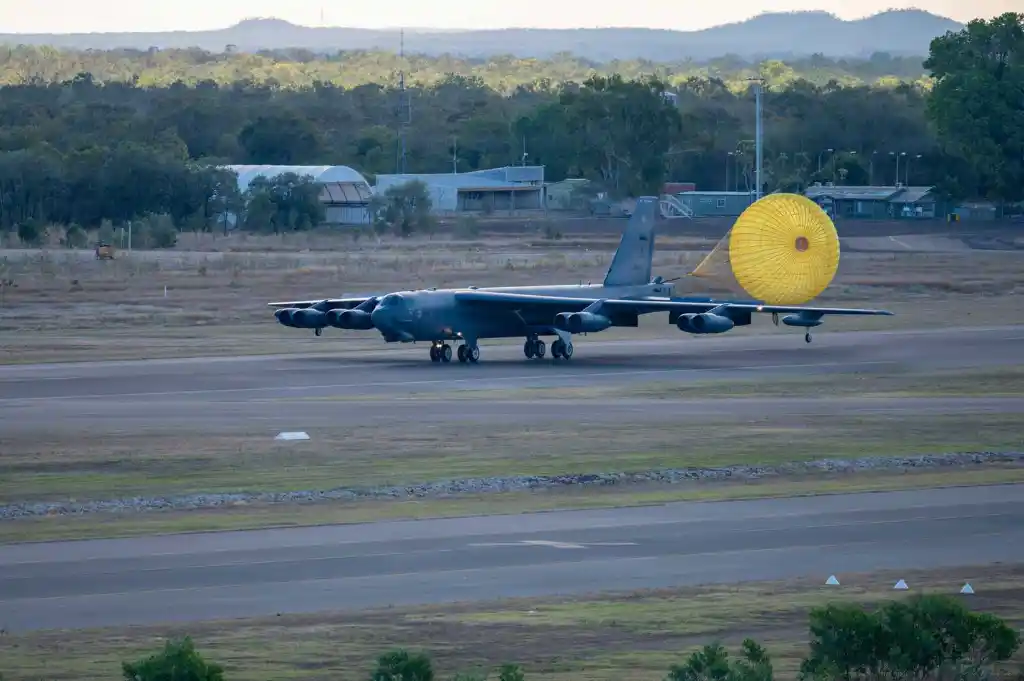
On September 1, US Air Force B-52H Stratofortress bombers arrived at Royal Australian Air Force Base Tindal in Australia’s Northern Territory. On the surface, the deployment looked like another overseas training rotation. In reality, it marked an important shift in how the United States plans to operate heavy bombers across the Indo-Pacific. After years of construction and billions of dollars in wider defense investment, Tindal has developed into an airfield capable of supporting the world’s most recognizable strategic bomber on a sustained basis.
The transformation is significant because Tindal is not simply gaining a better runway or additional parking space. The base is being prepared as part of a wider network designed to keep American and allied aircraft moving between dispersed locations rather than concentrating too much combat power at one vulnerable installation. That concept has become increasingly important as the People’s Republic of China expands its ability to threaten American bases throughout the Western Pacific.
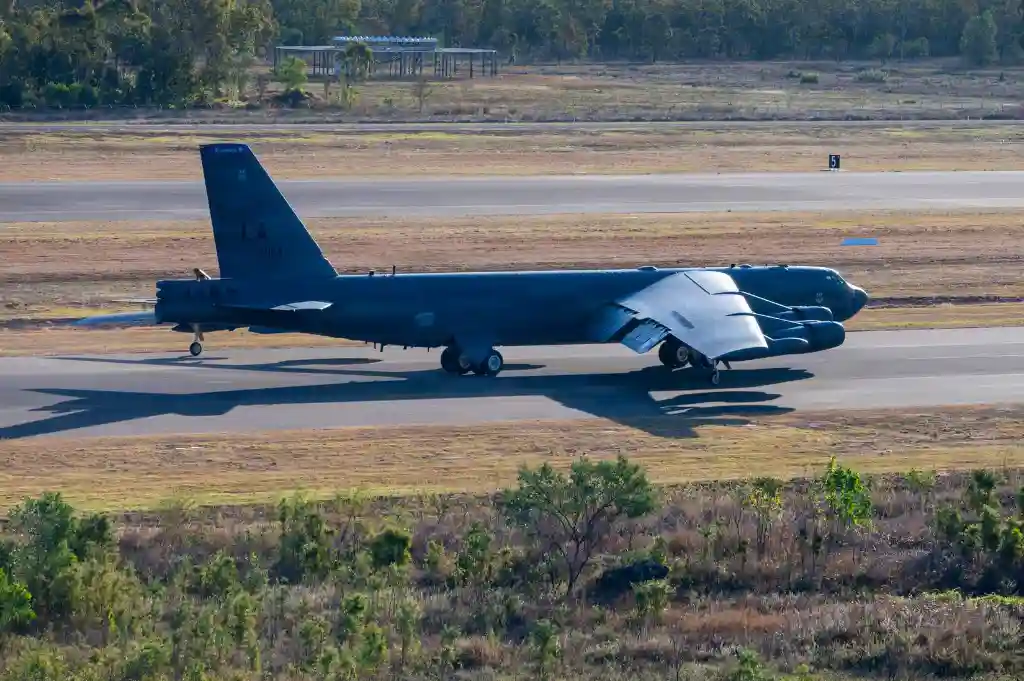
The scale of the work explains why the latest B-52 deployment matters. A package worth roughly $1.1 billion has upgraded Tindal’s runway, aviation fuel infrastructure, power systems, water supply, utilities, and aircraft operating areas. At the center of the American-funded construction is a dedicated parking ramp large enough to accommodate six B-52 bombers. The site is therefore becoming much more than a seasonal training location. It is being shaped into a forward operating base that can support repeated bomber rotations.
Why Tindal Is Becoming So Important to the US Air Force
The transformation of Tindal is closely connected to the US Air Force’s Agile Combat Employment concept. Rather than assuming that a small number of major bases can remain operational throughout a high-end conflict, ACE emphasizes the ability to distribute aircraft, personnel, weapons, fuel, and maintenance equipment across a larger network of locations.
For American airpower in the Indo-Pacific, this is especially important because the distances involved are enormous. The Pacific contains thousands of miles of ocean between potential operating locations, while many of the most important US bases are well known to potential adversaries. A force that remains concentrated at a handful of predictable locations risks losing a large amount of combat power if those bases are damaged during the opening stages of a conflict.
Tindal offers a different geographical option. Located in northern Australia, it is far from the immediate chain of islands surrounding East Asia while remaining connected to the broader Pacific theater. Its position allows the United States and its allies to operate aircraft from a location that complements existing facilities rather than simply duplicating them.
The base was already strategically useful before the latest construction. Australia’s Lockheed Martin F-35A Lightning II fighters and other advanced aircraft operate from the wider Tindal complex, giving the location an established military infrastructure and operational purpose. American investment has expanded that foundation so the airfield can support much heavier aircraft and larger concentrations of personnel.
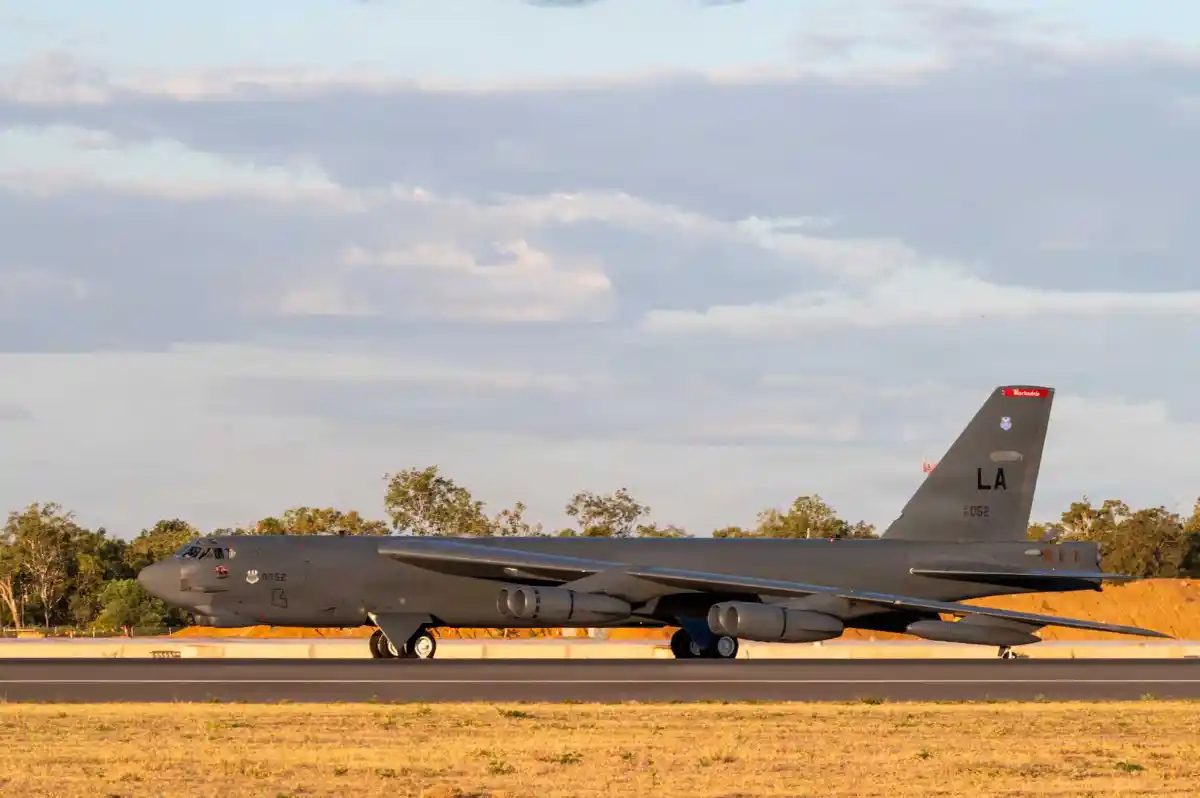
The first major stage involved approximately $737 million in runway and aviation fuel infrastructure improvements, while another roughly $437 million was directed toward power, water, and utility modernization. Those systems might appear less dramatic than a bomber ramp, but they are essential to sustained operations. A B-52 deployment requires enormous quantities of fuel, specialized maintenance equipment, reliable electricity, communications, weapons support, and personnel facilities.
The US Department of Defense has also allocated more than $14 million for a squadron headquarters and maintenance building. Together, these improvements give Tindal the infrastructure needed to support recurring American bomber deployments instead of occasional visits.
The $1.1 Billion Investment Is About More Than Six B-52s
The six-aircraft parking ramp is one of the clearest indicators of what Tindal is designed to become. Six B-52Hs represent a substantial concentration of long-range strike capability, but the deeper significance is the ability to generate operations from a second location.
Australia’s own defense spending adds another layer to the transformation. Canberra has committed roughly $8 billion toward defense facilities across the Northern Territory, creating a much broader infrastructure program around the region. The American contribution therefore fits into an Australian effort to make northern military facilities more capable and resilient.
Tindal’s expanded infrastructure could also support aircraft from other allied nations. Japanese aircraft, Singaporean F-35s, British Joint Strike Fighters, US Navy aircraft, and US Marine Corps aviation assets could potentially use the airfield during heightened operations. That flexibility is central to the modern Pacific strategy because the United States is not building a network designed exclusively around American aircraft.
Instead, the emerging model is an interconnected system of bases that can support multiple nations. If one airfield becomes unavailable, aircraft can potentially shift to another. If an adversary monitors one location, aircraft can relocate elsewhere. If maintenance facilities at one base are damaged, another location can absorb some of the workload.
That makes infrastructure itself a component of deterrence.
Why Guam Is No Longer Enough
For decades, Andersen Air Force Base on Guam served as one of America’s most important forward bomber locations in the Pacific. Guam’s position provided a powerful combination of distance, infrastructure, and access to the broader theater. Bombers operating there could reach targets across the Western Pacific while remaining thousands of miles from the continental United States.
The strategic environment has changed.
China’s DF-26 ballistic missile, with a reported range approaching 2,485 miles (4,000 kilometers), has given Beijing the ability to threaten Guam directly from the Chinese mainland. The missile is widely associated with China’s ability to attack American bases and other high-value targets at extended ranges, leading to its frequently reported “Guam Killer” nickname.
The danger is not limited to destroying aircraft. A runway does not need to be completely demolished to become operationally useless. Multiple impacts across a runway, taxiway, fuel facility, or aircraft parking area could disrupt bomber operations long enough to interfere with a major campaign.
This changes the military value of a fixed base. A facility can be extremely well defended and still become a target that an adversary has planned against for years.
The answer is not necessarily to abandon Guam. The island remains a critical American military installation and continues to receive major investments in infrastructure and defensive capabilities. Instead, the United States is increasingly building redundancy into its Pacific airpower network.
Tindal is one part of that redundancy.
From Permanent Guam Rotations to Bomber Task Forces
The B-52 deployment also reflects a major change in American bomber strategy. For roughly 16 years, the US Air Force maintained a continuous bomber presence on Guam. B-52s operated alongside other strategic bombers, including the B-1B Lancer and B-2 Spirit, providing a visible and persistent American strike capability in the region.
That model changed in 2020.
Rather than maintaining a predictable permanent bomber presence at one forward location, the Air Force shifted toward Bomber Task Force deployments. Aircraft now rotate through different overseas bases for shorter and less predictable periods. The objective is to preserve persistent operational activity without making the location and timing of bomber operations completely predictable.
Guam remains part of that network, but it is no longer the only important forward location.
This is where Tindal becomes particularly valuable. The Australian base allows the Air Force to demonstrate that its heavy bombers can be sustained from a location thousands of kilometers from Guam. It also provides planners with another operating point from which bombers can support missions across the Indo-Pacific.
The distinction is important. Tindal is not replacing Andersen Air Force Base. It is complementing it.
What a B-52 Brings to the Pacific
The B-52H may be nearly seven decades old, but its age does not make the aircraft strategically irrelevant. Its enormous airframe, long range, large weapons capacity, and extensive modernization program continue to make it one of America’s most useful long-range strike platforms.
The bomber can fly more than 8,699 miles (14,000 kilometers) without aerial refueling, depending on configuration and mission conditions, and can carry a payload exceeding 66,000 pounds (30,000 kilograms). That combination gives commanders considerable flexibility when deciding where aircraft can operate from and how much weaponry they can carry.
Its value is also changing as its weapons and electronics evolve. The future B-52J configuration is expected to receive major upgrades, including new engines, modern sensors, improved communications, and the ability to integrate newer long-range weapons.
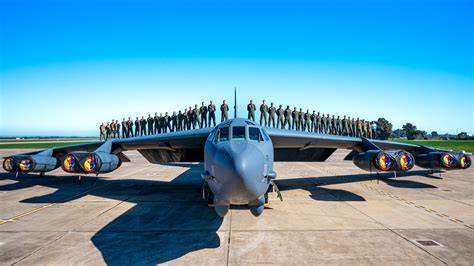
The bomber does not necessarily need to fly deep into heavily defended enemy airspace. Modern long-range weapons allow the aircraft to remain hundreds of miles away from dangerous areas while still contributing substantial combat power. That makes basing flexibility particularly important.
A B-52 operating from Tindal can therefore serve as a long-range weapons platform, command-and-control asset, and potentially an important node within a broader network of aircraft and unmanned systems.
Future integration with advanced weapons and collaborative combat aircraft could further expand that role. Rather than thinking of the B-52 simply as an aircraft that flies toward a target and drops bombs, planners increasingly view it as part of a connected strike network capable of launching weapons and coordinating effects from outside heavily defended zones.
Tindal Gives the B-52 More Than a Backup Runway
The geographical value of Tindal becomes clearer when its position is considered alongside Guam. A B-52 flying at normal cruise speeds would require roughly five hours to cover 3,107 miles (5,000 kilometers) toward areas near China’s coastline, although actual combat missions would depend heavily on routing, tanker support, weapons, threat conditions, and operational objectives.
The point is not that Tindal places bombers immediately beside a potential battlefield. Its importance comes from creating another launch point far enough away to complicate an adversary’s targeting calculations.
That makes the base valuable even when no bomber is physically parked there.
If an adversary has to monitor multiple airfields instead of concentrating surveillance and strike planning against one major installation, the problem becomes considerably more complicated. The United States can potentially move aircraft between locations, change deployment patterns, and make it harder to determine where the next bomber operation will originate.
This is the central idea behind the new Pacific basing architecture: survivability through dispersion.
Australia’s Northern Territory Is Becoming a Major Allied Airpower Zone
Tindal’s transformation also reflects Australia’s increasingly important role in regional defense planning. The Northern Territory sits at the intersection of Australia’s geography and the wider Indo-Pacific security environment, making its airfields particularly useful for operations across Southeast Asia and the Pacific.
The base’s ability to support American bombers alongside Australian aircraft gives both countries additional operational flexibility. It also provides an established location where other partners can potentially participate in exercises, deployments, and contingency operations.
That multinational dimension is crucial. Modern air campaigns rarely depend on one aircraft type or one country operating independently. Fighters need tankers, bombers need maintenance teams, aircraft need fuel and weapons, and all of those elements depend on secure communications and logistics.
An upgraded airfield therefore creates strategic value far beyond its runway.
China Has Already Noticed the Change
The strategic implications have not gone unnoticed in Beijing. Chinese officials have criticized the expansion of Tindal and broader American military cooperation with Australia, arguing that the growing presence of US forces contributes to regional tensions and could encourage an arms race.
Australian political debate has also focused on questions surrounding sovereignty, oversight, and the circumstances under which American aircraft and weapons could operate from Australian territory. Those debates are likely to continue as the infrastructure becomes more deeply integrated into allied planning.
The physical transformation, however, is already taking place.
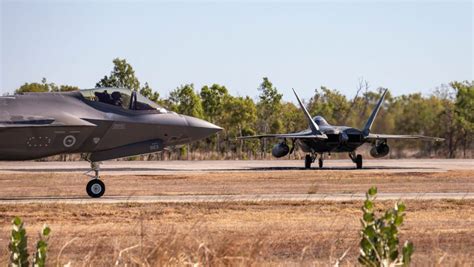
What began as an Australian airfield with important regional capabilities has become part of a much larger American and allied network. The $1.1 billion upgrade does not create a new bomber fleet, and it does not make Guam obsolete. Its purpose is more subtle but potentially more consequential: it gives the United States another place from which to generate and sustain long-range airpower.
Tindal Could Define the Next Phase of Pacific Basing
The arrival of B-52Hs at Tindal demonstrates how quickly the concept of dispersed airpower is moving from planning documents into physical infrastructure. Six aircraft may fit on the new ramp, but the larger transformation involves fuel, maintenance, utilities, communications, personnel facilities, and the ability to sustain operations over time.
That infrastructure is what turns an airfield into a military node.
For the US Air Force, the significance of Tindal is therefore not simply that it can host the B-52. It is that the base represents a different philosophy for operating in the Pacific. Instead of relying on a small number of heavily developed forward bases, American planners are building a network in which aircraft can move between locations and continue generating combat power even when individual facilities are threatened.
Andersen remains essential. Guam remains heavily defended. But the strategic logic of the region increasingly favors multiple operating locations rather than one dominant forward hub.
Tindal’s transformation puts that principle into concrete form. The remote Australian base is now positioned to support one of America’s most capable long-range bombers, strengthen cooperation with regional allies, and provide another layer of resilience hundreds or thousands of miles away from the most exposed Pacific installations.
In an era when a single missile strike can potentially close a runway, the most valuable airbase may no longer be the one with the biggest collection of aircraft. It may be the one that gives those aircraft somewhere else to go.