In a historic demonstration of unmanned aerial technology, China has successfully transported 180 tonnes of steel and concrete up the steep, rugged mountains of Yunnan province using a coordinated fleet of heavy-lift drones. The mission, designed to support a solar power infrastructure project, is being hailed as a milestone in civilian drone applications and a potential paradigm shift in how remote-area construction is approached.
Heavy-Lift Drone Swarm Revolutionizes Mountain Transport
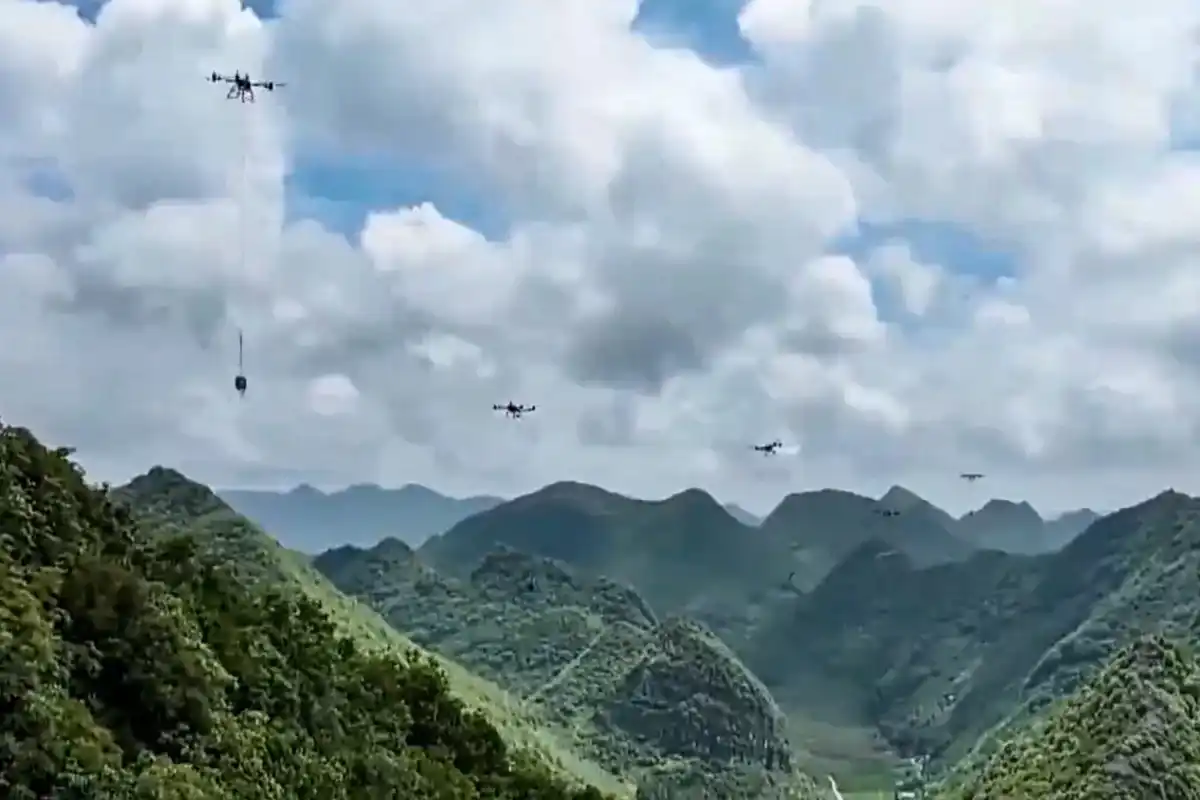
The project unfolded in Xichou County, nestled in the karst landscapes of southwest China, where traditional logistics had long been stymied by treacherous cliffs, limited road access, and narrow ridgelines. Conventional solutions like cableways would have required up to a month of preparation and labor. Instead, Chinese engineers deployed a swarm of 16 industrial drones, completing the complex task in just three days.
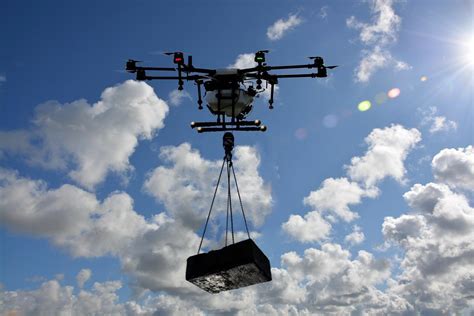
Flying at altitudes of up to 1,650 meters (5,413 feet), these drones autonomously navigated along pre-programmed flight paths, delivering steel beams and concrete bags with surgical precision to high-altitude construction points. The operation supported the construction of three electricity transmission towers, essential for the distribution of energy from a solar power station embedded deep in the mountainous terrain.
Precision Flight and Automation Replace Manual Labor
The heavy-lift drones, developed and operated by a coalition of Chinese engineering firms and UAV specialists, were designed for high-stability operation in unpredictable weather. According to Wang Fangmin, senior manager at Yunnan Power Grid Corporation, the drones demonstrated a precision “comparable to aerial courier delivery,” eliminating the need for human carriers or temporary transport infrastructure.
“The drones flew autonomously along preset routes without manual operation,” Wang said in a statement broadcast by CCTV, adding that the system improved transport efficiency by a factor of ten compared to traditional methods.
The visual coverage provided by state broadcaster CCTV showed the massive multi-rotor drones lifting materials over valleys and peaks, a feat once deemed nearly impossible due to the area’s steep geological formations.
Sustainable Energy Meets Next-Gen Logistics
This pioneering approach was not only logistically impressive—it was also environmentally strategic. The use of drones eliminated the need to build temporary roads or cableway systems, thereby reducing the ecological impact on fragile mountain ecosystems. By avoiding large-scale ground disturbance, the project preserved the local flora and fauna, an important consideration in the biodiversity-rich province of Yunnan.
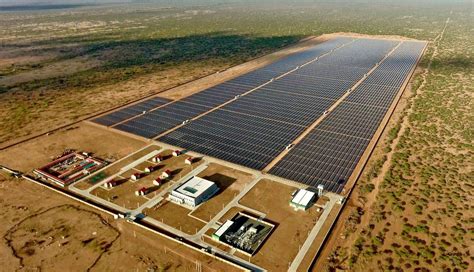
Furthermore, the delivery supports China’s continued push for green energy independence, as the mountain-top solar farm is expected to feed clean electricity to nearby villages and industrial outposts. The project aligns with China’s goal of achieving carbon neutrality by 2060, and sets a new standard for low-impact infrastructure development.
Military Implications Spark Online Speculation
Although the mission was conducted under the banner of civilian infrastructure development, many online commentators and defense analysts have noted the military potential of such drone capabilities. The coordinated and autonomous deployment of heavy-lift UAVs in challenging terrain could be adapted for rapid deployment of materials, supplies, or even tactical gear in conflict zones or disaster-stricken areas.
Chinese netizens on platforms like Weibo and Zhihu were quick to draw parallels to military use cases. Some users dubbed the operation a demonstration of a “logistical airlift system without helicopters,” suggesting potential strategic applications in border regions or emergency relief missions.
While Chinese officials have remained silent on any military angle, the dual-use nature of drone logistics technology cannot be overlooked. The same autonomous systems that carried steel and concrete up a mountain could, in theory, be used to deliver food, water, communication equipment, or medical supplies in regions cut off from traditional access.
Breakthrough in Swarm Intelligence and Autonomous Flight
Another remarkable feature of the mission was its reliance on swarm intelligence algorithms, enabling 16 drones to fly in tandem without collision or interference. These AI-driven flight control systems allowed the drones to self-correct, reroute, and coordinate loads, greatly reducing the need for human oversight.
Each drone was equipped with real-time environmental sensors, allowing them to adapt to sudden changes in wind, temperature, or altitude pressure. Engineers monitoring the system from a nearby ground station reported zero mid-air faults or delivery failures throughout the entire three-day mission.
The underlying AI was reportedly developed by a Beijing-based tech lab specializing in multi-agent systems and dynamic flight route optimization, though details remain under wraps.
Engineering a Path Forward: What’s Next?
Following the success of the Xichou project, the State Grid Corporation of China and its regional subsidiaries are planning further drone-based construction campaigns in Tibet, Sichuan, and Guizhou—regions known for their mountainous topography and logistical challenges. These projects will reportedly include long-range electric transmission lines and remote hydropower station installations.
Engineers have also begun experimenting with next-generation drones capable of carrying loads exceeding 1.5 tonnes, with hybrid propulsion systems for extended flight times. Aerial docking stations, solar-powered charging pads, and airborne relay drones are all in conceptual development stages.
Beyond China’s borders, global infrastructure planners are taking notice. Developing countries in South America, Central Asia, and Sub-Saharan Africa, where transportation infrastructure is lacking, are exploring similar UAV-driven supply chain solutions for road construction, mining operations, and energy deployment.
Labor, Cost, and Efficiency Reimagined
Traditionally, building infrastructure in inaccessible regions required large numbers of manual laborers, heavy equipment, and time-consuming groundworks. These methods are expensive, slow, and often dangerous. By contrast, the drone delivery system drastically reduces manpower requirements, project timelines, and long-term operational costs.
Moreover, the human cost of infrastructure development—particularly in hazardous terrain—is significantly lowered. With autonomous drones replacing high-risk manual carrying roles, workplace injuries and fatalities can be minimized. Experts estimate that in the Xichou project alone, over 2,000 hours of human labor were saved.
A Glimpse Into the Drone-Powered Future
China’s success in delivering 180 tonnes of materials by drone offers a compelling preview of what future construction logistics may look like. As UAV technology continues to evolve, we may see everything from bridge components and modular housing units to agricultural supplies and disaster relief packages delivered by air to locations once considered unreachable.
The Xichou feat marks not only a technological breakthrough but a philosophical one: a future where building the world no longer depends solely on trucks, cranes, or human backs—but on fleets of intelligent, autonomous flying machines.
As the lines between civilian innovation and strategic capability blur, one thing is clear: heavy-lift drones are no longer science fiction—they are the airborne engines of tomorrow’s infrastructure.