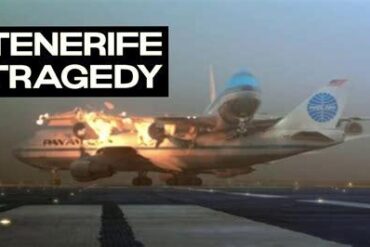
In the annals of aviation history, March 27, 1977 marks an indelible tragedy: the Tenerife airport disaster, the deadliest accident in commercial aviation. At the heart of this catastrophic event was a collision between KLM Flight 4805 and Pan Am Flight 1736, killing 583 people in a harrowing instant. Yet within this darkness, one name stands apart — Robina van Lanschot, a Dutch tour guide who defied regulations and, by a twist of fate, became the sole surviving passenger from the ill-fated KLM flight.
A Decision That Defied Fate
Robina van Lanschot’s life was spared by a single, life-altering choice. Scheduled to fly aboard KLM Flight 4805 with a group of tourists on their way from Amsterdam to Las Palmas via a stop in Tenerife, Robina made a controversial decision. During the unscheduled layover on the island, she opted not to reboard the aircraft. While official aviation protocol required all passengers to return to the plane, she stayed behind, possibly sensing discomfort or simply deciding on a change of plans. That singular deviation from procedure saved her life.
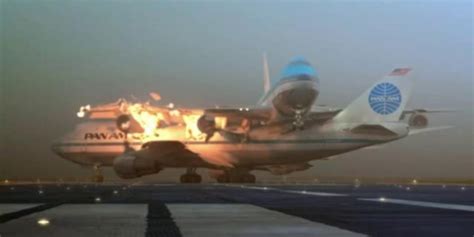
At that time, Robina had been working as a tour guide for Dutch vacationers. Her group was among the many travelers rerouted to Los Rodeos Airport in Tenerife due to a terrorist bombing at their intended destination, Gran Canaria Airport. The temporary diversion turned fatal when two Boeing 747s — one operated by KLM Royal Dutch Airlines, the other by Pan American World Airways — were both forced to taxi on the same fog-covered runway with fatal miscommunications.
The Deadly Chain of Miscommunication and Fog
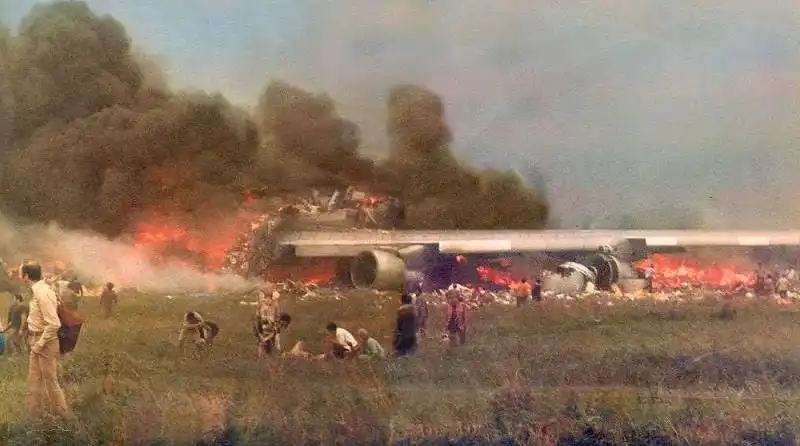
The runway collision that claimed 583 lives was the result of a chilling combination of dense fog, radio miscommunication, and procedural failure. As KLM’s aircraft lined up for takeoff, the crew misinterpreted an unclear ATC (Air Traffic Control) clearance as a green light. Unbeknownst to them, the Pan Am 747 was still taxiing on the same runway. Visibility was limited to a few hundred feet.
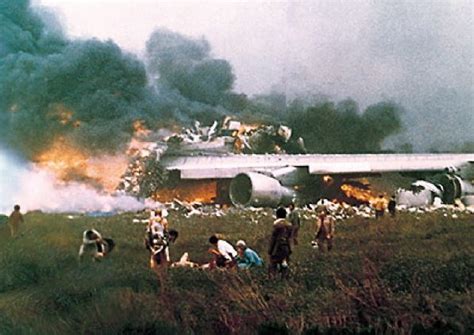
The KLM captain, Jacob Veldhuyzen van Zanten, was a decorated veteran pilot and even featured in KLM advertising. That fact only deepened the disbelief when investigators concluded that he initiated takeoff without definitive clearance. The ensuing collision obliterated both aircraft. Survivors from the Pan Am plane later recounted the nightmarish fireball, the screams, and the rush to escape the mangled wreckage.
Robina, who had been scheduled to sit on KLM 4805, watched the aftermath unfold from the terminal. In the span of minutes, her life trajectory diverged irrevocably from her group’s — all of whom perished.
Survival from the Shadows: Robina’s Quiet Aftermath
Despite the gravity of her story, Robina van Lanschot has lived largely outside the public spotlight. She has granted few, if any, interviews over the decades. Her survival is sometimes mentioned in retrospectives of the disaster, but she has deliberately avoided the attention that might naturally follow such a fate-defying narrative.
In the years following the crash, no official statement from Robina emerged, and her public silence stands in stark contrast to the few other survivors who later spoke about their trauma and survival. Her absence from commemorations and documentaries has left a void in the public record. Her choice not to fly that day remains one of aviation’s most mysterious acts of spontaneous self-preservation.
A Flight Attendant’s Tale of Horror and Strength
While Robina escaped the crash altogether, those on Pan Am Flight 1736 faced a hellish ordeal. Among the few survivors was Joan, a flight attendant whose recollection of the disaster remains one of the most viscerally detailed testimonies.
Strapped into the jump seat near the cockpit, Joan had little warning before the KLM aircraft struck. The cabin floor beneath her collapsed. Along with a fellow crew member, she found herself dangling above the burning galley, surrounded by screams, smoke, and twisted metal. She survived only by crawling barefoot through fire and debris.
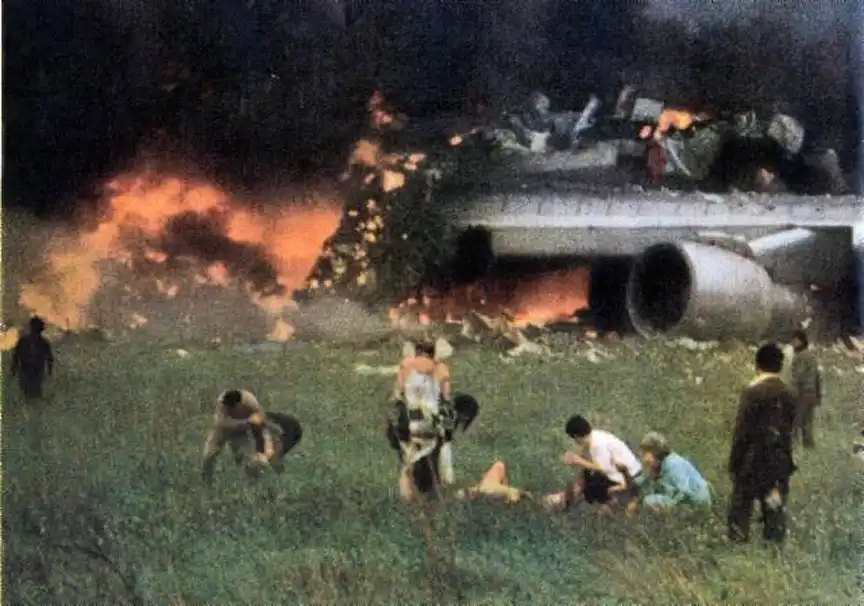
The physical challenge was compounded by absurd policy. Pan Am’s uniform regulations at the time required flight attendants to wear high heels, which made climbing, running, and escaping nearly impossible. Joan had to abandon her heels, only to find the wreckage littered with jagged metal shards that turned the cabin floor into a deadly terrain.
Corporate Negligence and Policy Change
In the wake of the disaster, Joan returned to work, but with one key change: she refused to ever wear high heels during emergencies again. Her decision sparked a confrontation with Pan Am management, which initially attempted to terminate her for violating uniform standards. The airline was met with union resistance, and after a prolonged dispute, the company backed down. Ultimately, Pan Am altered its uniform policy, a long-overdue shift prompted by a disaster that revealed how image-driven policies endangered lives.
Joan’s story did not end with survival. She continued working as a flight attendant for another 30 years, carrying the burden of memory into every flight. In a 2009 layover in Prague, a fellow airline professional with 25 years of experience recounted meeting Joan. She spoke candidly of the crash — not as a headline or history lesson, but as a lifelong scar and a daily reminder of mortality.
The Anatomy of Survival
The Tenerife disaster is often remembered as a case study in aviation errors — a perfect storm of human failure, environmental conditions, and systemic miscommunication. But embedded within that tragedy are outliers, individuals whose survival defied logic.
Joan survived through grit and luck amid the chaos. Robina survived by simply stepping off the expected path. Their stories, though different in tone and arc, reveal a common thread: the thin, unpredictable line between life and death.
The official investigation, conducted by Spanish and international authorities, led to numerous reforms in aviation communication. Standardized phraseology, increased cockpit crew coordination (Crew Resource Management), and clear ATC transmission protocols were direct results. The industry learned, at a profound cost, how to mitigate the kinds of errors that led to Tenerife.
Legacy and Lingering Questions
Today, the Tenerife disaster looms as a ghost over modern aviation — a monument to the consequences of assumption and haste. The story of Robina van Lanschot, however, remains an anomaly within an anomaly. She is one of the few individuals ever documented as surviving an aviation catastrophe by not boarding at the last moment. Her survival was neither engineered nor anticipated. It simply happened.
That quiet twist of fate continues to intrigue aviation historians. What prompted her refusal? Was it fear, foresight, or fatigue? We may never know. But in an industry defined by order, checklists, and protocol, her defiance of all three stands as a testament to intuition beyond rulebooks.
Though she has lived a life away from public scrutiny, Robina van Lanschot’s name will always be linked to one of the darkest days in air travel — not as a victim, but as a spectral witness who stood outside history by inches.
Conclusion: Shadows of a Catastrophe
The Tenerife runway disaster was a crucible that reshaped aviation. From its flames emerged stories of horror, courage, and survival that remain unmatched. In Robina van Lanschot and Joan, we find the two poles of human experience in disaster — the one who never boarded, and the one who endured the flames.
Their lives tell us that history is not only written by victors or victims, but also by survivors — those who carry forward the memory of what was lost, and the miracle of what was spared.