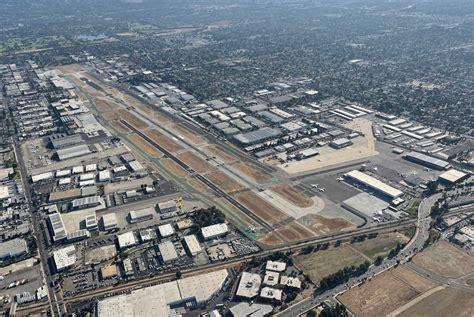
The Academy Awards represent the most visible celebration of the global film industry, but the machinery that makes the event possible extends far beyond the Dolby Theatre. Long before the red carpet unfurls and camera flashes ignite across Hollywood Boulevard, a different kind of choreography unfolds fifteen miles away in California’s San Fernando Valley. At Van Nuys Airport (VNY)—one of the busiest general aviation airports on Earth—Oscars weekend transforms the airfield into the discreet logistical backbone of Hollywood’s most glamorous night.
For a few intense days each year, the airport becomes a gathering point for private jets carrying actors, directors, producers, financiers, and global media executives. The ramp fills with ultra-long-range aircraft capable of crossing oceans nonstop, while fleets of black SUVs glide through private gates beneath rows of palm trees. Ramp marshals replace paparazzi, and instead of cheering crowds, the soundtrack is the steady whine of turbofans spooling down after intercontinental flights.
The phenomenon illustrates an often-overlooked reality of the entertainment industry: global cultural events depend on invisible infrastructure. While millions of viewers focus on fashion, speeches, and golden statues, Van Nuys quietly manages the aviation logistics that allow hundreds of VIP travelers to arrive, depart, and move around Los Angeles on impossibly tight schedules.
The result is an annual aviation spectacle that fascinates pilots, business aviation operators, and industry observers alike. Watching Van Nuys during Oscars weekend reveals a living case study in high-density private aviation operations, where precision planning, airport infrastructure, and luxury travel intersect in a uniquely Hollywood setting.
The Historic Airfield That Became Hollywood’s Gateway
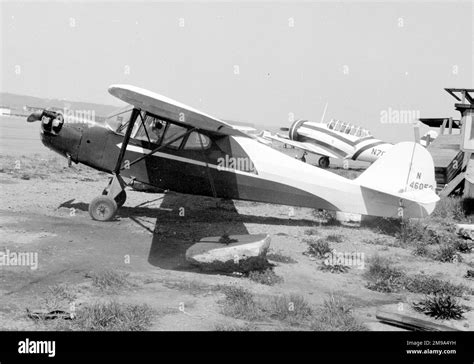
Van Nuys Airport’s modern reputation as the entry point for Hollywood elites is rooted in a long and surprisingly complex aviation history. The airfield opened in 1928 as Metropolitan Airport, during a period when Southern California was rapidly becoming one of the world’s most important aviation regions. The mild climate, vast open land, and emerging aerospace industry created ideal conditions for flight testing, manufacturing, and pilot training.
During the early decades of operation, the airport served multiple roles. Aviation pioneers used its runways for experimental aircraft testing, while early airlines and flight schools expanded operations throughout the Los Angeles basin. As the aviation industry accelerated in the 1930s and 1940s, the airport became closely connected to the broader Southern California aerospace ecosystem, which included legendary companies such as Lockheed and Douglas.
World War II dramatically increased the airfield’s strategic value. The United States military relied heavily on the region’s aviation infrastructure to train pilots, produce aircraft, and support logistics networks. Although larger industrial complexes handled the bulk of aircraft manufacturing, Van Nuys played a crucial role in pilot training and operational support.
After the war, commercial aviation underwent a transformation. Passenger airlines expanded rapidly, and large international airports began to dominate scheduled air travel. In Los Angeles, that role fell primarily to Los Angeles International Airport (LAX). As airline operations consolidated there, Van Nuys gradually evolved into something different—a hub for corporate aviation, charter flights, and private aircraft ownership.
By the 1950s and 1960s, the airport’s location proved irresistible to the entertainment industry. The runways sat only minutes from Hollywood studios, Beverly Hills estates, and the entertainment headquarters scattered across Los Angeles. For actors, producers, and executives, Van Nuys offered something commercial terminals could never provide: privacy, speed, and discretion.
Hollywood noticed quickly. Over the decades, the airport appeared in numerous films and television series. Scenes from productions such as Casablanca, Executive Decision, and Silent Running used its ramps and hangars as cinematic backdrops. Television shows including Airwolf, Alias, and Entourage further cemented the airport’s place in Hollywood lore.
Why Oscars Weekend Turns Van Nuys Into Aviation Ground Zero
The Academy Awards last only a few hours, yet the aviation buildup begins days earlier. Beginning in the middle of the week leading up to the ceremony, flight activity at Van Nuys increases steadily as private jets begin arriving from across the United States and around the world.
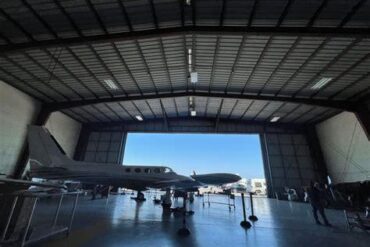
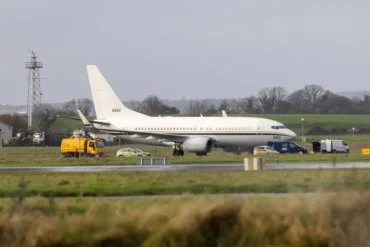
By Friday and Saturday, the airport’s ramps resemble a luxury aircraft exhibition. Gulfstream jets, Bombardier Globals, and Dassault Falcons line the taxiways wingtip to wingtip. Aircraft handlers coordinate arrivals almost continuously as celebrities, producers, financiers, and international media teams converge on Los Angeles.
The airport’s unique role stems from several powerful advantages that make it the preferred entry point for high-profile travelers.
Van Nuys sits roughly fifteen miles from Hollywood and Beverly Hills, which translates into a drive of about twenty to thirty minutes under favorable traffic conditions. For individuals whose schedules are packed with rehearsals, press interviews, private events, and after-parties, those minutes matter.
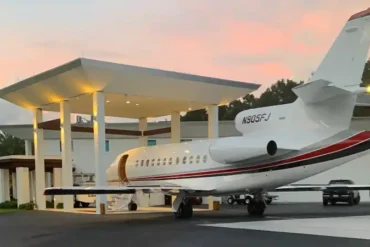
Equally important is privacy. Unlike major commercial airports, Van Nuys operates entirely as a general aviation facility, meaning there are no commercial airline terminals or crowded public concourses. Passengers arrive through private aviation service providers known as fixed-base operators (FBOs). These facilities function like luxury private terminals where arrivals, customs procedures, catering, and transportation occur behind secure gates.
Flexibility completes the equation. Private aviation allows travelers to schedule flights precisely around event commitments. An actor can depart New York after a late-night talk show appearance, land at Van Nuys early the next morning, attend rehearsals, and still have time to prepare for the ceremony.
During awards season, this level of logistical precision becomes invaluable. Hollywood’s calendar compresses into a few intense days filled with screenings, interviews, parties, and award ceremonies. Private aviation acts as the transportation system that keeps the entertainment industry moving.

Runways, Ramps, And The Machinery Behind The Glamour
The glamour associated with private aviation often hides the operational sophistication required to manage a surge of high-end aircraft. Van Nuys Airport’s infrastructure is specifically designed to handle large volumes of business aviation traffic efficiently.
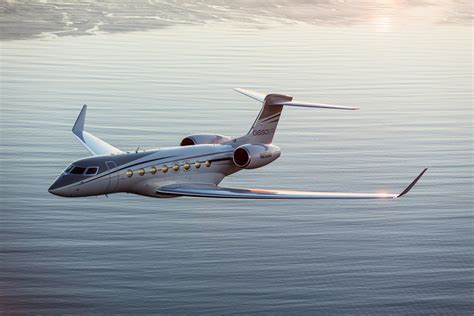
The airfield operates two parallel runways. The longer runway stretches 8,001 feet, providing more than enough distance for heavy business jets such as the Gulfstream G650 and Bombardier Global 7500. These aircraft rank among the most advanced private jets ever built, capable of flying nonstop between continents while offering cabins designed more like luxury apartments than airplanes.
The second runway, measuring 4,013 feet, primarily supports lighter aircraft and helicopter operations. Together, the two runways create the flexibility needed to manage frequent arrivals and departures during peak periods like Oscars weekend.
Along the edges of the airfield sit several major FBOs, including Signature Aviation and Clay Lacy Aviation. These facilities operate like highly specialized hospitality and logistics centers. Inside their terminals, passengers find private lounges, meeting rooms, concierge services, and even gourmet catering kitchens capable of preparing customized inflight meals.
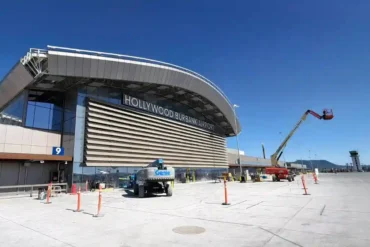
In the weeks leading up to the Academy Awards, FBO operators begin extensive preparations. Aircraft parking reservations must be coordinated well in advance because ramp space becomes extremely limited. Some jets remain parked at Van Nuys for the entire weekend, while others unload passengers and then reposition to nearby airports such as Hollywood Burbank Airport to free up space.
Ramp operations themselves resemble a carefully choreographed dance. As an aircraft approaches its assigned parking position, ground handlers guide the jet using illuminated marshalling wands. Wheel chocks slide into place moments after the aircraft stops. Passenger stairs roll forward, luggage handlers unload baggage, and within minutes passengers step directly into waiting vehicles.
The speed of the process is remarkable. For VIP travelers attending the Oscars, the journey from aircraft cabin to a chauffeured car can take less than five minutes.
The Aircraft That Dominate Hollywood’s Aviation Skyline
Oscars weekend provides aviation enthusiasts with a rare opportunity to see some of the most advanced private jets in the world gathered in one place. These aircraft represent the technological pinnacle of business aviation, combining long range, high speed, and extraordinary interior comfort.
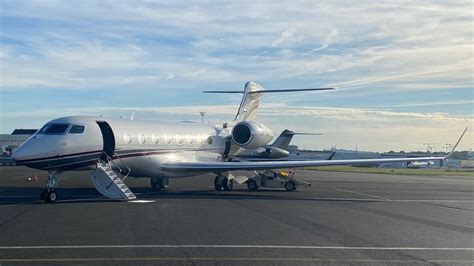
The Gulfstream G650 and G650ER frequently appear on the Van Nuys ramp during major entertainment events. With ranges approaching 7,000 nautical miles, these aircraft can fly nonstop between Los Angeles and cities such as London, Tokyo, or Dubai. Inside, passengers experience wide cabins, panoramic oval windows, and sophisticated cabin pressure systems that reduce fatigue during long flights.
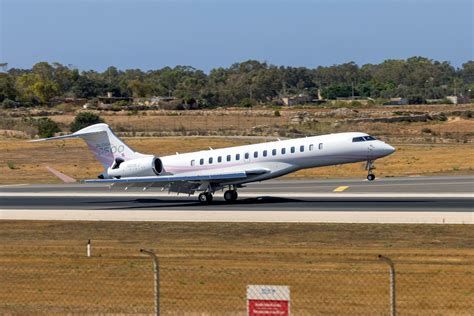
Another frequent visitor is the Bombardier Global 7500, widely regarded as one of the most luxurious business jets ever built. Its cabin includes four distinct living areas, allowing travelers to move between lounge spaces, dining areas, and private bedrooms. The aircraft can fly approximately 7,700 nautical miles, enabling nonstop travel between almost any two major entertainment capitals.
French manufacturer Dassault contributes its own presence with the Falcon 8X, an elegant tri-jet known for its impressive short-runway performance and advanced digital flight controls. The Falcon’s ability to operate efficiently from smaller airports makes it especially attractive to operators managing complex travel itineraries.
Meanwhile, slightly smaller aircraft such as the Embraer Praetor 600 handle many domestic routes. These jets typically shuttle passengers between Los Angeles and cities like New York, Toronto, and Miami during awards season.
Each aircraft represents a tiny slice of a much larger system. When dozens arrive within a narrow window of time, the airport transforms into a dynamic mosaic of global aviation technology.
Managing Airspace In One Of The World’s Busiest Regions
The spectacle on the ground is impressive, but the real complexity unfolds in the skies above Southern California. The Los Angeles region contains one of the most intricate airspace systems in the world, shaped by overlapping commercial airline routes, military operations, helicopter corridors, and dense general aviation traffic.
Van Nuys sits beneath the Class B airspace surrounding Los Angeles International Airport, meaning pilots must coordinate closely with air traffic controllers to safely integrate into the flow of aircraft arriving and departing the region’s largest airport.
During Oscars weekend, that coordination becomes even more demanding. Flight departments often request preferred landing slots days in advance to ensure timely arrivals. Air traffic controllers sequence inbound aircraft carefully, maintaining safe spacing while accommodating the steady stream of business jets approaching the airport.
Aircraft arriving from the north typically descend through the Santa Clarita Valley, while those approaching from the south must maneuver around commercial airline traffic heading toward LAX. Controllers balance efficiency with safety, ensuring that every aircraft transitions smoothly through one of the most crowded skies in North America.
Weather can add additional complexity. Los Angeles frequently experiences marine layer fog during morning hours, reducing visibility and requiring instrument flight procedures. Fortunately, modern business jets are equipped with sophisticated navigation systems capable of executing precision approaches even in challenging conditions.
The result is a carefully orchestrated system where dozens of flights arrive safely within tight operational windows. For pilots and controllers alike, Oscars weekend represents an intense but rewarding test of aviation coordination.
From Aircraft Door To Beverly Hills In Minutes
Once an aircraft touches down and taxis toward its FBO, the final stage of the journey begins. The experience is deliberately designed to be seamless, discreet, and remarkably fast.
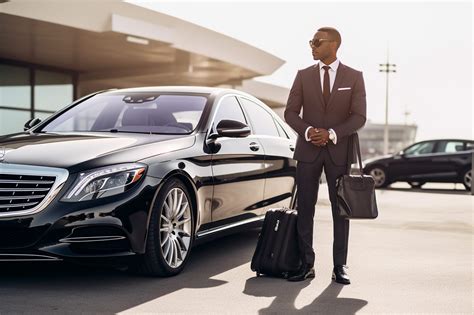
Passengers rarely encounter crowds. Instead, they step from the aircraft directly into secure areas where chauffeured vehicles wait beside the jet. Luggage transfers occur almost instantly, and airport staff coordinate with drivers to ensure immediate departures.
For international arrivals, customs officials may process passengers inside specialized private facilities. This arrangement allows high-profile travelers to clear immigration procedures without entering public terminals.
Within moments of landing, many passengers are already on their way to Beverly Hills hotels, Hollywood studios, or private residences scattered across Los Angeles. In ideal conditions, the journey from runway to hotel suite can take less than half an hour.
This extraordinary efficiency explains why Van Nuys continues to dominate the private aviation landscape during major entertainment events. When every minute matters, the ability to move quickly and discreetly becomes priceless.
Business Aviation’s Hidden Role In Global Cultural Events
Oscars weekend highlights a broader truth about modern travel. Major global events—from film festivals in Cannes to international political summits—often depend on private aviation networks operating quietly behind the scenes.
Commercial airline schedules simply cannot accommodate the fluid, high-pressure travel demands of global industries. Business aviation fills that gap by offering flexibility, privacy, and direct connectivity between cities that may not share frequent airline service.
Van Nuys Airport illustrates this phenomenon perfectly. By absorbing hundreds of private jet movements during major events, the airport acts as a pressure relief valve for Los Angeles’ air transportation system. Without it, additional traffic would likely overwhelm already crowded commercial hubs like LAX.
The future of these operations may evolve as aviation technology changes. Sustainable aviation fuel (SAF) is gradually entering the business aviation sector, reducing lifecycle carbon emissions. New aircraft designs promise improved fuel efficiency, quieter engines, and advanced aerodynamics.
Urban air mobility concepts—such as electric vertical takeoff aircraft—may eventually complement traditional private jets by carrying passengers between airports and city centers. Whether these technologies mature in time to reshape Oscars travel remains an open question, but experimentation is already underway across the aviation industry.
Even as technology advances, certain fundamentals remain constant. Speed, privacy, and proximity to Hollywood will continue to make Van Nuys Airport the preferred aviation gateway for the entertainment world.
Each Oscars season reinforces that reality. While the spotlight shines on the red carpet, the real logistical marvel unfolds quietly on a stretch of concrete in the San Fernando Valley—where the engines of private jets whisper the hidden soundtrack of Hollywood’s biggest night.