Flying is statistically one of the safest modes of transportation, yet when disasters strike the skies, their aftermath often resonates with profound sorrow. Even rarer are the instances where only one person emerges alive from such wreckage—stories that capture the world’s attention due to their unlikely nature and haunting survival details. We explore five of the most tragic plane crashes in aviation history where a single individual lived to tell the tale, while everyone else aboard perished. These events serve not only as somber records but also as remarkable testaments to human resilience and fate.
Juliane Koepcke and the Amazon Ordeal – LANSA Flight 508

On December 24, 1971, LANSA Flight 508 departed Lima, Peru, bound for Iquitos. The aircraft, a Lockheed L-188A Electra, carried 92 passengers and crew, including 17-year-old Juliane Koepcke and her mother. The journey took a tragic turn just 25 minutes after takeoff when the aircraft flew directly into a thunderstorm over the Amazon Rainforest.
A powerful lightning strike hit the right wing, triggering an explosion that tore the aircraft apart mid-air. Juliane, still strapped to her seat, plummeted over 10,000 feet into the dense jungle. In what can only be described as miraculous, she survived the fall with a broken collarbone, a gash to her leg, and severe bruises.
She awoke the next day, dazed and alone in the middle of the Amazon. Drawing upon survival skills taught by her zoologist parents, Juliane navigated the rainforest for 11 harrowing days, living on rainwater and scavenged candy. Finally, she encountered local loggers who helped rescue her.
Cause: The Peruvian aviation authority determined that deliberate flight into extreme weather was to blame. Despite warnings, the crew flew directly into a storm system with severe turbulence and lightning activity.
Vesna Vulović – The Freefall Miracle – JAT Flight 367
Only a month after the LANSA tragedy, on January 26, 1972, JAT Flight 367 exploded in mid-air over what is now the Czech Republic. The aircraft had originated in Stockholm, with planned stops in Copenhagen, Zagreb, and Belgrade. A total of 27 people were on board when it disintegrated at cruising altitude.
Flight attendant Vesna Vulović, who had just joined the airline, was the sole survivor. She plummeted from a height of 10,160 meters (33,330 feet) without a parachute. Her fall was broken by thick snow and the slope of a heavily wooded hill. Vesna was found with a fractured skull, crushed vertebrae, broken ribs, and pelvis, and she remained in a coma for several days.
Defying all odds, she recovered after months of treatment, though she retained a lifelong limp due to spinal injuries. Her survival remains the Guinness World Record for the highest fall survived without a parachute.

Cause: Investigations initially blamed a bomb planted by Croatian separatists in the baggage compartment. Later allegations speculated that Czechoslovak air defenses mistakenly shot the plane down, but no conclusive evidence surfaced to fully support either theory.
Cecelia Cichan – The Miracle Child – Northwest Airlines Flight 255
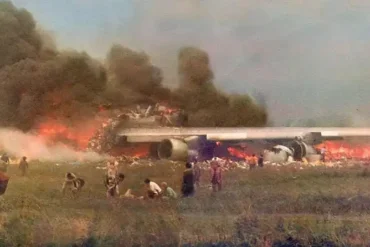
On August 16, 1987, Northwest Airlines Flight 255 departed Detroit Metropolitan Airport, bound for Phoenix, Arizona. Just seconds after takeoff, the McDonnell Douglas MD-82 aircraft crashed onto a highway overpass. 156 people, including two on the ground, were killed in the inferno.
Among the devastation, 4-year-old Cecelia Cichan was discovered alive beneath a seat. Her parents and 6-year-old brother died in the crash. Despite suffering a fractured skull, broken collarbone, leg injuries, and severe burns, she became a symbol of hope in an otherwise dark tragedy.
Firefighter Lt. John Thiede rescued her after hearing faint cries. Cecelia underwent numerous surgeries, including skin grafts, and was later raised by relatives in relative anonymity.
Cause: The NTSB determined that the flight crew failed to engage the aircraft’s flaps and slats—critical for takeoff. Compounding the error, the takeoff warning system failed due to a lack of electrical power, leaving the pilots unaware of the misconfiguration.
Bahia Bakari – Lost at Sea – Yemenia Flight 626
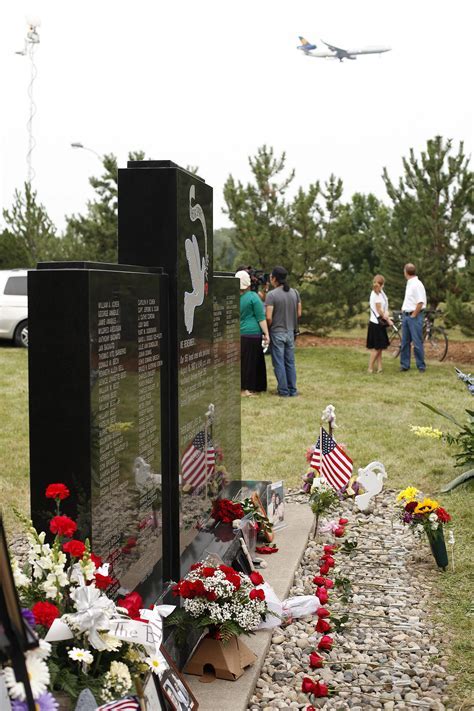
On June 30, 2009, Yemenia Flight 626, en route from Sana’a to Moroni in the Comoros Islands, crashed into the Indian Ocean during final approach. The Airbus A310 was carrying 153 people. Only 12-year-old Bahia Bakari survived.
Thrown into darkness and chaos, Bahia clung to a piece of fuselage for nearly nine hours, drifting alone in the rough sea. She had no life vest, couldn’t swim, and was injured with a broken collarbone and burns. Eventually, a civilian vessel spotted and rescued her.
Her story earned her the moniker “the miracle girl.” Despite her injuries and trauma, she later wrote a memoir detailing her experience.
Cause: The final report found pilot error as the primary factor. The crew, overwhelmed by multiple cockpit warnings and lacking situational awareness, failed to maintain control, causing the aircraft to stall irrecoverably. A combination of poor crew resource management and confusion over the aircraft’s trajectory contributed significantly.

Ruben van Assouw – Survivor in the Sand – Afriqiyah Airways Flight 771
On May 12, 2010, Afriqiyah Airways Flight 771, arriving in Tripoli, Libya from Johannesburg, South Africa, crashed while attempting to land. The Airbus A330 disintegrated on impact, killing 103 people, including Ruben van Assouw’s entire family.
At just nine years old, Ruben was found still strapped to his seat in the mangled wreckage, critically injured. He suffered multiple fractures in his legs and was temporarily paralyzed, but later regained mobility after intensive rehabilitation.
The boy was flown back to the Netherlands after initial treatment and was placed under the care of his extended family. His survival drew widespread media coverage and an outpouring of public support.
Cause: The investigation by Libya’s Civil Aviation Authority concluded pilot error during the approach phase. Distractions in the cockpit, poor coordination, and a lack of adherence to standard approach procedures were all cited. Fatigue and complacency may also have played roles.

The Psychology and Probability of Sole Survivors
Statistically, it is exceedingly rare to be the only person to survive an airplane disaster. These anomalies spark debates around fate, luck, and resilience. The U.S. NTSB once published data suggesting that 95% of passengers survive aviation accidents, but this generally includes less catastrophic events. When it comes to total or near-total loss incidents, the odds plummet.
Yet the stories of Koepcke, Vulović, Cichan, Bakari, and van Assouw challenge those odds. Medical professionals suggest that a combination of physical factors, such as seating position, structural integrity of the fuselage, and sometimes body mass, may influence survivability. Psychological studies also examine the long-term trauma and survivor’s guilt often carried by these individuals.
In every case, one element stands clear: these sole survivors not only escaped physical devastation but faced decades of emotional reconstruction in its aftermath. Their stories are often less about miraculous survival and more about unfathomable resilience in the face of loss.
Conclusion: Stories Etched in Aviation History
Each of these five tragic crashes offers more than a case study in aviation failure; they offer profound human stories that remind us of the fragility of life and the power of endurance. Though thousands perish in aviation disasters worldwide, the narrative of a lone survivor speaks louder than black boxes or flight recorders. These individuals became symbols—not just of survival, but of life continuing when all logic says it should have ended.
While aviation safety has improved remarkably over the decades, these stories remain permanent fixtures in the history of flight, offering both cautionary lessons and remarkable inspiration.