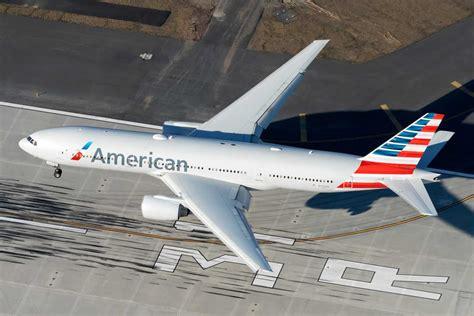
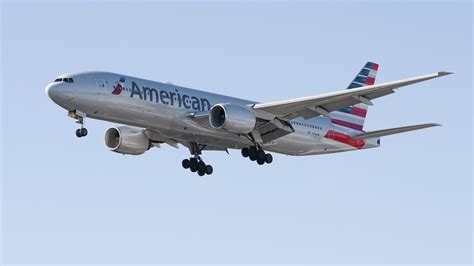
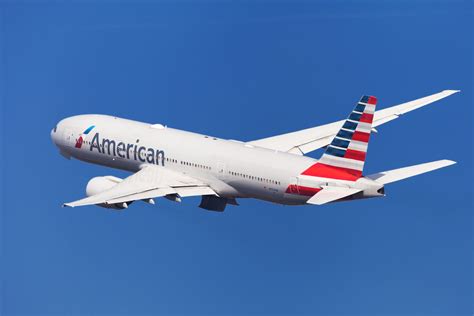
American Airlines enters 2025 with a fleet of forty-seven Boeing 777-200ER aircraft, forming a crucial backbone of its long-haul operations despite an average age of twenty-five years. The airline continues to rely heavily on this aircraft type across high-demand international markets, using its range, payload capacity, and flexible cabin layout to support transatlantic, transpacific, and deep-South American routes. Even as the global fleet trends toward newer twin-engine widebodies, American retains the 777-200ER as a proven, high-utilization workhorse and has committed to a full interior retrofit to elevate the onboard experience.
The reliability of the 777-200ER and the aircraft shortage triggered by delayed Boeing 787 Dreamliner deliveries have further reinforced its importance. With American adapting its network planning for 2025, the 777-200ER continues to shoulder many of the airline’s most strategically valuable long-haul sectors.
As we examine where the aircraft will fly throughout 2025, the data highlights a clear pattern of deployment that aligns with American’s global hub architecture and international demand flows.
Dominance On Transatlantic Routes To Europe
Europe remains the largest and most influential market for American’s 777-200ER network. The aircraft operates intensively from major U.S. hubs into Europe’s busiest airports, providing consistent capacity on routes where demand remains strong year-round. London Heathrow, Madrid, Frankfurt, Paris Charles de Gaulle, and Munich all see frequent 777-200ER service, reflecting the aircraft’s versatility and the high traffic density between these cities and American’s U.S. hubs.
In 2025, London Heathrow (LHR) stands out as the most heavily served international destination for the aircraft. The 777-200ER connects Heathrow with a wide spread of American hubs, including Charlotte, New York JFK, Boston, Los Angeles, and Raleigh-Durham. These routes rank among the most frequently operated 777-200ER flights in the airline’s schedule. Heathrow’s central role as a oneworld mega-hub intensifies American’s reliance on the type, ensuring a steady transatlantic bridge supported by strong premium-cabin demand.
Madrid further strengthens the network’s European dimension. Serving both leisure and business traffic, Madrid functions as American’s secondary European gateway for the 777-200ER, connected directly to Charlotte, Miami, and additional hubs. The aircraft’s balanced configuration, with a mid-sized premium cabin and substantial economy seating, fits these markets efficiently.
A Crucial Workhorse For Latin America From Miami And Dallas
In Latin America, the 777-200ER is indispensable. Miami serves as American Airlines’ central South American gateway, and the aircraft operates some of the longest flights in the system from this hub. In 2025, the 777-200ER will continue flying high-demand routes including Buenos Aires (EZE), São Paulo (GRU), Rio de Janeiro (GIG), and Santiago (SCL). These markets consistently support large premium-cabin volumes and substantial cargo demand, categories in which the 777-200ER remains highly competitive.
Miami’s reach extends beyond South America. Seasonal surges and large leisure markets such as Cancun, San Juan, and Las Vegas also receive 777-200ER service during peak periods to optimize fleet utilization. The aircraft’s lower premium density compared to the 777-300ER makes it well-suited for these strong but less business-centric markets.
Dallas-Fort Worth enhances the aircraft’s significance even more. As American’s largest hub, DFW uses the 777-200ER across multiple continents, connecting Latin America, Europe, and Asia while also deploying the aircraft on select domestic sectors when seasonal demand requires widebody lift.
Transpacific Links To Asia From Dallas-Fort Worth
Although Europe and Latin America dominate overall utilization, the Boeing 777-200ER also maintains a quiet but important role in American’s Asia network. In 2025, Dallas-Fort Worth (DFW) remains the primary transpacific launch point for the aircraft. Routes such as Seoul Incheon (ICN) and Tokyo Narita (NRT) rely on the 777-200ER to maintain daily long-haul connectivity while American awaits additional Dreamliner deliveries.
These missions underline the aircraft’s range and payload strengths. Even though American plans to increase 787-9 flying once its remaining orders arrive, the 777-200ER remains essential to preserving schedule continuity in its Asia portfolio throughout 2025.
Hub Deployment Patterns Across The U.S.
The 777-200ER’s distribution across American’s ten domestic hubs reveals a clear operational emphasis. Miami, Dallas-Fort Worth, and Charlotte host the majority of 2025 flying for this aircraft type.
Miami dominates South America routes and peak-season Caribbean demand. Dallas-Fort Worth carries the widest mix of missions, spanning Europe, Asia, and domestic widebody flights. Charlotte is a surprise standout, acting as a consistent transatlantic gateway despite its smaller size compared to American’s mega-hubs. The 777-200ER’s moderate premium capacity and efficient layout make it ideal for Charlotte’s thinner but steady European traffic.
Raleigh-Durham remains a noteworthy non-hub outlier, operating a daily 777-200ER flight to London Heathrow—one of American’s most unique widebody deployments.
Fleet Context: Why The 777-200ER Remains Essential
American’s long-haul fleet in 2025 totals 136 widebody aircraft across the 777 and 787 families. The airline retired multiple older types—including the Airbus A330, Boeing 757, and Boeing 767—during 2020, simplifying maintenance and training but also reducing fleet flexibility. The unexpectedly rapid rebound in international travel, combined with severe supply-chain delays affecting Rolls-Royce engines and Boeing 787 production, created a significant fleet shortfall.
This context explains the 777-200ER’s longevity. While aging, the aircraft bridges a crucial capacity gap at a time when American cannot afford to withdraw it. The type’s pending retrofit confirms its central role for at least several more years, elevating its cabins to match American’s newest premium products, including the Flagship Suite.
Cabin Configuration And Upcoming Retrofit Program
The 777-200ER fleet seats 273 passengers across three cabins: 37 lie-flat business-class seats, 24 premium economy seats, and 212 standard economy seats. Each seat includes personal entertainment screens and power outlets. Although age might suggest declining relevance, American Airlines has committed to expanding premium capacity by roughly twenty-five percent through an extensive interior redesign.
The retrofit will align the 777-200ER with the Dreamliner and the upcoming Airbus A321XLR product standard, ensuring cohesive service quality across all long-haul aircraft. These enhancements strengthen the aircraft’s competitiveness in transatlantic and transpacific premium markets.
The 777-200ER’s Strategic Future Beyond 2025
As American Airlines continues integrating new Dreamliners and prepares for the arrival of forty-nine Airbus A321XLR aircraft, the long-term network configuration may gradually shift. However, through 2025 and likely well into the decade, the Boeing 777-200ER will remain a cornerstone of American Airlines’ global footprint. Its ability to balance capacity, range, and operational efficiency ensures it stays deeply embedded in the most essential long-haul corridors of the network.
From Europe’s busiest hubs to the farthest reaches of South America, the 777-200ER continues to fly some of American Airlines’ most strategically important missions. Its ongoing modernization will only reinforce its value as the airline navigates a period of fleet renewal, international expansion, and evolving global demand.