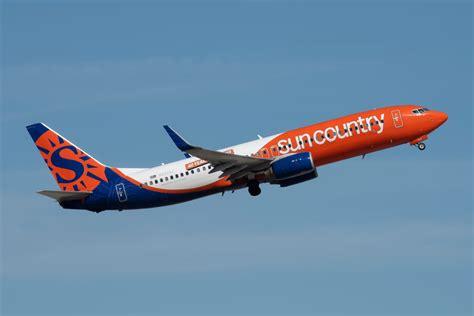
Tulsa International Airport has officially entered a new era. For the first time in the airport’s nearly 100-year history, travelers can now board a scheduled commercial international flight directly from Tulsa without connecting through another US hub. The milestone became reality on May 21, when Sun Country Airlines inaugurated nonstop service between Tulsa International Airport (TUL) and Cancun International Airport (CUN).
The launch represents far more than a new vacation route. It signals a dramatic shift for northeastern Oklahoma’s aviation landscape, ending decades of dependence on major transfer airports such as Dallas/Fort Worth, Houston, Atlanta, and Chicago for overseas travel. For local travelers, the new flights slash travel times and eliminate the stress of lengthy layovers that had become routine for international journeys.
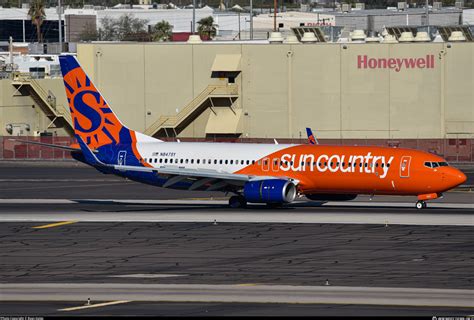
Sun Country Airlines is operating the route twice weekly using Boeing 737-800 aircraft, with departures scheduled every Thursday and Sunday. The seasonal service immediately becomes one of the most historically significant route launches in Tulsa aviation history.
The timing is symbolic as well. Tulsa International Airport is approaching its centennial anniversary, and airport leadership has positioned this launch as the beginning of a much broader international strategy.
After years of planning, infrastructure investment, and growing passenger demand, Tulsa has finally joined the list of US airports offering direct international commercial service.
Tulsa-Cancun Flights Eliminate Longstanding Travel Frustrations
For years, Tulsa travelers heading overseas faced a predictable routine: connect through another city before reaching any international destination. Even though international travel demand from the Tulsa region remained strong, the airport lacked the customs infrastructure necessary to process arriving airline passengers from abroad.
Cancun consistently stood out as Tulsa’s largest unserved international market. Thousands of passengers from Oklahoma were already traveling there annually, but every trip required a stop at another US airport first.
The new route changes that entirely.
Sun Country’s Tulsa-to-Cancun flights depart at 11:02 AM and arrive in Cancun at 1:48 PM. Return flights leave Cancun at 2:50 PM and land back in Tulsa at 5:53 PM. The schedule is specifically designed for leisure travelers seeking streamlined access to one of Mexico’s most popular beach destinations.
Current operating details include:
- Route: Tulsa (TUL) to Cancun (CUN)
- Launch Date: May 21, 2026
- Frequency: Thursdays and Sundays
- Aircraft: Boeing 737-800
- Airline: Sun Country Airlines
The convenience factor is massive for travelers across Oklahoma and neighboring regions. Instead of enduring multi-hour layovers in Texas hubs or risking missed connections during busy travel seasons, passengers can now fly directly to the Caribbean coastline in under three hours.
That simplicity is expected to drive even stronger demand moving forward.
A $41 Million Customs Facility Made International Flights Possible
Behind the celebratory inaugural flight sits a major infrastructure investment years in the making.
Tulsa International Airport recently completed a brand-new Federal Inspection Services facility specifically designed to accommodate commercial international arrivals. Without it, scheduled international airline service simply could not happen.
The project cost approximately $41 million and includes:
- Dedicated customs and immigration processing areas
- International baggage handling systems
- Expanded passenger screening checkpoints
- Modernized arrival corridors
- New passenger waiting and processing amenities
Construction began in 2024 and was completed just ahead of the Cancun launch.
Before the facility opened, US Customs and Border Protection already maintained operations at Tulsa for cargo aircraft and private aviation traffic. However, the airport lacked the federally approved infrastructure required for processing large numbers of arriving commercial airline passengers.
The new 45,000-square-foot complex fundamentally changes Tulsa’s capabilities.
Airport executives have repeatedly emphasized that Cancun is not intended to remain the airport’s only international destination. Instead, officials describe the customs facility as a long-term platform for future expansion into Mexico, the Caribbean, and potentially additional overseas markets.

Tulsa Already Generates Massive International Passenger Demand
What makes Tulsa’s international launch particularly striking is that the region already supports substantial overseas travel volume despite previously lacking nonstop service.
During the 12-month period ending in March 2026, Tulsa generated approximately 270,000 international passengers. That equals roughly 740 international travelers every single day.
Airport data revealed Tulsa’s top international destinations included:
- Cancun
- London
- Los Cabos
- Punta Cana
- Puerto Vallarta
- Tokyo
- Vancouver
- Montego Bay
- Nassau
- Rome
Cancun alone accounted for roughly 24,000 annual passengers, making it by far the airport’s strongest international market.
Those numbers explain why airport planners viewed Cancun as the logical first destination. The demand already existed naturally within the region. The challenge was simply providing direct access.
Previously, Tulsa passengers relied heavily on connecting hubs including Dallas/Fort Worth International Airport, Houston Intercontinental, Atlanta Hartsfield-Jackson, Chicago O’Hare, and Charlotte Douglas. The new nonstop route removes those intermediate steps entirely for one of Tulsa’s busiest international travel markets.
The implications extend beyond convenience. Direct international flights often help airports strengthen business investment opportunities, tourism growth, and regional economic competitiveness.
For Tulsa, the psychological impact may be just as important as the operational one. The airport is no longer solely a domestic facility feeding larger hubs. It now functions as an international gateway in its own right.
Sun Country Expands Tulsa Network With Minneapolis Flights
The Cancun service was not the only addition unveiled by Sun Country Airlines.
On the same day international flights began, the carrier also launched new nonstop service between Tulsa and Minneapolis–Saint Paul International Airport. Like the Cancun route, the Minneapolis flights operate twice weekly on Thursdays and Sundays using Boeing 737-800 aircraft.
The expansion gives Tulsa travelers another low-cost leisure-oriented airline option while helping diversify the airport’s route network.
Sun Country has increasingly focused on underserved mid-sized US cities where leisure demand remains strong but nonstop connectivity opportunities remain limited. Tulsa fits that strategy perfectly.
Airport officials believe the dual-route launch could encourage additional carriers to evaluate Tulsa for future expansion opportunities, especially now that international customs infrastructure is fully operational.
Tulsa’s International Ambitions May Only Be Beginning
The significance of Tulsa’s first scheduled international commercial route stretches beyond a single destination.
Airports across the United States increasingly compete for direct international connectivity because such routes often stimulate tourism spending, corporate investment, and regional visibility. For decades, Tulsa lacked the facilities to participate in that competition fully.
Now the airport has both the infrastructure and the demonstrated passenger demand to support broader ambitions.
Mexico and Caribbean destinations remain the most likely near-term expansion targets because of strong leisure demand from Oklahoma travelers. However, airport planners are expected to monitor performance closely before pursuing additional routes.
The successful launch also arrives during a broader trend of secondary US airports pursuing international service opportunities. Richmond International Airport, for example, is preparing to restore international flights in 2027 after losing Bermuda service earlier this year.
Tulsa’s situation stands apart because this is not a restoration. It is a true first.
For an airport nearing its 100th anniversary, the inaugural Cancun departure marks one of the defining moments in its modern history — and potentially the first chapter of a much larger international future.