Deferred maintenance plays a significant role in commercial aviation, allowing airlines to maintain operational schedules without compromising safety. Airlines utilize a Minimum Equipment List (MEL) to categorize aircraft systems and specify what must be functional before a flight can take off. While ADDs facilitate the continuation of services during minor discrepancies, they come with strict monitoring and compliance requirements. If an ADD exceeds its designated timeframe, the aircraft cannot operate until the necessary maintenance is performed.
This incident with Flight KL691 serves as a prime example of how stringent aviation standards are enforced. The need for compliance stems not just from internal policies but also from broader regulatory frameworks designed to uphold aviation safety. By opting to return to Amsterdam, KLM demonstrated its commitment to maintaining these high standards, prioritizing regulatory compliance over potential inconvenience to passengers.
Logistical Challenges of In-Flight Maintenance
Another critical factor influencing the decision to return to AMS was the logistical feasibility of addressing maintenance issues at Toronto Pearson. While YYZ is one of North America’s busiest international airports, it lacks the specific infrastructure and certified technical support needed for KLM to address the maintenance requirement effectively. The necessary parts and qualified personnel were located in Amsterdam, KLM’s primary maintenance hub.
Operating a complex aircraft like the Airbus A330-300 requires specialized tools and highly trained technicians, particularly when it comes to time-sensitive maintenance tasks. Attempting to resolve such issues at an outstation could lead to delays that last several days, severely impacting the airline’s overall schedule and aircraft rotation. By returning to Schiphol, KLM ensured that the maintenance issue could be addressed swiftly and effectively, preserving the long-term efficiency of its fleet while adhering to safety protocols.
KLM’s Response to the Incident
Upon returning to Amsterdam, the affected passengers were understandably disappointed. However, KLM representatives reassured them that their safety was never in jeopardy. The airline promptly made arrangements for accommodations, meals, and alternative travel options for those impacted by the disruption. Some passengers were rebooked on the next available flights to Toronto, while others were offered options to reroute through connecting hubs.
KLM issued a public statement confirming that the situation, though regrettable, was handled in full compliance with safety and maintenance regulations. They emphasized that the aircraft was not in danger and that the return was a precautionary measure to uphold mandatory protocols. This response aligns with KLM’s longstanding reputation for prioritizing safety and operational integrity, reinforcing the airline’s commitment to ensuring passenger confidence in their travel experiences.
The Aircraft: Airbus A330-300 PH-AKA
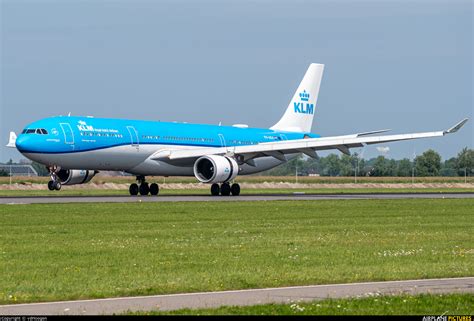
The aircraft involved in this incident, the Airbus A330-300 registered PH-AKA, has been a part of KLM’s fleet since 2012. Known for its reliability and efficiency, this wide-body jet is powered by two General Electric CF6-80 engines, allowing it to serve a variety of long-haul destinations across North America, Asia, and the Middle East. With a passenger capacity of approximately 292, the aircraft is an essential component of KLM’s intercontinental operations. Its turn-back due to maintenance needs is a rare occurrence, further underscoring KLM’s stringent adherence to technical oversight and safety protocols.
Final Thoughts on KLM Flight KL691’s Turnaround
The mid-Atlantic U-turn of KLM Flight KL691 illustrates the challenges that even well-planned flights can encounter. This incident was not the result of mechanical failure or an emergency but rather a testament to the importance of maintaining the highest standards of maintenance discipline within the aviation industry. By prioritizing compliance and safety over convenience, KLM reaffirmed its dedication to operational excellence.
For both passengers and aviation professionals, this episode serves as a real-world reminder of the complexities that underpin air travel. Behind the scenes, airlines like KLM work diligently to ensure that every flight remains safe, legal, and dependable—even when that means making the difficult decision to turn back mid-journey.