Obtaining a Private Pilot Certificate is a transformative journey that combines technical proficiency, regulatory compliance, and extensive flight experience. For aspiring aviators, understanding the full scope of requirements is essential to staying on track and ensuring a successful checkride. In this comprehensive guide, we outline everything required—from the initial student pilot stage to the final checkride—detailing the milestones that define your path to becoming a certified private pilot in the United States.
Eligibility Criteria and Language Proficiency
To begin your flight training, you must meet the minimum eligibility criteria outlined by the Federal Aviation Administration (FAA):
- Be at least 16 years old to qualify for a Student Pilot Certificate.
- Be at least 17 years old to receive a Private Pilot Certificate.
- Be able to read, speak, write, and understand English proficiently, as it is the global language of aviation.
These fundamental requirements serve as the entry gate into a world of rigorous training and specialized skill development.
Medical Certification and Student Pilot Endorsements
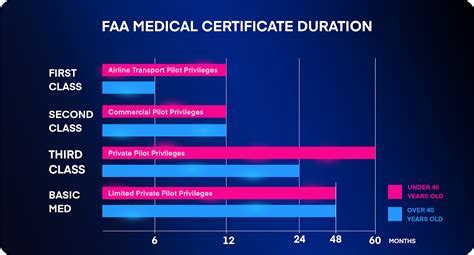
Before solo flight, you must undergo a medical evaluation by an FAA-authorized Aviation Medical Examiner (AME). A Third-Class Medical Certificate is the minimum required for private pilots, and it must be obtained before receiving solo flight endorsements.
You will also need to obtain a Student Pilot Certificate, typically issued electronically via the Integrated Airman Certification and Rating Application (IACRA) platform, and endorsed by your flight instructor.
Ground School and Aeronautical Knowledge Requirements
Ground training forms the academic backbone of pilot certification. Through a certified ground school course—either online, in-person, or via home-study—you will learn the theory and regulations governing flight. Topics include:
- Principles of aerodynamics
- Meteorology
- FAA regulations (Part 61 and 91)
- Airspace classifications
- Weight and balance
- Radio communications
- Navigation and flight planning
Before your written test, your instructor will endorse your readiness based on FAA Regulation 61.105, signaling that you’ve acquired sufficient theoretical knowledge.
Dual Flight Training Requirements (Minimum 20 Hours)
To qualify for the private pilot checkride, you must log at least 20 hours of flight instruction with a Certified Flight Instructor (CFI) in accordance with FAA Part 61.109. These must include:
- 3 hours of cross-country training in a single-engine airplane.
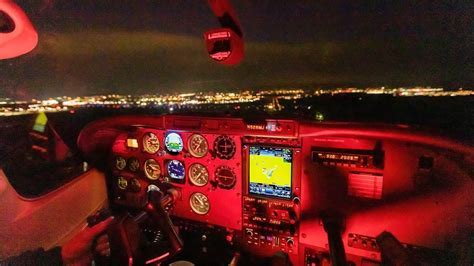
- 3 hours of night flying, with:
- One cross-country flight over 100 nautical miles (nm).
- 10 takeoffs and 10 full-stop landings in traffic patterns.
- 3 hours of instrument training, focusing on control by reference to instruments only, including:
- Straight and level flight
- Constant airspeed climbs/descents
- Turns to a heading
- Radio communications and navigation systems use
This segment ensures you are prepared for both day and night VFR conditions and have a strong foundation for eventual IFR (Instrument Flight Rules) training.
Solo Flight Requirements (Minimum 10 Hours)
Solo time is a critical component of your training. A minimum of 10 solo hours must be logged, including:
- 5 hours of cross-country solo flying.
- One solo cross-country flight that covers at least 150nm, with:
- Three full-stop landings at three different airports.
- One leg of the journey covering at least 50nm.
- Three takeoffs and landings to a full stop at an airport with an operating control tower.
Before you can conduct solo flights, you must complete:
- Presolo aeronautical knowledge test under §61.87(b).
- Flight training covering maneuvers and procedures as defined in §61.87(c).
- Local and cross-country solo endorsements under §61.87(p)(v) and §61.93(c).
Each endorsement must be documented and signed by your CFI. Additionally, solo endorsements are valid for 90 days, after which they must be reissued.
Required Areas of Operation and Flight Proficiency
Your training must cover the FAA-mandated Areas of Operation. Mastery of these subjects is evaluated during your checkride and must be practiced until proficiency is demonstrated:
- Preflight preparation and procedures
- Takeoffs, landings, and go-arounds
- Performance maneuvers (e.g., steep turns, slow flight, stalls)
- Navigation (VFR cross-country planning and execution)
- Night operations
- Instrument maneuvers
- Emergency operations
- Postflight procedures
Each skill is not merely taught but refined through continuous practice to the point of proficiency, ensuring the pilot’s readiness for real-world scenarios.
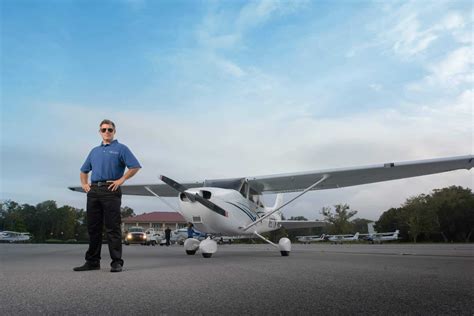
Advanced Flight Skills and Maneuvers
Beyond basic maneuvers, private pilots must demonstrate mastery of more technical skills:
- Soft field and short field takeoffs/landings
- Go-arounds and forward slips to landing
- Steep turns and ground reference maneuvers
- Straight and level flight
- Controlled climbs and descents
Competency in radio communications is also essential, particularly when operating within controlled airspace. These advanced maneuvers form the foundation for more complex flight operations as you progress.
Final Preparation for the Checkride
As your training concludes, certain time-sensitive steps must be completed within two calendar months of your checkride date:
- 3 hours of flight instruction to fine-tune maneuvers and scenarios.
- Completion of ground school and written knowledge test, with an endorsement from your instructor.
- Checkride endorsements, which confirm you’ve met the prerequisites under §61.39(a)(6), §61.103(f), §61.107(b), and §61.109.
This final phase is crucial and often includes simulated emergency procedures, mock checkrides, and intensive review of oral exam topics.
The FAA Checkride and Certification
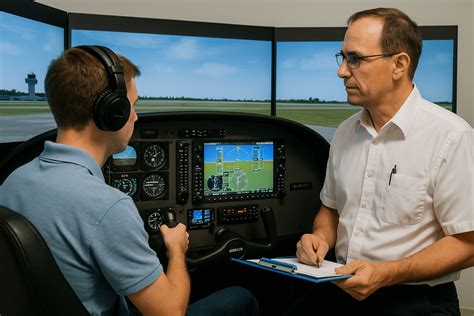
The FAA Practical Test, commonly known as the checkride, consists of two parts: the oral exam and the flight test. The oral exam assesses your understanding of aeronautical knowledge areas, including regulations, weather interpretation, aircraft performance, and cross-country planning. The flight test follows and evaluates your ability to perform maneuvers safely and within FAA standards.
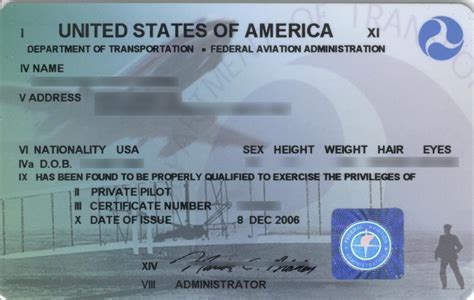
Upon successful completion, the Designated Pilot Examiner (DPE) will issue a temporary Private Pilot Certificate—your official entry into the world of certified flight.
If the checkride is discontinued due to weather or other uncontrollable factors, or if the examiner issues a notice of disapproval, further training and re-evaluation may be required.
Conclusion: The Road to Private Pilot Success
Becoming a Private Pilot involves far more than flying a plane—it’s a structured, regulated process that develops technical skill, decision-making ability, and aeronautical judgment. From obtaining a Student Pilot Certificate to mastering instrument maneuvers, each stage is designed to transform a novice into a safe and competent pilot.
By adhering strictly to the FAA’s requirements and maintaining a disciplined training schedule, students can confidently progress through each milestone. The checkride is not the end, but rather the beginning of a lifelong journey in aviation.