Automatic Dependent Surveillance–Broadcast (ADS-B Out) has become a cornerstone of modern aviation surveillance. Mandated under FAR 91.225 in the United States and gaining traction globally, this system significantly enhances situational awareness, traffic management, and flight safety. However, understanding where ADS-B Out is required—both within U.S. airspace and internationally—demands close attention to geography, altitude, and aircraft classification.
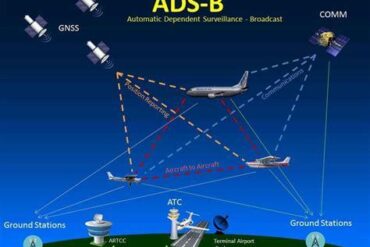
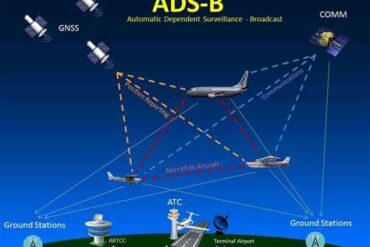
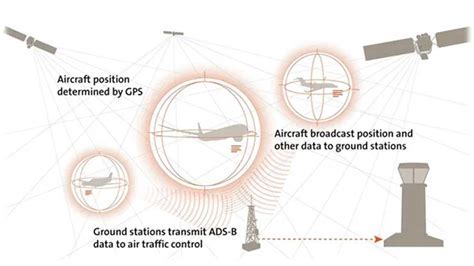
ADS-B Out transmits an aircraft’s GPS-derived position, velocity, and identification to air traffic control and nearby equipped aircraft. Unlike ADS-B In, which receives data, ADS-B Out is mandatory in specific airspace zones. Failure to comply can result in denied access to controlled airspace, serious regulatory penalties, and operational inefficiencies.
U.S. Domestic Requirements: A Regulatory Framework Defined by FAR 91.225
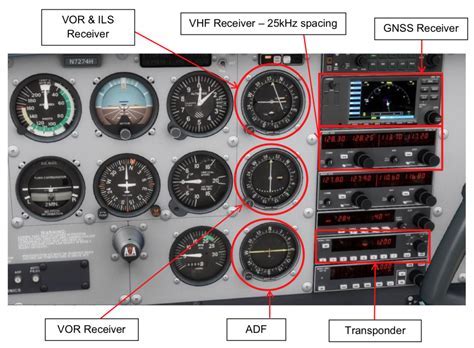
Within the continental United States, the Federal Aviation Administration (FAA) requires ADS-B Out equipage in clearly defined airspace sectors. As of January 1, 2020, aircraft must be equipped with either 1090ES (Extended Squitter) transponders or 978 MHz UAT (Universal Access Transceiver) units, depending on altitude and aircraft type.
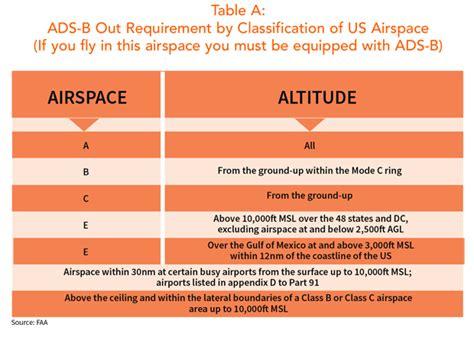
The U.S. ADS-B Out rule applies to the following airspace classifications:
• Class A Airspace: All operations from 18,000 feet mean sea level (MSL) and above require a 1090ES transponder. This high-altitude space is reserved for Instrument Flight Rules (IFR) traffic and managed strictly by ATC.
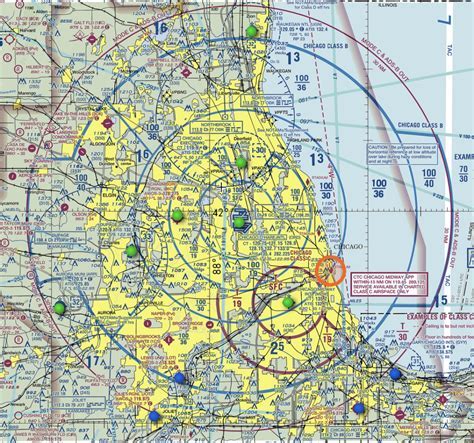
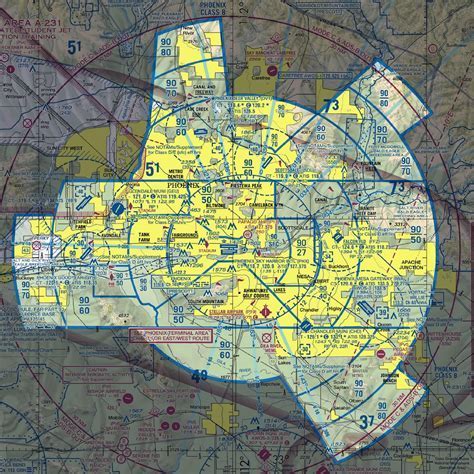
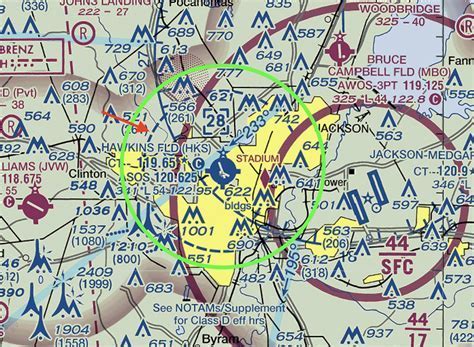
• Class B Airspace: ADS-B Out is required within and above the lateral limits of Class B zones, extending up to 10,000 feet MSL. These areas encircle major hub airports like Atlanta (ATL) or Chicago O’Hare (ORD).
• Class C Airspace: Requirements mirror Class B, encompassing the lateral boundaries and vertical ceiling of the controlled zone, up to 10,000 feet MSL.
• Class E Airspace at or Above 10,000 feet MSL: Except for zones at or below 2,500 feet above ground level (AGL), aircraft must be equipped when operating at high altitudes in this controlled environment.
• Mode C Veil (30 NM Radius of Class B Primary Airports): This unique zone imposes ADS-B Out equipage from the surface up to 10,000 feet MSL within a 30-nautical-mile radius of the busiest U.S. airports.
• Special Rule for the Gulf of Mexico: ADS-B Out is also required in Class E airspace over the Gulf, specifically at or above 3,000 feet MSL and within 12 nautical miles of the U.S. coastline.
U.S. Equipment Considerations: 978 MHz UAT vs. 1090ES
While both 978 MHz UAT and 1090ES satisfy ADS-B Out mandates, they serve different user profiles. The 978 MHz UAT option is exclusive to the U.S. and suitable for aircraft operating below Class A airspace. In contrast, 1090ES is globally recognized and required for flights above 18,000 feet or in international airspace.
Given the U.S.-only scope of 978 MHz UAT, aircraft owners planning international travel or future-proofing operations typically opt for 1090ES transponders. These units integrate with existing Mode S systems and are compatible with space-based ADS-B surveillance technologies.

International Mandates: Expanding Global Adoption of ADS-B Out
Globally, countries are adopting ADS-B Out requirements at varying speeds. However, a consistent trend is emerging: 1090ES transponders with antenna diversity are increasingly being mandated, especially where space-based ADS-B is in use. Aircraft operating internationally must monitor national requirements carefully, particularly when flying at or above FL290 or on designated airways.
Australia mandates 1090ES ADS-B Out for all IFR operations, regardless of altitude. Compliance is required nationwide, including remote and oceanic regions.
Canada is in the process of finalizing its ADS-B Out requirements. Nav Canada, a joint stakeholder in the Aireon space-based system, plans to require 1090ES transponders with antenna diversity. Though rulemaking is ongoing, phased implementation is expected soon.
Europe requires 1090ES ADS-B Out for IFR aircraft with a maximum takeoff weight (MTOW) over 12,566 pounds or a maximum cruise airspeed exceeding 250 KTAS. These parameters exclude lighter general aviation aircraft but cover nearly all business jets and commercial transports.
Asia-Pacific mandates are increasingly prevalent. For instance:
- Hong Kong, Indonesia, Sri Lanka, Taiwan, and Vietnam require 1090ES at FL290 and above.
- Singapore enforces ADS-B Out on specific airways, critical for regional navigation.
Mexico has taken a phased approach. Although the mandate was delayed to January 1, 2022, aircraft now flying in controlled airspace must meet 1090ES standards. There are indications that 978 MHz may be accepted as an alternate compliance pathway in certain zones, though official clarification is pending.
South Africa has implemented stringent rules: 1090ES is mandatory for all IFR operations and for any aircraft first registered or undergoing transponder replacement in Class A, B, D, or E airspace. This includes both domestic and visiting aircraft.
Space-Based ADS-B and Antenna Diversity: The New Frontier
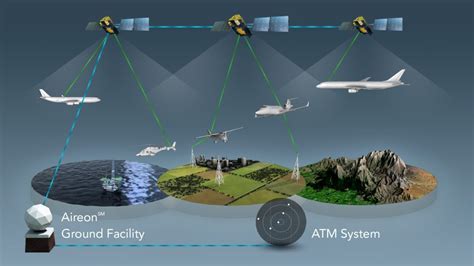
A defining feature of next-generation air traffic surveillance is the transition to space-based ADS-B, enabled by constellations like Aireon. These systems track aircraft from low Earth orbit, eliminating the blind spots of ground-based radar and vastly improving coverage over oceans and remote regions.
To utilize these services, aircraft must be equipped with 1090ES transponders featuring antenna diversity. This means having antennas installed both on the top and bottom of the airframe, ensuring uninterrupted satellite visibility.
Space-based ADS-B is operational in Canada, parts of Europe, Australia, and the North Atlantic. Pilots flying across the Atlantic or Pacific Ocean must ensure antenna-diverse equipment to meet ICAO and regional mandates.
Exceptions, Exemptions, and Operational Impacts
There are few exemptions to ADS-B Out rules. In the United States, waivers can be requested via the FAA’s ADS-B Deviation Authorization Preflight Tool (ADAPT). However, such waivers are limited, not guaranteed, and often time-sensitive.
Exemptions might apply to:
- Aircraft without electrical systems
- Balloons or gliders
- Some experimental or vintage aircraft
Nevertheless, these aircraft must avoid ADS-B-required airspace, greatly limiting operational flexibility. In regions like Europe or Australia, no exemptions are offered for scheduled or commercial flights.
The absence of ADS-B Out capability restricts access to busy airports, higher cruise altitudes, and preferred routing, leading to inefficiencies in flight planning and increased operational costs. Moreover, international overflights may be denied or rerouted, particularly in space-based ADS-B airspace.
Strategic Equipage Recommendations for Aircraft Owners and Operators
Given the global trajectory toward universal ADS-B Out compliance, operators should carefully evaluate future operations. Even if current missions do not cross into ADS-B-required airspace, anticipated changes in regulation and growing adoption of satellite-based surveillance indicate that proactive equipage is the optimal strategy.
Key Recommendations:
- Equip with 1090ES transponders, regardless of current flight profiles.
- Choose systems that offer antenna diversity to ensure compatibility with space-based ADS-B.
- Monitor national civil aviation authority updates, especially in regions like Asia-Pacific, Africa, and South America.
- For general aviation pilots flying only in low-altitude domestic U.S. airspace, 978 MHz UAT may suffice, but limits future flexibility.
Conclusion: ADS-B Out is No Longer Optional
The evolution of ADS-B Out requirements reflects a broader transformation in global airspace management. Whether operating a turboprop within U.S. borders or commanding a business jet across hemispheres, compliance with ADS-B mandates is not merely a legal obligation—it is a strategic investment in safety, efficiency, and access.
Staying ahead of emerging mandates and technological standards ensures that aircraft remain operationally versatile, cost-effective, and legally compliant in an increasingly connected sky.