Flying through clouds, fog, or darkness where the horizon vanishes requires more than visual instincts — it demands precise instrumentation and rigorous training. Under Instrument Flight Rules (IFR), pilots depend solely on their cockpit instruments to navigate, communicate, and control the aircraft. IFR is the backbone of modern aviation safety, enabling pilots to fly efficiently even when external visual cues are unavailable. To operate safely and legally under these conditions, specific instruments and certifications are mandatory. This article provides a comprehensive guide to the instruments required for IFR flight, their regulatory basis, operational purpose, and the advantages of earning an Instrument Rating.
Understanding IFR and the Need for Instruments
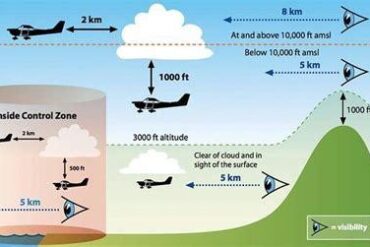
Instrument Flight Rules govern flight operations when visual references are insufficient. Unlike Visual Flight Rules (VFR), where pilots navigate by sight, IFR enables aircraft to fly in clouds, at night, and in other low-visibility conditions by relying on instruments and ground-based air traffic control.
IFR is essential for:
- Ensuring separation between aircraft in congested airspace.
- Allowing safe operation during inclement weather.
- Supporting long-range and high-altitude flights.
It is required for all commercial airline flights and heavily used in private and business aviation for its efficiency and safety enhancements. However, flying IFR is not possible without a properly equipped aircraft, a filed flight plan, and a certified instrument-rated pilot.
The Legal and Practical Instrumentation Requirements
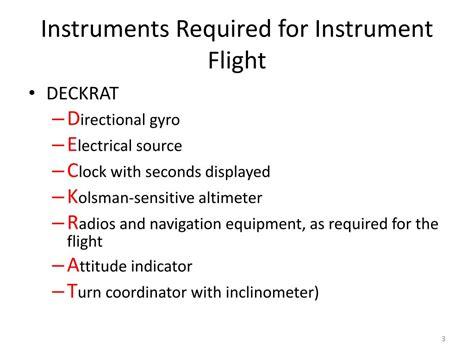
According to the Federal Aviation Administration (FAA) under FAR 91.205, an aircraft must carry a specific set of instruments and equipment to legally operate under IFR. These tools form the critical backbone for situational awareness, navigation, and aircraft control. The mandatory instruments can be grouped by function:
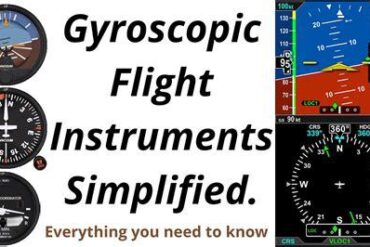
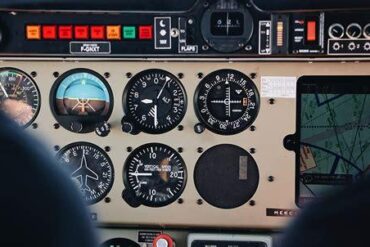
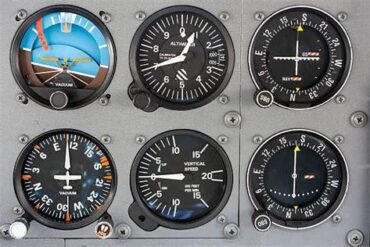
Basic Flight Instruments (The “Six Pack”)
These are essential to maintain stable flight and awareness of aircraft position:
- Airspeed Indicator – Shows how fast the aircraft is moving through the air.
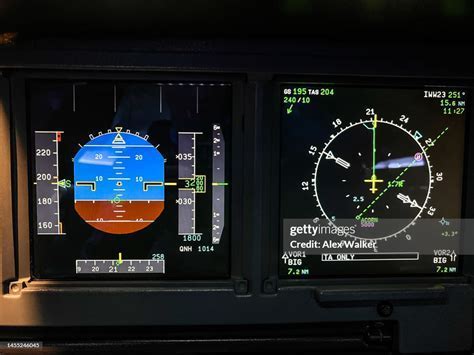
- Attitude Indicator – Displays aircraft orientation relative to the horizon.
- Altimeter – Indicates altitude above mean sea level.
- Turn Coordinator – Indicates rate and coordination of turn.
- Heading Indicator – Displays directional heading.
- Vertical Speed Indicator (VSI) – Shows rate of climb or descent.

Engine and System Monitoring Instruments
To maintain operational safety, pilots need precise engine performance indicators:
- Tachometer for each engine.
- Oil Temperature and Pressure Gauges.
- Manifold Pressure Gauge (for altitude engines).
- Fuel Quantity Gauges for each tank.
- Cylinder Head or Coolant Temperature Gauges (liquid-cooled engines).
Navigation and Communication Equipment
IFR flight depends on reliable communication with Air Traffic Control (ATC) and accurate positional awareness:
- Two-Way Radio Communication System.
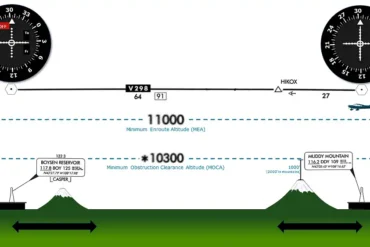
- Navigation Radios (VOR, DME, ILS as applicable).
- Transponder with Mode C or Mode S.
- GPS Receiver (not legally required but highly recommended).
Additional IFR Equipment Requirements
- Sensitive Altimeter adjustable for barometric pressure.
- Clock with hours, minutes, and seconds display (integrated or standalone).
- Gyroscopic Rate-of-Turn Indicator (unless replaced by approved electronic instruments).
- Slip-Skid Indicator.
- Position and Anti-Collision Lights.
- Emergency Locator Transmitter (ELT).
- Landing Light (if for hire).
- Spare Fuses (one full set or three of each type).
- Generator or Alternator of sufficient capacity.
These requirements ensure that IFR-capable aircraft can be flown accurately without reliance on visual references, maintaining both vertical and lateral separation from other traffic and terrain.
IFR Flight Plans: Structure and Importance
A key regulatory requirement for flying under IFR is the filing of an IFR flight plan. This formal document, submitted to ATC before departure, details the planned route, altitudes, waypoints, and estimated times. It allows ATC to:
- Sequence aircraft efficiently in congested airspace.
- Monitor aircraft location and progress.
- Provide route adjustments for weather or traffic.
- Coordinate emergency assistance if required.
IFR flight plans must be filed at least 30 minutes before departure for flights above FL230 (23,000 feet) and should be activated shortly after takeoff. While GPS-based navigation is revolutionizing IFR procedures, traditional navigation aids like VOR and ILS remain foundational to ATC coordination.
Instrument Rating: Essential Certification for IFR Flight
Having the right instruments means nothing without a pilot trained to use them under pressure. That’s why the Instrument Rating is one of the most rigorous and valuable certifications in aviation.
What Is an Instrument Rating?
An Instrument Rating (IR) is an FAA certification that permits a pilot to fly under IFR. It is typically added to a Private Pilot License (PPL) or Commercial Pilot License (CPL). It includes training in:
- IFR flight planning and clearance procedures.
- Use of flight instruments for navigation and control.
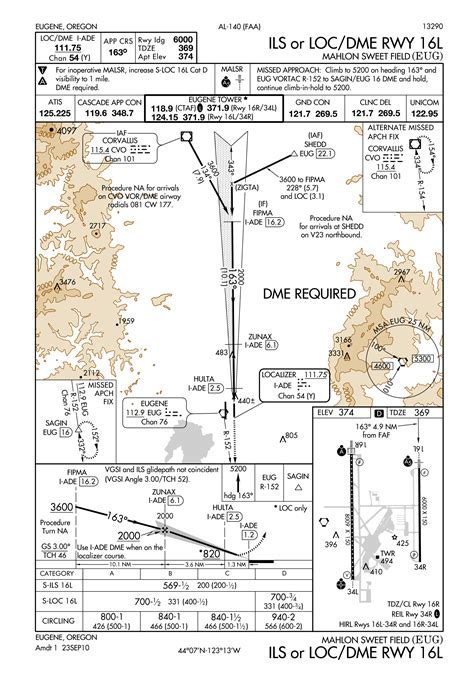
- Holding procedures and approaches (precision and non-precision).
- ATC communications and IFR enroute operations.
Training Requirements
FAA minimums for earning an IR include:
- 50 hours of cross-country flight time as pilot in command (PIC).
- 40 hours of actual or simulated instrument time, including 15 hours with a certified flight instructor.
- One cross-country flight of 250+ nautical miles, including instrument approaches at three airports.
The training demands high levels of mental discipline, multitasking, and precision. Pilots learn to make decisions solely on instrument data — a skill that can be life-saving in weather or emergency scenarios.

Benefits of Instrument Training and IFR Operations
While IFR certification is challenging, the operational and career advantages are undeniable:
- Greater Flight Flexibility: Pilots can legally fly in a wider range of weather conditions, reducing delays.
- Improved Safety: Relying on instruments prevents disorientation in clouds or at night.
- Increased Efficiency: IFR routes are direct and managed by ATC, minimizing detours.
- Career Advancement: An Instrument Rating is a prerequisite for commercial and airline pilot careers.
These benefits also apply to aircraft owners, business operators, and aviation enthusiasts who seek dependable, all-weather flying capabilities.
Conclusion: IFR Mastery as the Hallmark of Professional Aviation
Mastering the instruments required for IFR flight is not merely a regulatory obligation — it’s a benchmark of aviation excellence. By equipping aircraft properly, filing structured flight plans, and earning an Instrument Rating, pilots unlock the full potential of aviation, transcending weather limitations and expanding flight opportunities.
Whether preparing for a commercial pilot career or simply seeking the confidence to fly year-round, the journey to IFR proficiency begins with understanding these critical instruments and procedures. IFR flight is not just about flying in clouds — it’s about flying with precision, purpose, and preparedness.