In the United States Air Force (USAF), the integrity of vision is not a mere technical requirement — it is a matter of mission success and operational safety. Pilots, aircrew members, and many technical specialists rely heavily on precise visual acuity to make split-second decisions, detect threats, and navigate high-performance systems. As such, the eyesight required for Air Force roles is among the most scrutinized aspects of medical evaluation.
Applicants to the U.S. Air Force Academy (USAFA) must meet stringent general commissioning standards, with even higher thresholds imposed on those pursuing flight careers. These visual requirements are rigorously defined, grounded in decades of military medical data, and updated to reflect the evolving needs of modern aerial warfare.
Minimum Visual Acuity Standards for Entry
All USAFA cadets must satisfy the general visual requirements for Air Force commissioning. These include:
-
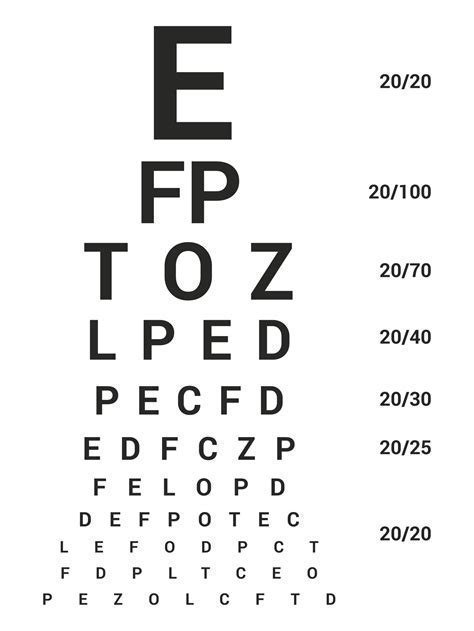
Distant Visual Acuity: Vision must be correctable to at least 20/40 in each eye using spectacles.
-
Near Visual Acuity: Vision must be correctable to 20/40 in the better eye.
These baselines ensure that all cadets — regardless of their eventual specialty — can meet the operational demands expected of every officer. Importantly, failure to meet these standards at the time of entry can disqualify a candidate, even if their long-term visual prognosis is positive.
Refractive Error Limits
The Air Force imposes strict limits on refractive error, which includes conditions such as myopia, hyperopia, and astigmatism. These are evaluated using diopters of spherical equivalent:
-
Myopia or Hyperopia: Must not exceed ±8.00 diopters.
-
Astigmatism: Must not exceed 3.00 diopters.
These values are critical, as excessive refractive error may impair visual clarity in high-G environments, hinder target acquisition, or delay reaction time in complex visual fields.
Pilot-Specific Vision Requirements
Vision standards for Air Force pilots and aviation candidates are significantly more stringent than those for general commissioning. Although all cadets must initially pass the basic visual criteria, aviation candidates undergo a second-tier evaluation known as the Flying Class I (FCI) examination. This is conducted during the third academic year (junior year) at the USAFA and includes:
-
Advanced tests for visual acuity, depth perception, and color discrimination.
-
Corneal topography and detailed retinal health screenings.
Aviation roles demand uncorrected or surgically corrected vision that meets military-grade stability, field of view, and response time. Candidates who do not meet these stringent metrics may not be cleared for pilot training.
Color Vision and Depth Perception Testing
Color vision is a critical attribute for aviators. The initial DoDMERB medical examination, used for USAFA entry, includes basic color vision tests. However, these tests do not reflect the complexity of evaluations required for aviation clearance. Official color vision testing for pilots includes:
-
Farnsworth Lantern Test (FALANT) or other anomaloscope-based evaluations.
-
Specialized tests to detect subtle red-green color deficiencies or blue-yellow perception errors.
Depth perception is equally vital. Air Force pilots must demonstrate stereopsis (binocular depth perception) to accurately judge distances during aerial maneuvers and landings.
Refractive Surgery: PRK and LASIK Protocols
Corrective vision surgery — particularly Photorefractive Keratectomy (PRK) and Laser-Assisted In Situ Keratomileusis (LASIK) — is allowed within strict Air Force guidelines. However, the following must be observed:
-
Surgery must NOT be performed prior to USAFA entry if it was done within 180 days of the DoDMERB exam.
-
Only procedures meeting Air Force preoperative standards are acceptable.
-
Cadets who qualify may undergo PRK or LASIK during their time at the Academy under military supervision.
Civilian refractive procedures often fail to comply with USAF operational requirements, especially regarding flap thickness, corneal mapping, and post-op healing stability.
Flying Class I Examination: The Gold Standard for Aviation Candidates
The Flying Class I (FCI) vision exam is the ultimate determinant of aviation fitness. Conducted in the junior year, this exam evaluates candidates for roles in:
-
Pilot Training
-
Combat Systems Officer (CSO)
-
Remotely Piloted Aircraft (RPA) Operations
-
Special Operational Duty (SOD) roles
This examination includes:
-
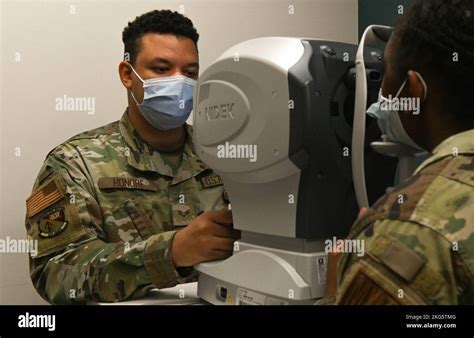
Full ophthalmologic evaluation
-
Tear film analysis (to rule out dry eye)
-
Measurement of intraocular pressure
-
Extended field-of-vision testing
Disqualifying Conditions and Waivers
Certain conditions can disqualify a candidate unless a waiver is granted. These include:
-
Severe anisometropia (difference in prescription between eyes)
-
Keratoconus or other corneal degenerations
-
History of retinal detachment or major ocular surgery
Waivers may be considered in highly competitive candidates whose vision is otherwise correctable, but these are evaluated case by case by the Air Force Medical Waiver Authority.
DoDMERB vs. Flying Class Exams: Understanding the Difference
Many applicants mistakenly believe that passing the DoDMERB medical exam guarantees aviation eligibility. In reality, the DoDMERB exam is merely a screening tool for general service entry. For aviation and special operational duties, the Air Force requires:
-
A separate and more comprehensive eye exam.
-
Evaluation against Flying Class medical standards, not general commissioning standards.
-
Use of Air Force-specific testing equipment and methodology.
This distinction is critical. A candidate who passes the DoDMERB with 20/20 corrected vision may still be disqualified during the Flying Class exam due to factors like contrast sensitivity or corneal irregularities.
Visual Fitness and Operational Excellence
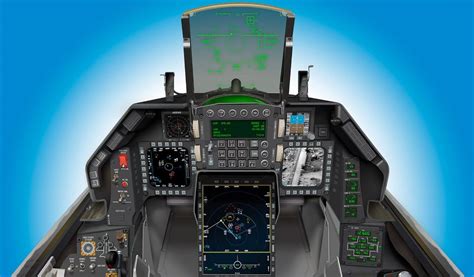
Eyesight in the Air Force is more than a medical checkbox — it is a reflection of mission-readiness. From detecting enemy aircraft on the horizon to scanning terrain for landing zones, the demands placed on the visual system of USAF personnel are immense. Modern cockpits, Heads-Up Displays (HUDs), and Night Vision Goggles (NVGs) further amplify the need for optical precision and rapid adaptation.
Meeting the Air Force’s eyesight standards is not merely about seeing clearly — it is about seeing accurately, quickly, and consistently under stress. This visual performance threshold underpins everything from pilot survivability to team coordination and operational dominance.
Conclusion: Vision Standards as a Gateway to Elite Service
In the United States Air Force, exceptional vision is not just a preferred trait — it is a core qualification. From the USAFA entry phase through to advanced aviation exams, each stage filters candidates to ensure only those with optimal visual capabilities progress to elite operational roles. Aspiring cadets must prepare accordingly, with a clear understanding of the visual benchmarks that shape Air Force careers.
Frequently Asked Questions (FAQ)
Can I become an Air Force pilot if I wear glasses?
Yes, but only if your corrected vision meets or exceeds 20/20 and your uncorrected visual parameters fall within acceptable refractive error limits. Candidates must also pass a specialized Flying Class I eye exam.
Is LASIK surgery allowed before applying to the USAF Academy?
No. Undergoing LASIK or PRK within 180 days prior to your DoDMERB exam is disqualifying. Cadets may receive refractive surgery during their time at the Academy if they meet Air Force-specific criteria.
What happens if I fail the vision test at the USAFA?
If you do not meet the initial vision standards, you may be disqualified from entry. However, for cadets already admitted, some vision issues may be waived or corrected, especially if you are otherwise highly qualified. A waiver process is available for borderline cases.