Understanding FAA Eyesight Standards for Pilots
To ensure flight safety and operational precision, the Federal Aviation Administration (FAA) mandates strict visual acuity requirements for pilots across all classes of medical certification. Visual standards not only protect the pilot but also safeguard passengers, crew, and those on the ground. Given the high-stakes environment in which pilots operate, visual clarity at various distances is non-negotiable.
FAA vision standards differ depending on the class of medical certification—First Class, Second Class, and Third Class—each corresponding to different levels of pilot responsibility and commercial activity.
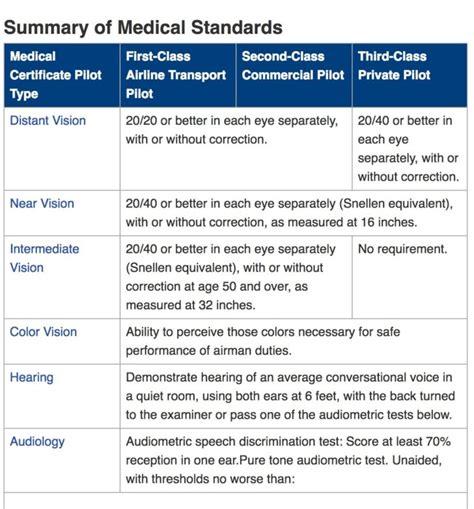
First and Second Class Medical Certificates, typically required for airline transport and commercial pilots, demand 20/20 distant vision in each eye, with or without corrective lenses. Near vision at 16 inches must be 20/40 or better, again in each eye. Additionally, pilots aged 50 and above must also meet an intermediate vision standard of 20/40 at 32 inches.

Third Class Medical Certificates, which apply to private pilots or non-commercial operations, require 20/40 vision for both near and distant acuity. There is no intermediate vision standard under this classification, reflecting the reduced complexity and lower passenger load of private operations.
Corrective Lenses and Vision Conditions
Pilots with myopia (nearsightedness) must wear corrective lenses at all times during flight. These lenses must correct their distant vision to the required 20/20 standard. On the other hand, those with hyperopia (farsightedness) or presbyopia—a condition commonly associated with aging—must have corrective lenses available during flight. These are often bifocals, progressive lenses, or half-cut reading glasses tailored for cockpit use.
Pilots who have undergone cataract surgery and received intraocular lens implants may also be eligible for certification, provided their post-operative vision meets FAA standards. However, in such cases, glasses may still be required to optimize visual acuity for all distances.
Air Traffic Controllers and Vision Standards
Due to the high reliance on visual monitoring of radar screens and aircraft movement, Air Traffic Control (ATC) personnel are held to similar standards as pilots. The FAA Order 3930.3B aligns ATC vision requirements with those of airmen. Controllers must demonstrate:
- 20/20 distant vision in each eye (with or without correction)
- 20/40 near vision at 16 inches
- 20/40 intermediate vision at 32 inches (if 50 years of age or older)
Unlike pilots, unilateral vision loss or visual field defects are generally not waiverable for controllers, due to the demands of constant and symmetric visual performance.
Visual Mechanics: How the Eye Maintains Focus
The cornea and lens of the eye are the two main elements responsible for focusing images on the retina. The cornea offers a fixed refractive power of around 45 diopters, while the lens adjusts dynamically (a process known as accommodation)—ranging from 1–18 diopters in youth. This flexibility declines with age, leading to presbyopia, or difficulty focusing on nearby objects.
As pilots age, the loss of accommodation becomes evident. Initially, they may attempt to hold reading material further away, but as cockpit instrumentation is fixed, the eventual adoption of reading aids or bifocals becomes necessary.
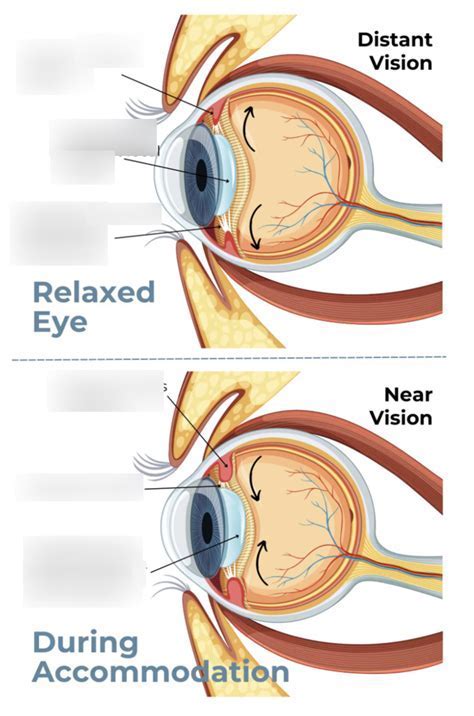
Interestingly, nearsighted pilots may delay the need for reading glasses due to the cornea’s excess refractive power partially offsetting the loss of lens accommodation. Ultimately, though, both nearsighted and farsighted individuals will require tailored corrective solutions to meet vision standards.
Astigmatism and Visual Correction
Astigmatism, caused by irregular corneal curvature, results in uneven light refraction, creating blurred or distorted images. This condition is corrected using toric lenses or specially prescribed glasses. As long as the resulting visual acuity aligns with FAA thresholds, astigmatism does not disqualify a pilot.
Refractive Eye Surgery and Certification
Pilots who opt for LASIK, PRK, or other refractive procedures are permitted to fly post-surgery if the visual outcome is stable and within FAA limits. If uncorrected vision post-surgery meets all standards, no limitations are placed on the certificate. However, if correction is still needed, the usual limitations (e.g., must wear corrective lenses) will apply.
Surgery must be declared at the next FAA medical examination using Form 8500-7 (Report of Eye Evaluation). Controllers must obtain clearance from a Regional Flight Surgeon before resuming duties.
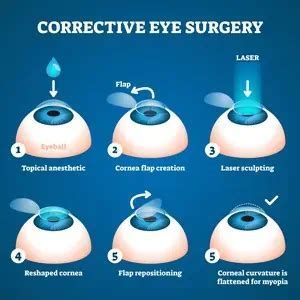
In rare cases where post-surgical results fail to meet FAA requirements, or where vision fluctuates, certification may be denied. Pilots may also require a Statement of Demonstrated Ability (SODA) to override certain disqualifications after long-term adaptation or successful medical flight tests.
Contact Lens Regulations and Restrictions
Pilots and controllers using contact lenses must still meet all vision standards. They may use bifocal contact lenses or glasses in conjunction with contact lenses to address both near and distant visual acuity.
However, the FAA explicitly prohibits the use of Monovision Contact Lenses (MVCL), which correct distant vision in one eye and near vision in the other. This setup compromises binocular depth perception, which is critical for spatial judgment and aircraft maneuvering, especially under low light or adverse weather conditions.
The only exception to this is for pilots who have undergone surgical monovision correction. Even then, a six-month adaptation period is mandated, followed by potential flight testing and medical review.
Multifocal contact lenses that use different refractive zones within the same lens are FAA-approved but require a one-month adaptation period. These lenses can cause peripheral blur, especially when gazing upward or laterally, which may be problematic in dim lighting environments.
Color Vision and X-Chrome Lenses
The FAA prohibits X-Chrome lenses, which are tinted contacts designed to enhance color perception for individuals with color blindness. These lenses alter color processing in a non-standard way and do not guarantee compliance with the FAA’s color vision testing protocols. Pilots must instead undergo FAA-approved color vision testing to verify ability.
Glaucoma and Medical Certification
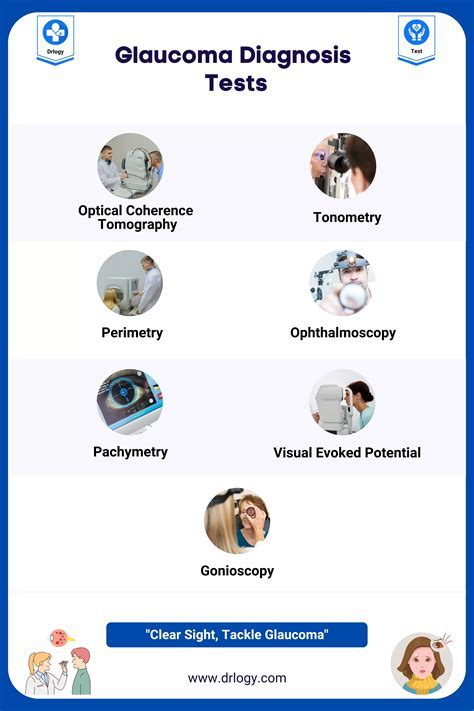
Pilots and controllers diagnosed with glaucoma or elevated intraocular pressure (IOP) are not automatically disqualified. The FAA allows continued certification if:
- IOP is controlled via medication or surgery
- Visual acuity remains within certified limits
- Visual fields are preserved
The condition must be evaluated and documented using FAA Form 8500-14 (Ophthalmologic Evaluation for Glaucoma) and submitted during FAA physicals. Controllers must report through their respective Regional Flight Surgeons. Ongoing treatment updates are mandatory for maintaining certification.
Removal of SODAs for Vision
Following updates to FAA policy, the requirement for uncorrected visual acuity was eliminated. Pilots who previously required a Statement of Demonstrated Ability (SODA) for uncorrected vision may now request its removal. This must be done via their FAA Aviation Medical Examiner (AME) or through AMAS support.
Frequently Asked Questions
What vision is required to be a commercial airline pilot?
To obtain a First Class medical certificate, commercial pilots must have 20/20 distant vision and 20/40 near vision, with or without correction, in each eye separately. Intermediate vision of 20/40 is also required for those aged 50 and above.
Can I become a pilot if I had LASIK or other eye surgery?
Yes. The FAA allows flying after successful refractive surgery, provided vision meets medical standards. The surgery must be declared, and pilots may need to undergo an adjustment period and vision test before recertification.
Why are Monovision contact lenses not allowed for pilots?
Because each eye is not corrected for both near and far vision, the FAA considers depth perception and spatial awareness compromised under MVCL. This is especially dangerous in low visibility or high-speed maneuvering environments.