Introduction to Private and Commercial Pilots
Understanding the difference between private pilots (PPL) and commercial pilots (CPL) is crucial for anyone pursuing a career in aviation or interested in the nuances of flight training. The distinction goes beyond just the type of license one holds. It spans the level of skill, precision, and knowledge that each category demands. Both types of pilots share some common elements in their training, but they diverge significantly when it comes to the level of proficiency and the specific competencies required. This article delves into the key differences between private and commercial pilots, breaking down the various aspects of training, skills, and certification requirements.

Skill Mastery: The Core Difference
At the heart of the Private vs. Commercial Pilots discussion lies the concept of skill mastery. While both types of pilots must demonstrate their ability to operate an aircraft safely, commercial pilots are expected to master these skills to a higher degree. The maneuvers required for both the PPL (Private Pilot License) and CPL (Commercial Pilot License) tests are largely similar, but the CPL demands more precision and includes advanced maneuvers that test a pilot’s ability to handle more complex situations.
For example, commercial pilots are trained to perform power-off 180s, instrument maneuvers, advanced stalls, and spins — maneuvers that require a deeper understanding of the aircraft’s behavior and the ability to control it with a higher degree of accuracy. In contrast, private pilots primarily focus on demonstrating safe flying techniques and the ability to make sound decisions in routine flying conditions.
Training and Testing: Similarities and Differences
The training programs for both private and commercial pilots are structured to provide foundational knowledge and build progressively upon it. However, the CPL training takes the learning process further by refining skills and demanding greater mastery. Let’s break this down:
PPL Test
The PPL checkride focuses on a pilot’s ability to safely operate an aircraft under basic conditions. Private pilots are evaluated on their ability to perform fundamental maneuvers like steep turns, stalls, slow flight, and take-offs and landings. The emphasis is on demonstrating competency rather than perfection. The pilot must prove they are capable of handling the aircraft safely in routine circumstances.
CPL Test
On the other hand, the CPL checkride involves these same maneuvers, but they must be performed to a higher standard. The precision required for each maneuver is much stricter. For example, altitude tolerance for steep turns during the PPL checkride might be ±100 feet, while for commercial pilots, this tolerance is tightened to ±50 feet. Furthermore, CPL students are required to perform additional maneuvers such as emergency descents, long take-offs, and crosswind landings, all of which challenge a pilot’s ability to fly the aircraft smoothly and consistently under a variety of conditions.
The CPL training also includes night flying, advanced weather analysis, and more in-depth navigation skills. These advanced elements build a pilot’s confidence and ability to handle more demanding flying conditions.
Knowledge Depth: PPL vs. CPL
While PPL training emphasizes a general understanding of aviation principles, the CPL test dives much deeper into the theoretical aspects of flying. The CPL knowledge test covers a broader range of subjects including air law, flight planning, navigation, weather systems, and emergency procedures.
For instance, while a private pilot may need to understand basic weather patterns and how they affect flying, a commercial pilot must have a comprehensive knowledge of weather systems, including microclimates, winds aloft, and the ability to anticipate how weather changes might impact flight plans. This deeper level of understanding is essential for commercial pilots who will often fly in more challenging and varied conditions compared to private pilots.
Energy Management: A Key Element for Commercial Pilots
One of the key distinctions between private and commercial pilots is the concept of energy management. Energy management refers to the ability to manage the aircraft’s potential and kinetic energy — essentially, controlling the aircraft’s speed and altitude in a way that allows for smooth, safe, and efficient flight. Commercial pilots are trained to master this skill, as it is crucial in emergency situations, during challenging weather conditions, and when flying heavier or more complex aircraft.
A prime example of energy management in commercial aviation is the power-off 180-degree landing maneuver. This maneuver requires a pilot to perform a glide approach to a landing, using only altitude (potential energy) and airspeed (kinetic energy) without engine power. It’s a test of both the pilot’s ability to manage the aircraft’s energy and their proficiency in making precise landing decisions under pressure.
Decision-Making and Risk Management
Another crucial area where commercial pilots stand apart from private pilots is in decision-making and risk management. Commercial pilots are responsible not only for their own safety but for the safety of passengers and crew members. This responsibility requires a more advanced approach to Aeronautical Decision Making (ADM) and the ability to assess risks accurately.
While private pilots are trained to make good decisions and evaluate risks on a personal level, commercial pilots must make decisions that affect a wider group of people. Commercial pilots need to have a higher level of situational awareness and the ability to adapt to rapidly changing circumstances, including unforeseen weather events, equipment malfunctions, and traffic conflicts.
The Role of Experience: Private Pilots vs. Commercial Pilots
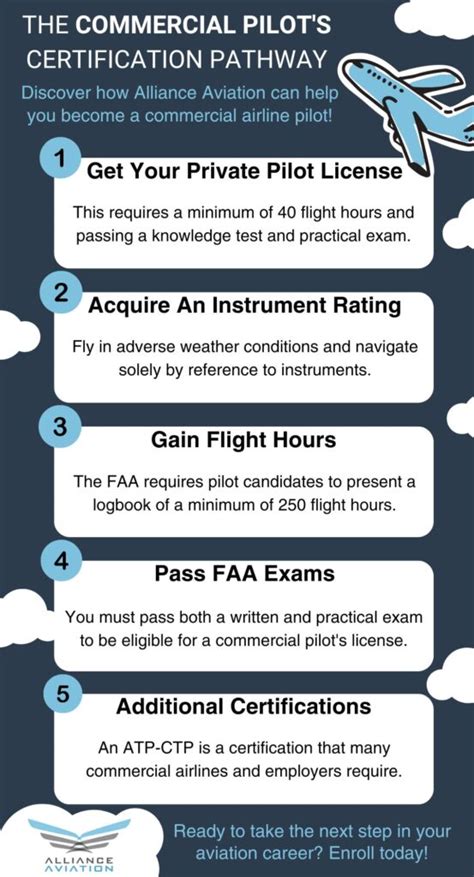
While the technical skills for PPL and CPL are closely related, the experience factor plays a much more significant role for commercial pilots. Commercial pilots are typically required to accumulate more flying hours — often upwards of 250-300 hours, compared to the 50-70 hours required for a private pilot license. This increase in flight hours is not just about quantity; it’s about the breadth of experience gained during these flights.
As pilots accrue more flight hours, they are exposed to a wider variety of flight conditions, which enhances their judgment and decision-making abilities. The difference in experience between a new private pilot and an experienced commercial pilot is palpable, especially in complex and high-pressure flying environments.
Conclusion
In conclusion, the primary difference between a private pilot and a commercial pilot lies in the degree of skill mastery, the precision of maneuvers, and the depth of knowledge required. Commercial pilots must demonstrate not only competency but mastery, particularly in terms of energy management, decision-making, and risk management. While the basic maneuvers for both the PPL and CPL are similar, commercial pilots are required to perform them with much tighter tolerances, in more challenging conditions, and with greater consistency.
As aviation professionals, commercial pilots are held to a higher standard, not just in terms of technical skills but also in their ability to handle responsibility and manage risks. This level of expertise and precision is what sets them apart from their private pilot counterparts.
FAQ
1. What’s the main difference between a PPL and a CPL?
The main difference lies in the level of skill and precision required. While both PPL and CPL tests include similar maneuvers, the CPL demands stricter tolerances and includes advanced techniques such as power-off 180-degree landings and spins.
2. Do commercial pilots need more flying hours than private pilots?
Yes, commercial pilots are required to accumulate more flying hours — typically between 250-300 hours — compared to the 50-70 hours required for a private pilot license.
3. Are the maneuvers for a commercial pilot more difficult than for a private pilot?
While the maneuvers themselves are not drastically different, commercial pilots are required to perform them to a higher level of precision and under more challenging conditions, including varying weather and emergency situations.