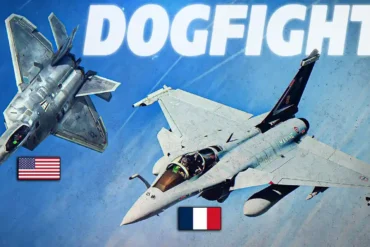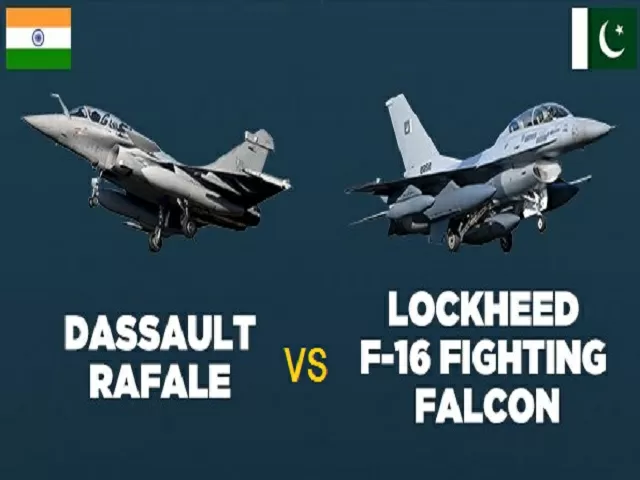
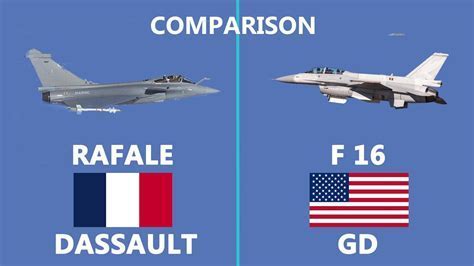
The F-16 Fighting Falcon and Dassault Rafale are among the most capable multirole fighter aircraft in service today. Developed by the United States and France, respectively, these aircraft serve different strategic and operational roles. While the F-16 is recognized for its agility, affordability, and mass adoption, the Rafale is known for its advanced avionics, superior weaponry, and multirole capabilities. This article provides a comprehensive comparison based on design, performance, avionics, operational flexibility, and strategic deployment.
Design and Development
F-16 Fighting Falcon
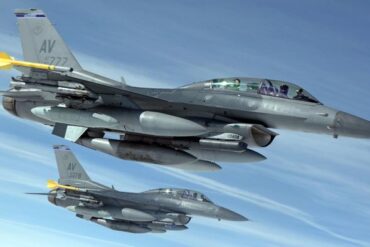
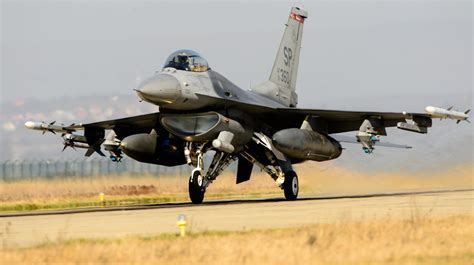
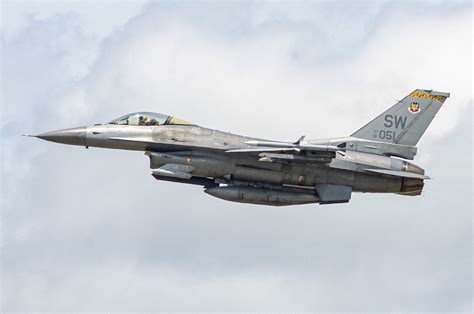
The F-16 Fighting Falcon, developed by Lockheed Martin, was introduced in 1976 as a 4th-generation fighter. Designed for cost-effectiveness and air superiority, it features a single-engine, lightweight airframe with a relaxed static stability design, enhancing maneuverability. With over 4,600 units built, it remains the most widely used fixed-wing military aircraft worldwide.
Dassault Rafale
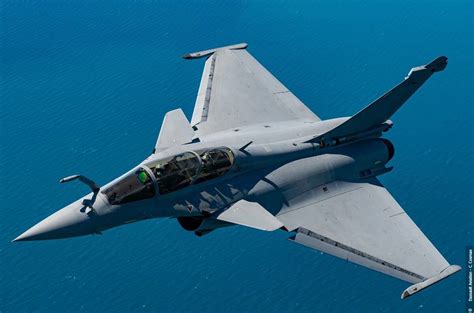
The Dassault Rafale, introduced in 2001, is a 4.5th-generation twin-engine fighter developed by Dassault Aviation. Unlike the F-16, the Rafale was designed for high-end multirole operations, including air superiority, ground attack, reconnaissance, and nuclear deterrence. It incorporates carrier compatibility, making it an integral asset for the French Navy.
Performance and Capabilities
Speed and Altitude
- F-16: Achieves a maximum speed of Mach 2 (2,414 km/h) with a service ceiling of 50,000+ feet.
- Rafale: Slightly slower at Mach 1.8 (2,222 km/h), but optimized for multirole flexibility and sustained combat performance.
Combat Radius
- F-16: Boasts a combat radius of 4,200 km, making it ideal for long-range missions.
- Rafale: Has a slightly shorter combat radius of 3,700 km, but compensates with superior survivability and electronic warfare systems.
Radar and Sensors
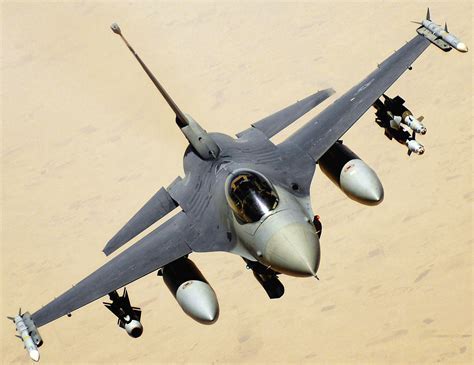
- F-16: Equipped with the AN/APG-68 radar, capable of tracking 20 targets within 84 km.
- Rafale: Features the RBE2-AA AESA radar, capable of tracking 40 targets within 100 km, along with an infrared search-and-track (IRST) system for stealth detection.
Weaponry
F-16 Armament
- AIM-120 AMRAAM missiles (range: 100 km).
- M61 Vulcan 20mm rotary cannon for close-range dogfighting.
Rafale Armament
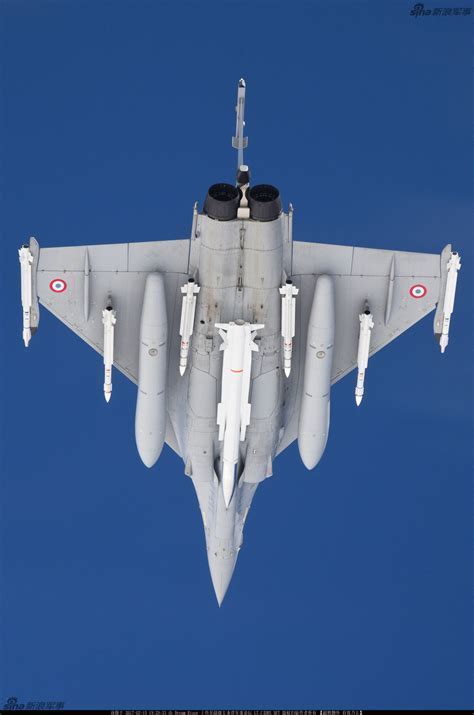
- Meteor missiles (range: 150+ km), offering superior beyond-visual-range (BVR) engagement.
- SCALP cruise missiles (range: 300+ km) for precision deep strikes.
The Rafale’s extended-range missiles and diverse loadout options give it a significant advantage in long-range engagements and precision-strike capabilities.
Avionics and Upgrades
F-16 Modernization
- The latest Block 70/72 variants incorporate the APG-83 AESA radar, improving tracking range and targeting accuracy.
- Features the AN/ALQ-257 IVEWS electronic warfare suite, enhancing radar warning and jamming capabilities.
Rafale’s Cutting-Edge Avionics
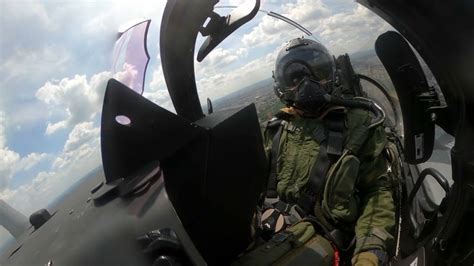
- Equipped with the SPECTRA electronic warfare system, offering advanced threat detection and countermeasures.
- Features fully digital fly-by-wire controls, improving pilot responsiveness and aircraft handling.
Operational Flexibility
F-16: Versatile Workhorse
- Excels in air-to-air combat, ground strikes, and reconnaissance missions.
- Cost-effective at approximately $14.6–18.8 million per unit.
- Operated by 25+ allied nations, ensuring global interoperability.
Rafale: Multi-Domain Dominance
- Designed for multi-domain warfare, including anti-ship missions and nuclear deterrence.
- Twin-engine configuration provides greater survivability.
- Carrier compatibility enables deployment from aircraft carriers.
Strategic Use Cases
F-16 in Global Conflicts
- Plays a crucial role in Ukraine’s defense against Russian forces, offering high-intensity combat effectiveness.
- Used extensively in NATO operations due to its reliability and rapid deployment capability.
Rafale’s High-End Combat Operations
- Deployed in French and Indian military operations, including precision airstrikes in Libya, Mali, and Syria.
- India’s purchase of 36 Rafales reflects its strategic importance in high-threat environments.
Conclusion
The F-16 Fighting Falcon remains an affordable, high-performance fighter well-suited for mass deployment and cost-effective combat operations. On the other hand, the Dassault Rafale offers advanced avionics, superior weaponry, and multi-domain versatility, making it a premier choice for high-threat environments.
The decision between the F-16 and Rafale depends on strategic requirements:
- For nations seeking a budget-friendly, combat-proven platform, the F-16 is the optimal choice.
- For air forces requiring cutting-edge technology and survivability, the Rafale is the superior aircraft.
FAQ
1. Which aircraft is better for air superiority, the F-16 or Rafale?
The Rafale has superior radar, stealth detection capabilities, and missile range, making it more effective in beyond-visual-range (BVR) engagements. However, the F-16’s agility and affordability make it a formidable air-to-air fighter.
2. Why do some countries choose the F-16 over the Rafale?
The F-16 is cost-effective, widely used, and easier to maintain, making it ideal for allied nations looking for a battle-tested multirole fighter at a lower acquisition cost.
3. How does Rafale’s electronic warfare system compare to the F-16’s?
The Rafale’s SPECTRA system offers advanced electronic countermeasures and threat detection, giving it better survivability in high-threat environments compared to the F-16’s electronic warfare suites.
Both aircraft serve distinct combat roles, and the choice depends on the operational priorities of a given air force.