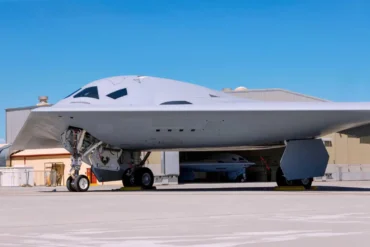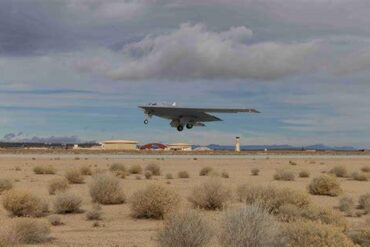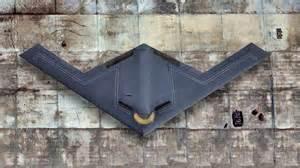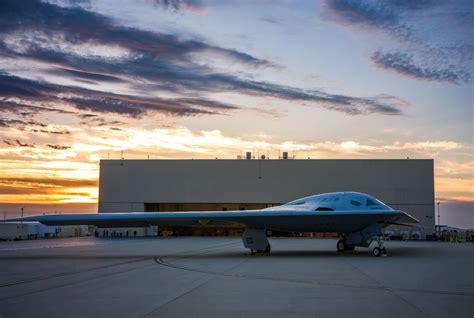
The Northrop Grumman B-21 Raider, heralded as the first 6th-generation combat aircraft, is not merely a marvel of stealth technology and advanced warfare systems—it is also a logistical juggernaut requiring a sprawling infrastructure upgrade to meet its operational needs. At the center of this transformation lies Ellsworth Air Force Base in South Dakota, the flagship location for this next-gen bomber. The price tag for this upgrade? Over $130 million for the runway alone, with an estimated $1.5 billion to $1.7 billion in total infrastructure modernization costs.
The Rise of a 6th-Generation Stealth Bomber
Northrop Grumman’s B-21 Raider is set to replace both the B-1B Lancer and the aging B-2 Spirit fleets. With the first operational units anticipated in 2027, this aircraft ushers in a new era of stealth, endurance, and digital interoperability. The B-21 is designed not just to strike, but to survive in denied airspace, thanks to its low observability, advanced materials, and integrated digital architecture.
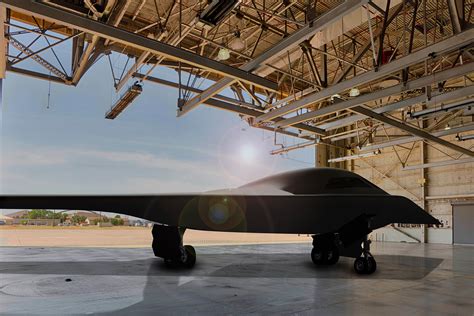
Its capabilities, however, demand corresponding readiness from its home bases. Unlike legacy platforms, the B-21 cannot operate effectively from outdated or undersized infrastructure. The aircraft’s complexity and stealth features necessitate specialized hangars, updated communications systems, robust runways, and hardened maintenance facilities.
Ellsworth Air Force Base: First in Line for B-21 Readiness
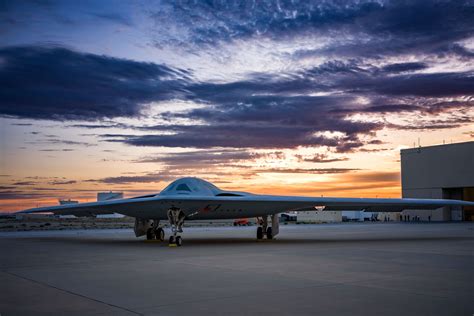
Ellsworth AFB has been selected as the first Main Operating Base (MOB) and the location for the B-21’s formal training unit. Currently home to the 28th Bomb Wing operating B-1 Lancers, Ellsworth’s role is poised to expand significantly. The transition from B-1 to B-21 is not only a tactical shift but a logistical metamorphosis.
A major milestone in this transformation came in December 2025, when the U.S. Air Force cut the ribbon on the newly rebuilt runway, a project valued at $129.5 million. This runway, essential for supporting the B-21’s operations, utilized a staggering 106,000 tons of concrete, along with 105 miles of joint sealing and 83 miles of electrical conduit to power advanced lighting and operational systems.
One Year, One Runway: The Massive Undertaking
The scale of the runway upgrade at Ellsworth is a testament to the B-21’s unique requirements. The entire runway was shut down for a full year, from December 2024 to December 2025. During that time, Ellsworth’s fleet of 17 B-1B Lancers was temporarily stationed at Grand Forks Air Force Base, maintaining long-range strike readiness while construction crews worked around the clock.
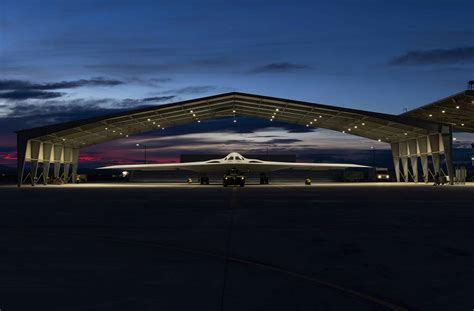
This was only one piece of the puzzle. The base is also receiving new hangars, purpose-built to house the B-21’s stealth-sensitive airframe and its intricate avionics systems. These hangars must also meet environmental controls to support the bomber’s maintenance cycles and low observable coatings.
Infrastructure: More Than Just a Runway
Ellsworth’s upgrades go far beyond the runway. A parallel investment of $135.5 million is being funneled into a Phase Maintenance Hangar, encompassing 80,000 square feet with dual bays, an airfield apron, and fully integrated utilities. This facility is vital for the B-21’s long-term service and readiness.
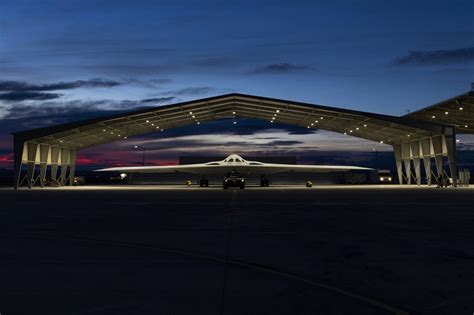
In July 2025, Conti Federal, in partnership with the U.S. Army Corps of Engineers, was awarded a $33.5 million contract to construct five Environmental Protection Shelters. These pre-engineered metal buildings are designed to shield the B-21 from environmental degradation, a critical feature given the bomber’s reliance on delicate stealth coatings.
Beyond these, Conti Federal is also tasked with building:
- A Radio Frequency Hangar for classified systems testing
- A Weapons Loader Training Facility
- A Fuel Systems Maintenance Dock
- Dock 81, a specialized servicing center
Whiteman and Dyess: Following Ellsworth’s Lead
While Ellsworth leads the B-21 transformation, Whiteman AFB in Missouri and Dyess AFB in Texas are not far behind. Whiteman, the current home of all remaining B-2 Spirits, benefits from preexisting heavy bomber infrastructure, with $600 million+ in upgrades anticipated. Projects include eight new military construction endeavors and 14 sustainment and modernization projects.
Dyess, home to the 7th Bomb Wing’s B-1s, faces a steeper climb. The estimated cost to prepare Dyess for B-21 operations is approximately $1.6 billion, spanning 24 major construction projects. These include runway overhauls, fueling systems, and digital support infrastructure.
Forward Operating Bases: Strategic Reach Requires Global Readiness
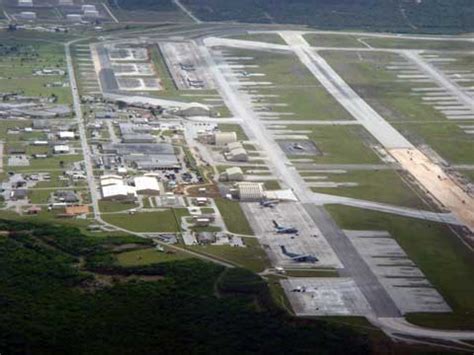
The B-21 Raider is not confined to its MOBs. It is a global strike asset and will deploy to Forward Operating Bases (FOBs) like Andersen AFB on Guam and NSF Diego Garcia. Though these bases won’t receive the full slate of upgrades seen at Ellsworth or Dyess, their enhancements are strategically vital.
At Andersen AFB, the Department of Defense’s Future Years Defense Program (FYDP) outlines a $7.3 billion investment through FY2028. Within this, an estimated $350 million to $600 million supports B-21-relevant infrastructure, including:
- Runway reinforcements
- Deployable shelters and mobile maintenance platforms
- A $211 million communications and command center upgrade
These enhancements bolster the Air Force’s agility and reach, allowing B-21s to operate in theater for deterrence, exercises, and real-world missions.
Strategic Cost: Why the Investment Is Justified
The cost of developing and acquiring the B-21 Raider is estimated at $700 million per unit, but that figure does not account for the vast infrastructure needed to sustain it. Across Ellsworth, Whiteman, and Dyess, total infrastructure spending will likely exceed $3.5 billion.
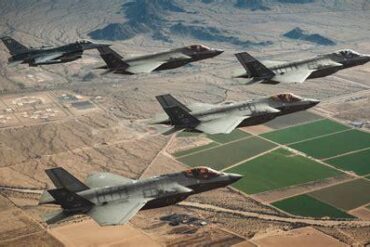
Critics often question the ballooning price tags of new defense systems. However, the reality is that modern warfare platforms demand modern support ecosystems. Just as the F-35 Lightning II has been hindered by lagging infrastructure, the USAF is proactively preventing similar shortfalls with the B-21.
The stealth bomber’s cutting-edge design, reliance on networked systems, and long-term maintainability require not only physical space but also digital integration, cyber defense readiness, and secure communications backbones.
The Bigger Picture: Redefining Global Power Projection
The B-21 Raider’s introduction marks more than a technological evolution; it is a redefinition of global power projection. With three fully equipped home bases and multiple FOBs being modernized, the USAF is crafting a network of readiness that ensures the B-21 can be deployed with speed, stealth, and strength.
The effort to revamp Ellsworth’s runway and broader infrastructure is the first visible step toward this transformation. And while the runway’s $130 million cost may raise eyebrows, it is a necessary down payment on a strategic asset built to operate deep into the 21st century.
Conclusion: Infrastructure as a Force Multiplier
What began as a concrete pour and a ribbon-cutting ceremony is, in reality, a cornerstone of America’s next-generation airpower. The Ellsworth AFB upgrades, and those underway at Dyess, Whiteman, and strategic FOBs, underscore a central truth: combat effectiveness begins on the ground.
The USAF’s commitment to building a robust support framework for the B-21 is as critical as the aircraft itself. In a world of contested airspace and emerging peer adversaries, the fusion of platform and infrastructure is not optional—it is a strategic imperative.