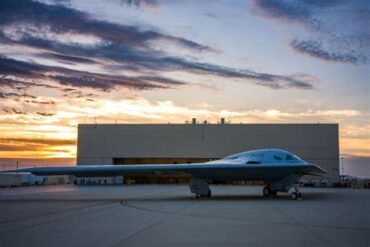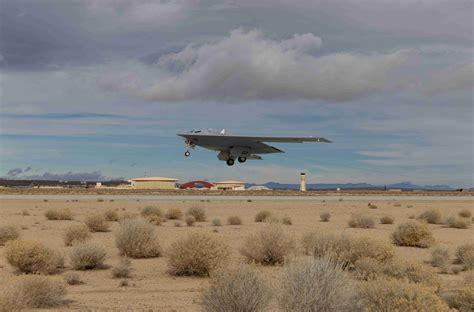
The B-21 Raider stealth bomber represents a decisive leap in American airpower, blending cutting-edge stealth, digital engineering, and long-range strike capability into a platform designed for the most demanding future battlefields. As the United States accelerates production, attention has shifted toward where this next-generation aircraft will operate. The U.S. Air Force has already confirmed three strategic bases that will anchor the Raider’s deployment, each chosen for its geography, infrastructure, and mission alignment.
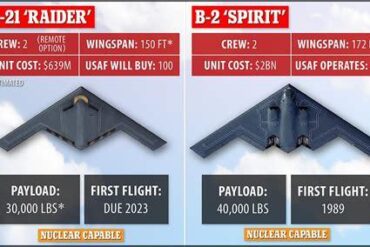
At the heart of the B-21 program lies a clear objective: modernize the bomber fleet while ensuring survivability against advanced air defenses. Developed by Northrop Grumman under the Long Range Strike Bomber program initiated in 2011, the aircraft was publicly unveiled in December 2022. Since then, momentum has surged, with flight testing, production scaling, and operational planning progressing in parallel. The Air Force intends to procure at least 100 B-21 Raiders, positioning the platform as the backbone of its strategic strike force.
The selection of operating bases reflects a deliberate effort to distribute capability across the continental United States while maintaining rapid global reach. Each base brings unique advantages, from training infrastructure to proximity to operational theaters, forming a network that enhances flexibility and deterrence.
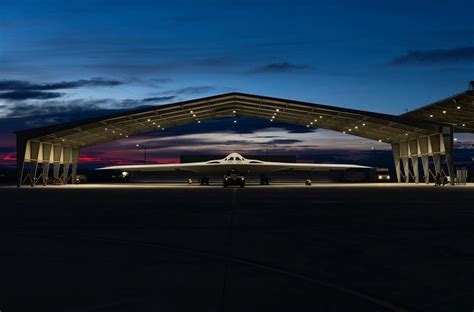
Ellsworth Air Force Base: The First Raider Stronghold
Ellsworth Air Force Base in South Dakota holds the distinction of being the first officially designated home of the B-21 Raider. This decision underscores Ellsworth’s long-standing role in bomber operations and its suitability for hosting next-generation aircraft. The base is undergoing significant upgrades, including new facilities tailored specifically for the Raider’s stealth maintenance requirements and advanced systems support.
Strategically located in the central United States, Ellsworth provides unobstructed access to global flight paths, making it ideal for long-range missions. Its selection also signals a transition, as the base prepares to evolve from its current fleet into a hub for sixth-generation bomber operations. The infrastructure investments here are not merely upgrades—they are a blueprint for how the Air Force intends to sustain stealth aircraft well into the future.
Whiteman Air Force Base: Stealth Legacy Meets the Future
Whiteman Air Force Base in Missouri, already synonymous with stealth operations as the home of the B-2 Spirit, is the second confirmed B-21 location. This choice is both practical and symbolic. Whiteman’s existing expertise in maintaining and operating stealth bombers provides a natural foundation for integrating the Raider.
The transition to the B-21 at Whiteman represents a continuity of stealth dominance, ensuring that institutional knowledge built over decades is preserved and expanded. The base’s personnel are uniquely positioned to adapt quickly to the Raider’s systems, accelerating its path to operational readiness. This continuity reduces risk while maximizing efficiency, a critical factor as the Air Force pushes toward a 2027 service entry target.
Dyess Air Force Base: Expanding Strategic Reach
Dyess Air Force Base in Texas completes the trio of announced locations, marking the third operational hub for the B-21 Raider. Known for its role in long-range bomber missions, Dyess brings both experience and geographic advantage to the program. Its southern location enhances coverage and flexibility, particularly for missions requiring rapid deployment across multiple theaters.
The inclusion of Dyess reflects a broader strategy to diversify basing and reduce vulnerability, ensuring that the Raider fleet remains resilient in the face of evolving threats. Infrastructure enhancements are already underway, aligning the base with the technical demands of maintaining a stealth platform built for sustained operations.
Engineering the Future of Strategic Bombing
Beyond basing decisions, the B-21 Raider’s development reveals a transformation in how military aircraft are designed and produced. With over $5 billion invested, the program leverages digital engineering and modular architecture to streamline upgrades and reduce lifecycle costs. This approach allows the aircraft to evolve alongside emerging threats without requiring complete redesigns.
Flight testing has demonstrated promising results, including successful in-flight refueling and minimal post-mission maintenance requirements. These achievements highlight a key advantage: operational readiness with reduced downtime. The Raider’s efficiency is further supported by a vast manufacturing network spanning more than 400 suppliers across 40 states, ensuring both scalability and industrial resilience.
A Strategic Network Taking Shape
The announcement of Ellsworth, Whiteman, and Dyess as B-21 bases marks only the beginning of a broader deployment strategy. Together, these locations form a distributed, resilient network capable of supporting global strike missions at a moment’s notice. As production accelerates and additional bases are considered, this network will expand, reinforcing the United States’ ability to project power with precision and stealth.
The B-21 Raider is not simply a replacement for aging bombers—it is a redefinition of strategic airpower, and the bases chosen to host it are the foundation of that transformation.