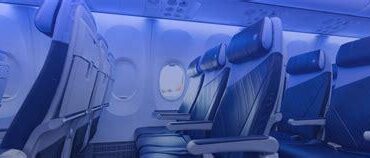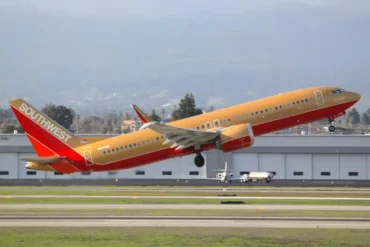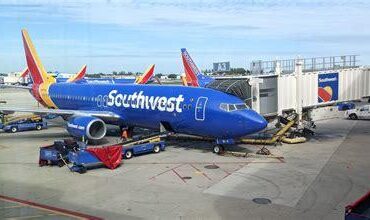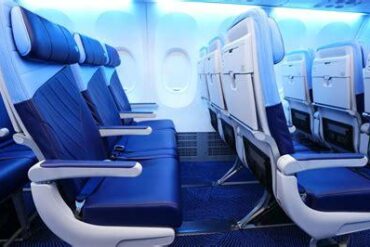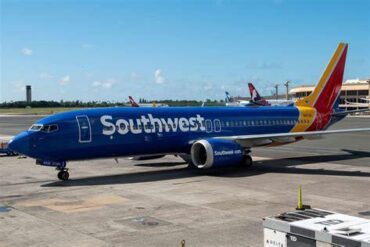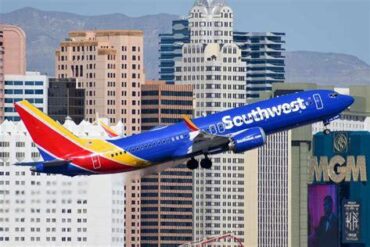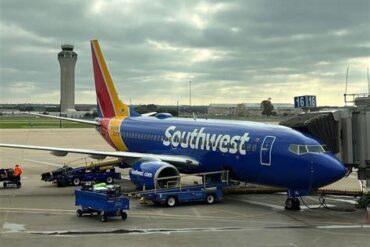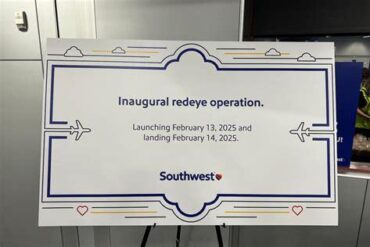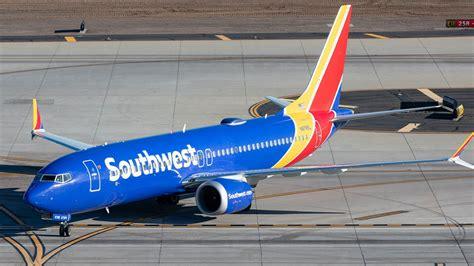
Southwest Airlines is making one of the most dramatic strategic shifts in its modern history, and it goes far beyond adding overnight flights. By October 2026, the carrier plans to operate 53 daily redeye flights, a scale that would have seemed unlikely for an airline once built around short-haul daytime flying, quick turns, and a famously simple customer experience. Yet this expansion depends on one deeper transformation: the decision to retire the airline’s iconic open seating model and move to assigned seats.
For decades, Southwest’s boarding system helped define the brand. Passengers lined up in boarding groups, entered the aircraft, and chose any available seat. It was unconventional, fast in many scenarios, and deeply associated with the airline’s low-cost identity. But the economics of aviation have changed. Aircraft are expensive assets, competition is fiercer, and every unused hour on the ground represents lost revenue potential.
That is why redeye flying has become increasingly attractive across the United States. Overnight schedules allow airlines to keep aircraft moving while many competitors still let jets sit idle. A plane that departs after midnight and lands at dawn can immediately be turned for a new morning departure, effectively creating extra productivity from the same fleet.
Southwest’s problem was that overnight operations demand a level of schedule precision that open seating could no longer reliably deliver.
Why Redeye Flights Matter More Than Ever
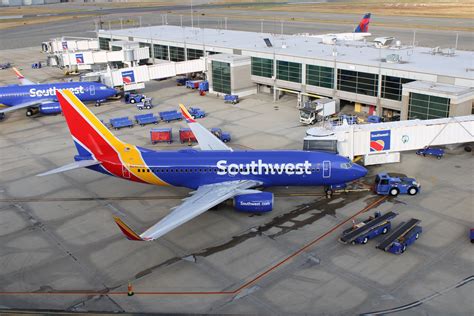
A redeye flight is more than a late departure. It is a financial tool. Airlines generate money when aircraft are flying, not parked. When a jet sits overnight at a gate, ownership costs, financing expenses, maintenance overhead, and depreciation continue while revenue stops.
For a carrier operating hundreds of aircraft, unlocking even a few additional flying hours per airplane can significantly improve margins. That is especially important for airlines facing delayed aircraft deliveries, rising labor costs, and fluctuating fuel prices.
Southwest’s new overnight schedules target exactly that opportunity. Instead of ending the day at 10:00 PM and resuming in the morning, aircraft can depart after midnight on long-haul sectors, land near sunrise, and immediately re-enter the network.
This matters most on routes such as:
- West Coast to Texas
- California to East Coast cities
- Las Vegas to major business markets
- Select international overnight routes
Those flights transform idle nighttime hours into productive utilization.
Why Open Seating Became a Liability
Open seating worked well when Southwest’s network was centered on shorter domestic hops with simpler passenger flows. Travelers boarded quickly, selected seats, and flights often departed with minimal complexity.
But open seating contains one hidden weakness: behavioral variability.
Some flights board smoothly. Others do not.
A family searching for seats together, passengers hesitating over aisle versus window, travelers placing bags in distant bins, or groups blocking rows while deciding where to sit can create unpredictable slowdowns. The issue is not always average boarding speed—it is inconsistency.
For daytime operations, small delays can sometimes be absorbed later. For redeye operations, they can become network-wide disruptions.
A midnight departure delayed by fifteen minutes may miss ideal arrival sequencing, compress ground turnaround time, disrupt crew schedules, and delay the first morning bank of flights.
That makes assigned seating less about customer preference and more about operational control.
The Precision Problem at Dallas Love Field
One of the clearest examples of why Southwest needs tighter discipline is Dallas Love Field, historically one of the airline’s most important airports.
Some overnight arrivals are timed to land at 6:00 AM, the exact moment local voluntary quiet-hour restrictions end. That means flights are designed to arrive the minute early-morning operations become acceptable.
There is almost no margin for error.
If boarding runs late in Los Angeles or Las Vegas, arrival timing can slip. Even a ten-minute variance may create noise complaints, gate conflicts, or cascading schedule pressure.
Assigned seating helps reduce this risk because passengers no longer spend time choosing seats after entering the cabin. They move directly to preassigned rows, reducing aisle hesitation and making departure times more dependable.
For an airline scheduling arrivals to the minute, predictability becomes priceless.
Crew Scheduling Makes Delays More Expensive
Airlines do not just schedule airplanes—they schedule people.
Pilots and cabin crew operate under strict duty-time regulations covering maximum work periods, rest requirements, and fatigue management. Overnight flying is particularly sensitive because circadian rhythm disruption increases fatigue risk.
When a flight pushes late during boarding, it can consume legal duty time. That may force crew replacements, expensive repositioning, or cancellations.
Those disruptions are costly because they often happen during limited overnight staffing windows when backup crews are harder to source.
Assigned seating reduces one of the most controllable causes of delay: boarding uncertainty.
That means Southwest can align crews more precisely with aircraft schedules and reduce the odds of expensive last-minute operational fixes.
Passenger Expectations Have Also Changed
There is another reason open seating no longer fit Southwest’s future: customer expectations on longer flights.
A one-hour domestic hop may tolerate spontaneity. A five-hour overnight journey is different.
Travelers increasingly want to know:
- Where they will sit
- Whether companions are together
- If they have aisle access
- How close they are to the front
- Whether they can rest comfortably overnight
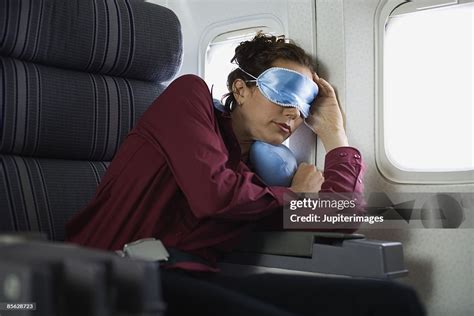
Redeye passengers value certainty because sleep, comfort, and stress reduction matter more at 1:00 AM than on a short midday flight.
That is particularly true as Southwest expands beyond its legacy profile into longer domestic and international routes. Competing against full-service carriers becomes harder if passengers cannot choose seats in advance.
Assigned seating modernizes the product while making overnight flying more appealing.
The Economics of Turning Aircraft at Dawn
The real money in redeyes is not only the overnight segment itself. It is what happens after landing.
An aircraft arriving around 6:00 AM can be cleaned, refueled, boarded, and sent back out on a profitable morning departure. That creates a continuous utilization cycle.
But this strategy works only if turnaround times remain tight.
If a redeye lands late because boarding was slow the night before, then:
- Morning departure may be delayed
- Crew connections may break
- Gates become congested
- Passenger misconnects increase
- Recovery costs rise across the day
Multiply that across dozens of daily redeyes and even minor inefficiencies become expensive.
Southwest’s move away from open seating is therefore an asset-productivity decision as much as a customer-service one.
Competitive Pressure Forced the Shift
The broader U.S. airline industry has evolved. Legacy carriers already use assigned seating, segmented cabins, premium upsells, redeye scheduling, and advanced network optimization. Ultra-low-cost competitors aggressively monetize extras while maximizing aircraft hours.
Southwest built success on simplicity, but simplicity can become rigidity when the market changes.
To compete effectively on coast-to-coast and international routes, the airline increasingly needs tools competitors already use:
- Assigned seating
- Revenue segmentation
- Better overnight scheduling
- Higher aircraft utilization
- More schedule precision
The end of open seating signals that Southwest is no longer defending tradition. It is optimizing for the next decade.
Why This Change Is Bigger Than Boarding
Some observers may view assigned seating as merely a branding shift. In reality, it changes the operational DNA of the airline.
Boarding influences:
- On-time performance
- Crew legality margins
- Turnaround speed
- Passenger satisfaction
- Network resilience
- Cost control
When Southwest says it plans to operate 53 daily redeye flights, it is also saying it needs a more engineered system than the one that made it famous.
The airline’s legendary open-seating model helped build an empire. But what built Southwest is not necessarily what scales Southwest into a new competitive era.
Final Verdict: Redeyes Needed Discipline, Not Nostalgia
Southwest Airlines did not kill open seating because it suddenly disliked its own history. It ended the system because overnight growth exposed its limitations.
Running 53 daily redeye flights by October 2026 requires punctual departures, precise dawn arrivals, efficient morning turns, compliant crew schedules, and passengers who can board with minimal friction.
Open seating offered freedom. Assigned seating offers predictability.
And in modern airline economics, predictability often wins.
Southwest’s redeye expansion is therefore more than a schedule update. It is proof that even the most iconic airline traditions can be retired when efficiency, scale, and competition demand something better.