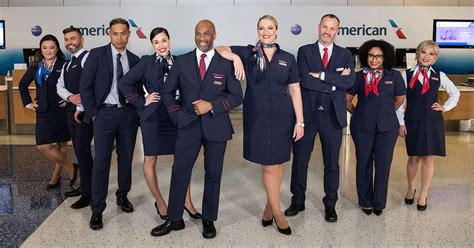
In a decisive move that underscores mounting pressure within the aviation industry, American Airlines has officially paused the hiring of new flight attendants for Summer 2025. The decision, though not entirely unexpected, highlights growing concerns over the macroeconomic environment in the United States and its profound effect on consumer behavior, corporate travel, and operational strategy across the airline sector.
The announcement aligns with a pattern emerging across the industry, where airlines are re-evaluating staffing, scheduling, and fleet utilization in response to shifting demand forecasts. As business travel expenditures shrink and leisure travelers become more cautious in their discretionary spending, American’s decision is emblematic of a recalibration phase among major U.S. carriers.
Strategic Retrenchment Reflects Demand-Side Weakness
American Airlines’ hiring freeze is not merely a tactical delay; it is a strategic signal. The company, headquartered at Dallas/Fort Worth International Airport (DFW), has drastically slowed its onboarding process for new cabin crew. This follows commentary from aviation insider JonNYC, who noted that the carrier’s internal sentiment suggests concern about overcapacity relative to declining demand projections.
Recent market indicators point toward a broad contraction in air travel appetite. Corporate clients are scaling back their travel budgets—opting for virtual meetings or hybrid event attendance—while individual travelers are more selective due to economic uncertainty. Fare reductions have quietly crept into several domestic and international routes, signaling an effort to stimulate demand in a tepid market.
Tariff Shocks and Global Trade Volatility
At the heart of American’s hiring pause lies a more complex macroeconomic issue: the escalation of U.S. tariffs and their reverberating consequences. New tariff policies introduced in early 2025 have rattled global markets and impacted sectors highly sensitive to international trade dynamics—including aviation.
The sudden imposition of tariffs as high as 50% on certain nations represents a dramatic departure from traditional U.S. trade strategy. Countries such as Lesotho and Laos have been hit hardest, with new U.S. rates vastly exceeding global averages. The ripple effects have been swift and punishing. Aviation stocks, including American’s, have plummeted, with the airline’s share price falling below its worst point during the COVID-19 pandemic.
Such volatility has weakened investor confidence and directly affected the carrier’s long-term strategic planning. Higher tariffs have historically been tied to reduced GDP growth, and the Smoot-Hawley Act of 1930 is often cited as a cautionary tale. It exacerbated the Great Depression by curbing trade and international cooperation—an outcome current economists fear could repeat.
Pilot Hiring Pause Sets Precedent in 2024
American’s current approach echoes its 2024 suspension of new pilot hires, a move that surprised many given the earlier post-pandemic pilot shortage. Last year, the airline halted new pilot class start dates for September through November as part of a calculated shift in workforce scaling. In its public statement, American cited the need to “optimize capacity” and tailor its talent acquisition to meet existing rather than speculative future demand.
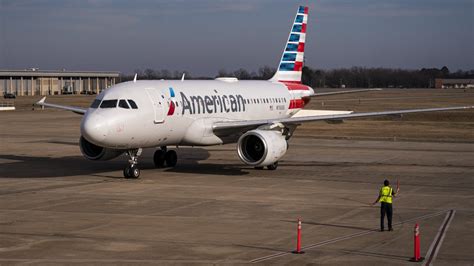
Importantly, that 2024 freeze did not affect pilots already in the training pipeline, and similar conditions are expected in the current freeze involving flight attendants. Individuals with conditional job offers have been notified, and the company has deferred updates on 2025 class scheduling.
This recurring theme suggests a company not only reacting to immediate market signals but actively shaping its operational posture for long-term sustainability amid a volatile global economy.
Consumer Spending and Loyalty Dynamics Shift
While the freeze may seem purely negative, there are unintended consequences that may benefit frequent flyers. According to loyalty expert Gary Leff, economic downturns often reduce overall credit card spending, thereby slowing the accrual of frequent flyer miles. This decrease in mileage issuance leads to lower competition for award seats, a rare bright spot for elite travelers during uncertain times.
Yet for the average consumer, higher tariffs and economic pressures translate to reduced international purchasing power, increased ticket prices (despite temporary fare reductions), and fewer route options as airlines trim unprofitable segments. Leisure travel—especially to global destinations—has been the first to falter, further contributing to American’s recalibrated workforce needs.
Leadership Turbulence at American Airlines
Adding to the complexity of the situation is internal disruption within American’s executive leadership. The departure of Chief Commercial Officer Vasu Raja coincided with a lowered second-quarter earnings forecast, suggesting operational and strategic issues go beyond external economic pressures.
During the Bernstein Strategic Decisions Conference on May 29, CEO Robert Isom conceded that American faces a challenging recovery path. “We’ve got some work to do on building back from the hole we’ve created for ourselves,” Isom stated—an unusually candid admission from a major airline CEO.
Such leadership instability further signals to markets that American is in a transitional and possibly defensive phase, reconsidering its growth trajectory and cost structures amid reduced earnings and structural headwinds.
Broader Industry Patterns Suggest Systemic Retrenchment
American Airlines is not alone. Other major carriers are also tightening operations in anticipation of reduced demand. Southwest Airlines (WN) has announced a similar slowdown in hiring and expansion due to rising operational costs, while United Airlines (UA) has responded to Boeing aircraft delays by offering unpaid leave to some pilots.
These moves indicate a systemic contraction within U.S. aviation, spurred by external economic forces and internal financial caution. This is not an isolated hiring pause but a symptom of a broader reckoning.
Legal Challenges Surrounding Tariff Authority
Legal scholars have expressed deep skepticism over the executive authority used to implement sweeping new tariffs. The current administration has invoked the International Emergency Economic Powers Act (IEEPA)—an act never before used to establish tariff structures. Traditionally, such actions fall under the Trade Act, which limits presidential tariff powers to 15% over a maximum of 150 days.
The use of IEEPA opens up potential constitutional challenges, especially under the “major questions doctrine” recently reinforced by the Supreme Court. This legal framework argues that Congress must explicitly authorize substantial policy shifts, such as long-term trade barriers. Without such clarity, the legitimacy of these tariffs—and by extension, their economic consequences—may face judicial rebuke.
Conclusion: A Sobering Summer Ahead for Aviation
As American Airlines suspends the onboarding of new flight attendants for the summer of 2025, the aviation community is left with more questions than answers. From volatile market reactions to evolving labor strategies, the airline’s moves reflect an industry entering a phase of austerity.
The freeze is both a response to real-time economic data and a protective maneuver to shield the carrier from overextension. While some may argue it is simply a short-term pause, the broader pattern suggests that 2025 will test the adaptability and resilience of American aviation like no year since the pandemic.
Only time will reveal whether these precautions are temporary, or the beginning of a new normal.