In a pivotal legal decision that underscores the tensions between national interests and global enterprise, a Brazilian federal court has ruled in favor of Boeing, allowing the American aerospace giant to continue recruiting local engineers for its expanding operations in Brazil. The court’s verdict not only brings a definitive close to a contentious lawsuit but also signals a major shift in the dynamics of Brazil’s high-tech labor market and its defense industrial base.
Boeing’s Strategic Expansion in Brazil Gains Legal Backing
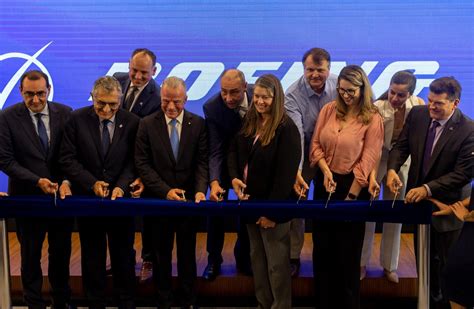
Boeing’s presence in Brazil has been growing steadily, with the establishment of its Engineering and Technology Center in São José dos Campos in October 2023 marking a significant milestone. This move was part of Boeing’s broader strategy to deepen its footprint in Latin America’s most advanced aerospace economy. Even before the center’s formal launch, nearly 500 Brazilian engineers had already been hired, many drawn from leading domestic firms including Embraer, Akaer, Avibras, and AEL Sistemas.
Industry Pushback: Allegations of Brain Drain and Strategic Risk
The aggressive recruitment sparked swift backlash from local industry stakeholders. Two major organizations—the Brazilian Association of Defense and Security Material Industries (Abimde) and the Brazilian Aerospace Industries Association (AIAB)—filed a lawsuit seeking to limit Boeing’s ability to recruit from Brazilian firms. They accused Boeing of triggering a brain drain by siphoning off key engineering talent, many of whom had been trained at public universities and were involved in sensitive national defense projects.
These associations claimed that ten major defense companies had already suffered severe losses in critical teams. In particular, Embraer, Brazil’s aerospace flagship, reportedly lost up to 70% of its personnel in some strategic units. This exodus, they argued, could jeopardize national sovereignty, especially considering that some of the engineers had access to classified military and defense information.
The Court’s Verdict: Legal Yet Controversial
Despite acknowledging the potentially disruptive nature of Boeing’s hiring strategy, Judge Renato Barth Pires ruled that it did not breach any existing laws. He described Boeing’s actions as “aggressive but lawful,” concluding that the legal framework of Brazil’s free enterprise system protected the right of professionals to seek better employment.
“The hiring of engineers by Boeing, including those who completed the professional master’s degree offered through the Embraer/ITA partnership, although certainly frustrating, is not unlawful,” Judge Pires wrote. “Nor does it authorize judicial intervention to prevent or limit such hiring.”
This decision effectively dismantled the core of the plaintiffs’ argument, which included a proposed annual cap of 6% recruitment from any single Brazilian company and a fine of $1 million per excess hire. The judge ruled that no demonstrable harm to national defense had occurred and that the allegations posed, at best, a “merely potential risk.”
A Look at the Educational and Strategic Foundations
Brazil’s aerospace engineering talent pool is uniquely robust, largely due to the country’s investments in elite public institutions such as the Aeronautics Institute of Technology (ITA), Universidade Federal de Minas Gerais (UFMG), and Universidade Federal de São Carlos (UFSCar). Many of Boeing’s new hires were trained at these institutions, and had gained significant expertise working on classified projects or in government-backed aerospace R&D initiatives.

As a result, critics argue that Boeing benefits disproportionately from publicly subsidized education, essentially absorbing talent that Brazil has spent decades cultivating. This is particularly sensitive in areas linked to strategic defense technologies, where continuity and retention of expertise are vital.
Post-Embraer Fallout: Boeing’s Plan B?
Boeing’s recruitment strategy must also be seen in the context of a failed acquisition. In 2018, Boeing proposed a $4.2 billion deal to acquire Embraer’s commercial aviation division, aiming to solidify its presence in the regional jet market. The deal would have created a joint venture, giving Boeing access to Embraer’s design talent, manufacturing capacity, and extensive supplier network.
However, the deal collapsed in April 2020 as Boeing reeled from the 737 MAX grounding crisis and the financial shock of the COVID-19 pandemic. With the merger off the table, Boeing pivoted to building its own independent R&D infrastructure in Brazil, spearheading a new center and hiring top-tier talent directly.
National Security vs. Market Liberalism: A Delicate Balance
The case has rekindled a deeper debate within Brazil over the limits of economic liberalism in sectors deemed vital to national security. Industry experts and political analysts warn that the unregulated exodus of defense-aligned personnel could erode the very foundations of Brazil’s sovereignty in aerospace defense.
Roberto Gallo, President of Abimde, emphasized this risk, stating: “The impact is already significant. This is not just about jobs—it’s about strategic independence.” For companies like Avibras and Safran, whose portfolios include missile systems, defense electronics, and surveillance technologies, losing engineers to Boeing represents more than a talent gap—it’s a potential vulnerability.
Nevertheless, Judge Pires cautioned against judicial overreach, emphasizing the constitutional protections for free movement and professional autonomy. He warned that imposing restrictions on private-sector hiring could stifle innovation and violate the economic liberties enshrined in Brazil’s legal framework.
Implications for the Aerospace Ecosystem in Brazil
With the court’s decision now public, Boeing is expected to accelerate the development of its São José dos Campos center, potentially adding hundreds more engineers in the next two years. This has dual implications:
- For Boeing: It gains a seasoned, cost-effective talent base in a region with advanced aerospace infrastructure.
- For Brazil: It risks a hollowing-out of its local aerospace ecosystem unless policies are enacted to retain talent and incentivize domestic innovation.
At the policy level, there may be renewed calls for strategic workforce planning, public-private R&D initiatives, and legal frameworks that balance openness with protection of critical industries. The Aerospace Industry National Plan, which had been dormant for years, may now receive renewed legislative attention.
What Comes Next? An Appeal and Strategic Recalibration
Abimde and AIAB have indicated they are considering an appeal, arguing that the court failed to fully recognize the long-term consequences of Boeing’s talent acquisition strategy. If pursued, the case could reach Brazil’s Superior Court of Justice, opening a broader constitutional discussion on national interest versus global corporate rights.
Meanwhile, Boeing’s continued hiring will test the resilience of Brazil’s aerospace sector. Companies may need to bolster employee retention, offer international-level compensation, or form alliances with academic institutions to create a talent pipeline resistant to foreign poaching.
In conclusion, while Boeing’s legal victory grants it a powerful advantage in Brazil’s aerospace domain, it simultaneously exposes systemic vulnerabilities within the country’s industrial and educational ecosystems. How Brazil chooses to respond—through legislation, industrial policy, or international diplomacy—will shape the future of its sovereignty in one of the world’s most strategic high-tech sectors.