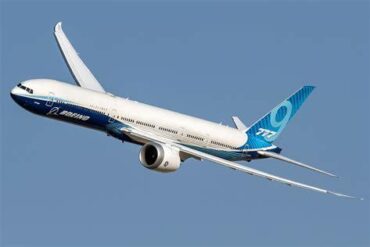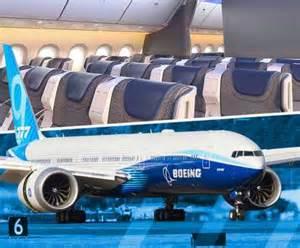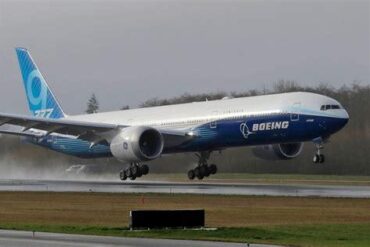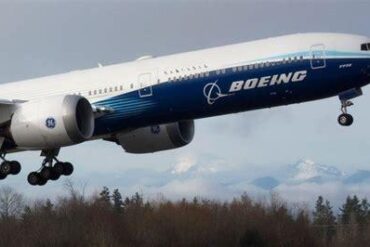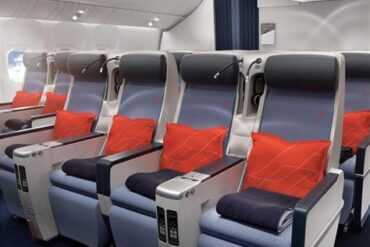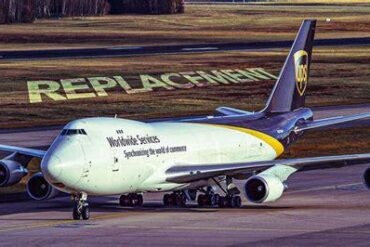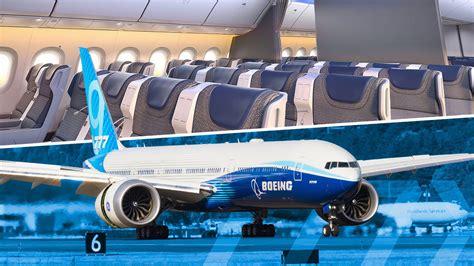
The Boeing 777X was conceived as the natural heir to the throne once occupied by the Boeing 747 and Airbus A380. It is the world’s largest twinjet, a machine built to dominate ultra-long-haul skies with enormous capacity, cutting-edge engines, and a wingspan so wide it literally folds at the tips. On paper, it is a flagship designed for the future. Yet for all its ambition, one glaring fact stands out: not a single major US airline has committed to ordering it.
That absence is not accidental. It is structural, strategic, and deeply rooted in how American carriers have reshaped their business models over the past two decades. While international airlines with tightly concentrated hubs and heavy long-haul demand have lined up for the 777X, US carriers have taken a different path—one defined by flexibility, measured growth, and a preference for smaller widebodies that reduce risk rather than amplify it.
The story of why US airlines are not buying the Boeing 777X is less about engineering and more about economics, network design, operational philosophy, and timing. The aircraft itself is not lacking in capability. It may, in fact, be too capable for what the American market currently demands.
The Boeing 777X: A Giant Built for a Vanishing Era
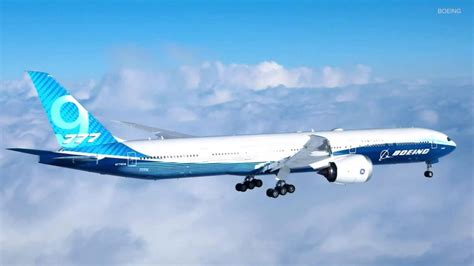
The 777X family consists primarily of two passenger variants: the Boeing 777-8 and the stretched Boeing 777-9. The -9, the larger of the two, can seat up to 426 passengers in high-density configurations. That places it in rarefied territory once occupied by quadjets like the 747 and A380.
Its defining features include:
- GE9X engines, the largest and most powerful commercial turbofans ever built
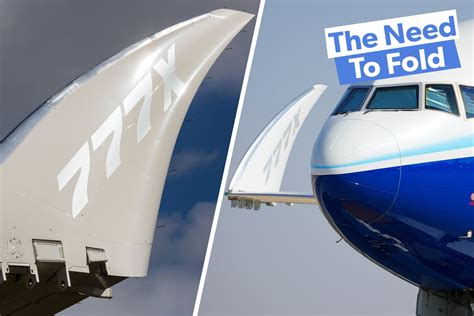
- A composite wing with folding wingtips, expanding span in flight while fitting standard gates on the ground
- Advanced flight deck systems and aerodynamic refinements designed to reduce fuel burn per seat
This is a jet engineered for high-capacity, high-demand trunk routes. It is optimized for airlines that can consistently fill hundreds of seats on long-haul corridors such as Dubai–London or Doha–Sydney.
That profile fits carriers like Emirates, Qatar Airways, Lufthansa, and Singapore Airlines. It does not neatly align with the evolving strategies of Delta, United, or American.
Why The Big Three Don’t Need The Capacity
At the heart of the issue is scale. The 777X is enormous. That size is both its greatest strength and its central liability.
US carriers operate vast domestic networks feeding into international hubs, but their long-haul strategies increasingly emphasize frequency over maximum capacity. Instead of flying one massive aircraft per day, they prefer multiple smaller widebodies, offering passengers scheduling flexibility while spreading commercial risk.
Smaller aircraft like the Boeing 787 Dreamliner and Airbus A350-900 strike a balance between range and efficiency. They carry fewer passengers, but they are easier to fill consistently. Load factor—the percentage of seats sold—becomes less of a pressure point. An underfilled 777X would be a revenue headache; a moderately loaded 787 is far more forgiving.
Delta and United have demonstrated that their current route structures are better served by aircraft seating roughly 250 to 330 passengers. The jump to 400-plus seats is not incremental—it is transformative. And transformations carry risk.
Network Architecture: Hub Concentration vs. Diversification
International carriers that have embraced the 777X often operate around super hubs. Emirates funnels global traffic through Dubai. Qatar Airways does the same through Doha. Lufthansa concentrates significant long-haul flows through Frankfurt and Munich.
The United States, by contrast, is geographically vast and commercially diverse. American, Delta, and United operate multiple hubs across the country—Atlanta, Dallas, Chicago, Denver, New York, Los Angeles. Traffic is distributed rather than hyper-concentrated.
That distribution weakens the case for ultra-large twinjets. The economics of the 777X shine brightest when an airline can reliably aggregate immense passenger volumes onto a single long-haul departure. US airlines tend to diffuse that demand across several routes and frequencies instead.
In short, their networks are optimized for flexibility, not gigantism.
The Shadow of Existing 777 Fleets
Another underappreciated factor is fleet age. Both American and United still operate substantial numbers of earlier-generation Boeing 777-200 and 777-300ER aircraft. Many of these jets have years of useful service life remaining.
Airlines do not retire widebodies casually. These aircraft represent hundreds of millions of dollars in capital investment. Replacing them prematurely would undermine financial discipline—something US carriers have emphasized heavily since restructuring in the 2000s.
Rather than leap toward the 777X, airlines are choosing incremental fleet renewal via the 787 and A350 families. Those aircraft provide efficiency gains without radically altering capacity profiles.
The 777X is not simply an upgrade. It is a strategic shift.
Certification Delays and Eroded Confidence
Even if the size were appealing, the program’s timeline has complicated its attractiveness.
Originally slated for entry into service around 2020, the 777X has endured nearly eight years of delays. Certification scrutiny intensified following the 737 MAX crises. Engine durability issues, test interruptions, regulatory reviews, and production slowdowns compounded the situation.
For airlines planning fleet renewals, certainty matters. Aircraft deliveries are scheduled years in advance to match route expansion, retirement plans, and financial forecasting. When timelines slip repeatedly, planning becomes unstable.
The result is predictable: airlines gravitate toward aircraft already in service. The Airbus A350-900 entered operations in 2015. The A350-1000 followed in 2018. The Boeing 787 has been flying commercially since 2011.
In comparison, the 777X remains in the testing and certification phase, with first deliveries now anticipated in the mid-to-late 2020s.
Airbus Capitalized on the Delay Window
Airbus did not wait.
The A350-1000, designed to compete directly with the 777-9, has accumulated significant orders and established a track record. While it seats fewer passengers at maximum configuration, it offers a balance of range, capacity, and operating cost that many airlines consider optimal.
For US carriers, the A350-1000 or A350-900 provides a more measured step upward. Delta already operates the A350-900. United has ordered A350s. The familiarity with Airbus composite widebodies reduces perceived risk.
The 777X, by contrast, represents both technological ambition and programmatic uncertainty. Airlines rarely reward uncertainty with billion-dollar commitments.
Fuel Economics and Real-World Performance Questions
The 777X’s promise rests heavily on the GE9X engine, engineered to deliver exceptional fuel efficiency per seat. For airlines that can fill the aircraft, the math becomes compelling: lower cost per passenger across long distances.
However, some customers have questioned whether the advertised fuel burn performance will fully materialize under operational conditions. Emirates, the program’s largest customer, has publicly scrutinized aspects of performance validation.
US airlines, historically cautious after past fleet miscalculations, appear unwilling to gamble on theoretical efficiency gains when proven alternatives exist.
A 787 may burn slightly more fuel per seat, but if it flies closer to full capacity more consistently, total route profitability improves. Airlines think in terms of route economics, not brochure metrics.
The Pandemic Reset Changed Fleet Philosophy
The COVID-19 pandemic forced airlines worldwide to reassess fleet complexity and financial exposure. The experience reinforced a preference for versatile aircraft capable of serving multiple route types.
Ultra-large jets are inherently specialized. They perform brilliantly in dense, long-haul markets. They are less adaptable in thinner markets.
During recovery, airlines favored aircraft that could pivot between transatlantic, transpacific, and high-demand regional routes without requiring consistently massive passenger volumes. The 787 and A350 families excel in that flexible middle ground.
The 777X, as the “heavyweight in a twinjet future,” occupies a narrower operational niche.
The Cargo Variant Faces Similar Indifference
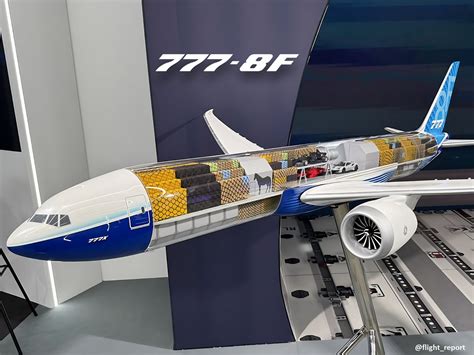
The Boeing 777-8F freighter was expected to inherit the mantle left by the 747 freighter. Yet US cargo carriers have not rushed to embrace it either.
The aircraft has accumulated orders internationally, but delays have pushed first deliveries toward the latter half of the decade. Meanwhile, Airbus is advancing the A350F program, potentially reaching market sooner.
Cargo economics are unforgiving. Ground efficiency, door size, payload flexibility, and delivery certainty matter intensely. US operators have historically balanced fleets with 767 freighters and 777Fs, avoiding overconcentration in ultra-large platforms.
The absence of American orders in the freighter segment mirrors the passenger story: caution prevails.
A Strategic Bet on the Middle, Not the Extreme
Viewed holistically, the decision by US airlines not to order the Boeing 777X is not a rejection of innovation. It is a calculated bet on moderation.
The American market rewards operational agility. Airlines prioritize:
- Manageable capacity increases
- Proven reliability
- Flexible deployment across diverse route profiles
- Predictable certification timelines
The 777X excels in scale, range, and technological advancement. It is designed for airlines that can channel vast passenger flows through centralized hubs. The United States does not operate that way to the same extent as Gulf or European mega-hubs.
In aviation strategy, bigger is not automatically better. Bigger is better only when demand is consistently immense and concentrated.
Could That Change?
Commercial aviation evolves in cycles. Ultra-long-haul demand may surge. Consolidation could intensify hub concentration. Environmental regulation could further reward next-generation efficiency at scale.
If US carriers begin retiring large numbers of 777-300ERs simultaneously, or if transpacific demand outpaces expectations, the calculus could shift. Fleet decisions are rarely permanent; they are reflections of present realities.
For now, those realities favor aircraft in the 250–350 seat category. The 777X, magnificent and imposing, sits slightly beyond that sweet spot.
The Heavyweight Without a Home in America
The Boeing 777X represents a bold vision: a future where twinjets replace quadjets entirely, where enormous passenger volumes travel farther on two engines than ever before. It is technologically impressive and strategically ambitious.
Yet in the United States, ambition must align with network logic. The largest twinjet ever built does not currently fit the structural and economic frameworks guiding American airline planning.
So the skies over Atlanta, Chicago, and Dallas may not see the 777X in domestic liveries anytime soon. Not because it lacks capability, but because capability alone does not dictate demand.
In aviation, the aircraft that wins is not always the biggest or the most powerful. It is the one that fits the route map.