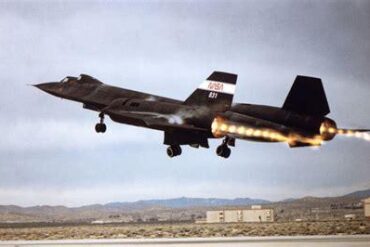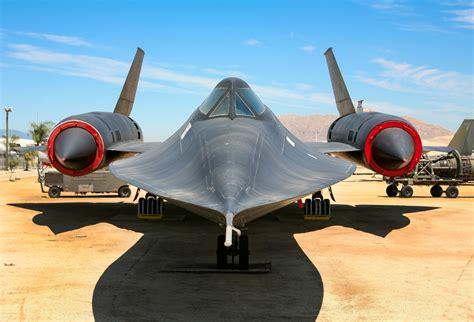
Few machines in human history embody raw technological audacity quite like the SR-71 Blackbird. Conceived at the height of Cold War tension, it was not merely an aircraft—it was a statement. A declaration that engineering, when pushed beyond conventional limits, could redefine what was physically possible. Decades after its retirement, its records remain untouched, its legend undiminished, and its performance still borderline unbelievable.
A Reconnaissance Machine Built to Outrun Everything
The SR-71 Blackbird was never meant to dogfight. It was never intended to carry weapons or engage enemies directly. Instead, it embraced a far more radical philosophy: speed and altitude as ultimate survival tools. Designed by Lockheed’s secretive Skunk Works division, the aircraft was built to penetrate hostile airspace, gather intelligence, and escape before threats could even react.
This philosophy emerged from a harsh reality. Earlier reconnaissance platforms like the U-2 had proven vulnerable. The Cold War demanded a new kind of aircraft—one that could not simply evade detection, but one that could render interception practically impossible.
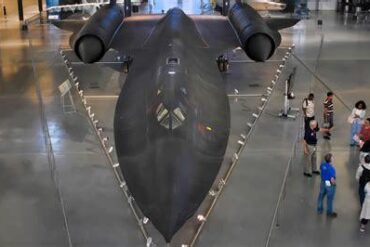
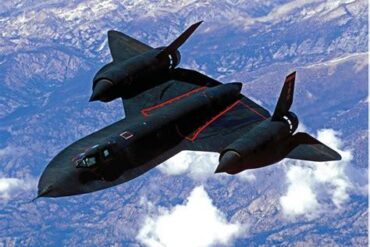
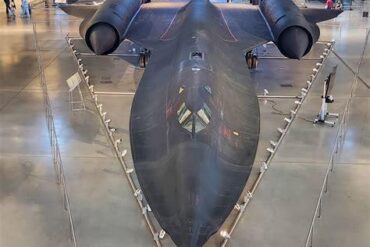
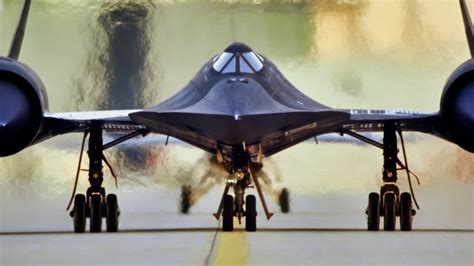
The result was a sleek, otherworldly aircraft that looked like it belonged in science fiction. Every line, curve, and surface was optimized for one purpose: sustained flight at speeds exceeding Mach 3.
Engineering for the Edge of Physics
What made the SR-71 extraordinary was not just its speed, but how it achieved it. Flying at Mach 3 generates immense aerodynamic heating, with surface temperatures exceeding 300°C (572°F). Conventional materials would simply fail under such stress.
Lockheed’s solution was revolutionary: titanium construction. Over 80% of the aircraft was built from this heat-resistant metal, a choice that introduced massive manufacturing challenges. Titanium was difficult to work with, expensive, and required entirely new fabrication techniques.
Even more fascinating was the aircraft’s behavior on the ground. The SR-71 was designed to expand under heat. At ambient temperatures, its panels didn’t fully seal, causing fuel to leak slightly while parked. Only at high speeds—when the structure expanded—did the aircraft become fully airtight.
This was not a flaw. It was intentional engineering at its most extreme.
The Record That Still Stands
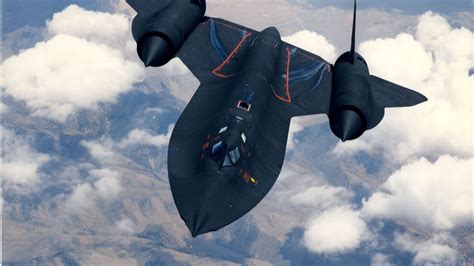
On July 28, 1976, the SR-71 achieved what no other crewed jet has matched since. It set the absolute speed record for an air-breathing manned aircraft: 2,193.2 mph (3,529.6 km/h)—approximately Mach 3.3.
To grasp this speed, consider this: the aircraft was traveling at nearly one kilometer per second. At that velocity, it could cross the continental United States in roughly one hour.
What makes this achievement even more remarkable is that it was not a short burst. The SR-71 was designed for sustained high-speed cruise, not momentary acceleration. It could maintain these extreme velocities for extended missions, something very few aircraft in history have ever approached.
There are even credible accounts suggesting that, under certain conditions, Blackbirds exceeded Mach 3.4. Yet even without pushing beyond its official limits, the aircraft secured a record that has remained untouched for nearly half a century.
Operating at the Edge of Space
Speed alone did not define the SR-71’s dominance. Its altitude capabilities were equally staggering. The aircraft routinely operated above 85,000 feet, placing it far beyond the reach of most conventional aircraft and many missile systems of its time.
At these altitudes, the sky darkens, and the curvature of Earth becomes visible. Pilots often described the experience as flying at the boundary between atmosphere and space.
This altitude was not just for spectacle—it was a critical component of survivability. The higher the aircraft flew, the fewer threats could reach it. Combined with its speed, this created a nearly untouchable reconnaissance platform.
On that same record-setting day in 1976, the SR-71 also achieved an altitude record of 85,068 feet in sustained horizontal flight, reinforcing its dominance not just in speed, but in vertical performance.
The Birth of a Cold War Icon
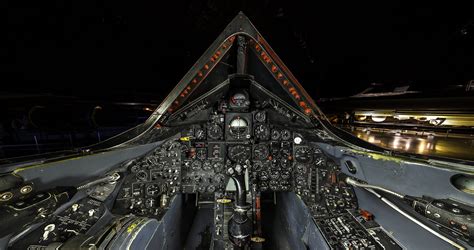
The SR-71’s origins trace back to the Lockheed A-12, a highly classified reconnaissance aircraft developed for the CIA. Led by the legendary engineer Clarence “Kelly” Johnson, the Skunk Works team pushed the boundaries of aerospace design.
The transition from A-12 to SR-71 introduced critical enhancements:
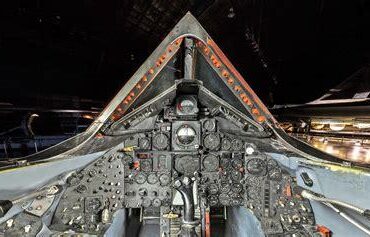
- A two-person cockpit for pilot and reconnaissance systems officer
- Advanced sensor suites capable of capturing high-resolution imagery
- Greater range and endurance for global missions
The development process was conducted under intense secrecy. When the aircraft was publicly revealed in 1964, it stunned the world. By 1966, it had entered operational service with the U.S. Air Force.
Only 32 units were ever built, making it not just advanced, but exceptionally rare.
A Masterpiece of Aerodynamic Design
The SR-71’s distinctive shape was not aesthetic—it was purely functional. Its long, slender fuselage minimized drag at high speeds, while its sharply swept wings enhanced stability in supersonic flight.
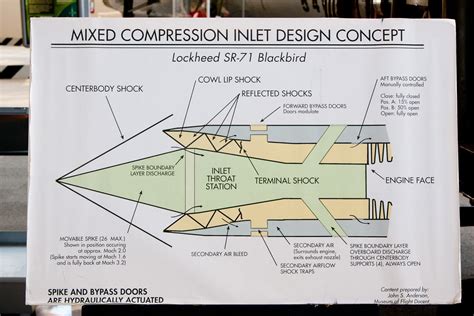
One of its most critical innovations was its engine inlet system. At Mach 3, managing airflow into the engines becomes a complex challenge. The Blackbird used movable inlet spikes to precisely control shockwaves, ensuring optimal airflow into its engines.
These engines, the Pratt & Whitney J58, were engineering marvels in their own right. At high speeds, they operated in a hybrid mode, effectively behaving like ramjets. This allowed the aircraft to sustain extreme velocities with remarkable efficiency.
In many ways, the SR-71 was not just a jet—it was a precursor to hypersonic propulsion concepts.
Operational Dominance Without Combat
Throughout its service life, the SR-71 flew thousands of missions across some of the most contested regions on Earth. From Europe to the Middle East to Asia, it gathered critical intelligence during moments of geopolitical tension.
Despite operating in hostile airspace, the aircraft achieved something extraordinary: it was never shot down by enemy action.
Missiles were launched at it. Interceptors attempted to pursue it. None succeeded.
The aircraft’s standard evasive maneuver was almost absurd in its simplicity—accelerate. By pushing beyond Mach 3, the Blackbird could outrun incoming threats, leaving missiles trailing behind in its wake.
This was not stealth in the modern sense. It was something arguably more impressive: outright speed dominance.
Life Inside the Blackbird
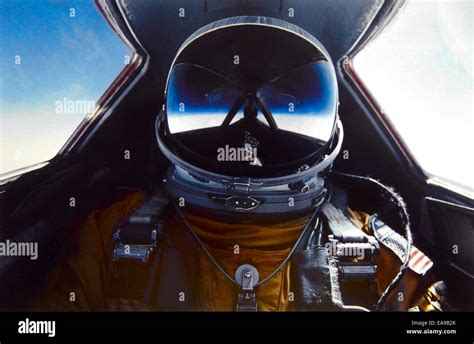
Flying the SR-71 was unlike piloting any other aircraft. Crews wore full-pressure suits, similar to those used by astronauts, due to the extreme altitudes involved.
Inside the cockpit, temperatures could fluctuate dramatically, and the physical demands on pilots were intense. Navigation at such speeds required absolute precision—small errors could translate into massive deviations over distance.
Refueling was another challenge. The aircraft typically took off with partial fuel loads due to leakage issues and then refueled mid-air shortly after departure.
Despite these complexities, pilots often described flying the SR-71 as one of the most exhilarating experiences in aviation history.
Why the SR-71 Was Retired
Given its unmatched capabilities, its retirement might seem puzzling. The reality, however, was driven by practical considerations.
The aircraft was extremely expensive to operate. Its specialized fuel, maintenance requirements, and limited number of trained personnel made it a costly asset.
At the same time, the strategic landscape was shifting. Satellites began to take on a larger role in reconnaissance, offering persistent surveillance without the need for risky overflights.
Budget constraints in the post-Cold War era further accelerated its retirement. The U.S. Air Force officially retired the SR-71 in 1990, although a brief reactivation occurred in the mid-1990s before its final withdrawal.
Importantly, the aircraft was not retired because it was obsolete. It was retired because its cost and specialization no longer aligned with evolving priorities.
A Second Life in Research
Even after its military career ended, the SR-71 continued to contribute to aerospace innovation. NASA operated several Blackbirds as research platforms, using them to study high-speed aerodynamics and propulsion.
These missions extended into the late 1990s, culminating in the aircraft’s final flight in 1999.
This extended service life underscored a critical truth: the SR-71 was not just ahead of its time—it was decades ahead.
The Unchallenged Legacy
Today, no crewed jet has surpassed the SR-71’s speed record. Despite advances in aviation technology, the challenges of sustained Mach 3+ flight remain formidable.
Modern military aircraft prioritize stealth, versatility, and cost-efficiency. Hypersonic research continues, but it largely focuses on unmanned systems and experimental platforms.
The SR-71 occupies a unique place in history. It represents a moment when engineering ambition aligned perfectly with strategic necessity, producing an aircraft that pushed boundaries in every dimension.
Why the Record Still Holds
Breaking the SR-71’s record is not simply a matter of building a faster aircraft. It requires overcoming a series of complex challenges:
- Thermal management at extreme speeds
- Structural integrity under intense stress
- Engine efficiency in high-Mach regimes
- Economic feasibility of sustained operations
These are not trivial obstacles. They demand massive investment and a clear strategic need—conditions that have not aligned in the decades since the Blackbird’s retirement.
As a result, the SR-71’s record endures, not because it is impossible to surpass, but because no program has yet justified the effort required to do so.
The Bottom Line: A Machine That Redefined Limits
The SR-71 Blackbird was more than a reconnaissance aircraft. It was a technological milestone, a machine that demonstrated what could be achieved when innovation is pushed to its absolute limits.
Its unmatched speed, extraordinary altitude, and operational success combined to create an aircraft that remains unrivaled in its category. Nearly fifty years after setting its record, it continues to stand as the fastest crewed air-breathing aircraft ever built.
In an era defined by rapid technological change, the SR-71 serves as a powerful reminder: sometimes, the most remarkable achievements are those that remain unbeaten—not because they are forgotten, but because they were so far ahead of their time that the world is still catching up.