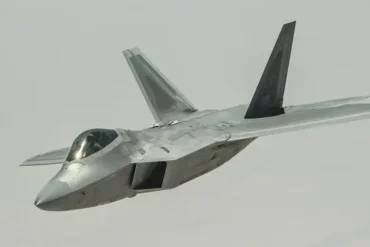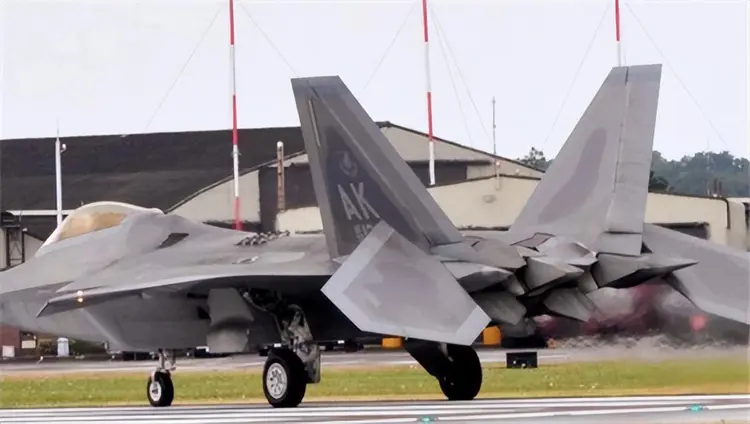
The F-22 Raptor represents a pinnacle of modern fighter jet design, integrating advanced stealth, high maneuverability, and unparalleled air superiority. A crucial component of its performance is the exhaust nozzle, which is engineered to optimize thrust vectoring while minimizing radar and infrared (IR) signatures. This article delves into the intricacies of the F-22’s nozzle system, examining its stealth-enhancing attributes, integration with the F119-PW-100 turbofan engine, infrared suppression measures, and future developments.
Two-Dimensional Nozzle Design and Stealth Characteristics
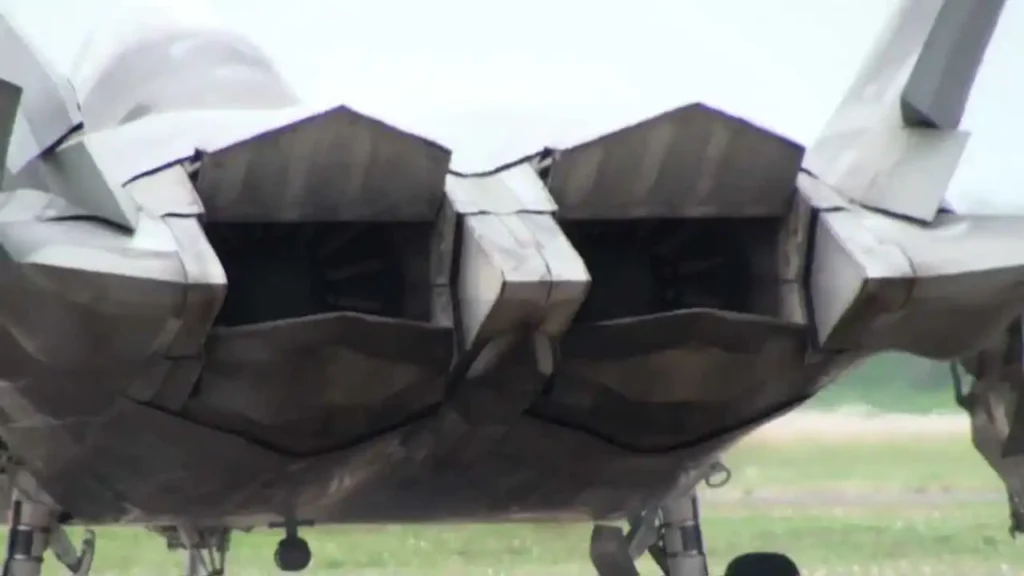
The F-22’s thrust vectoring nozzle employs a two-dimensional (2D) configuration, distinguishing it from traditional circular exhaust nozzles. This design features a rectangular or flat shape, which significantly reduces radar cross-section (RCS) by minimizing radar wave reflections. The F-22’s nozzle plays a fundamental role in its stealth capability, contributing to its reported RCS of only 0.001–0.08 square meters.
Unlike conventional nozzles that expose a circular exhaust plume, the F-22’s flat nozzle design diminishes the infrared signature by dispersing the exhaust over a broader area, reducing its thermal footprint. Additionally, this design aligns with the aircraft’s overall low-observable (LO) shaping, ensuring that its rear profile remains difficult to detect by enemy sensors.
Radar Signature Reduction
To further enhance stealth, the nozzle edges are carefully constructed to minimize high-frequency radar reflections. The absence of moving round edges ensures that radar energy is scattered instead of returning as a concentrated reflection, which is a common issue with circular nozzle designs found in fourth-generation fighters like the F-15 Eagle and F/A-18 Super Hornet.
Integration with the F119-PW-100 Engine
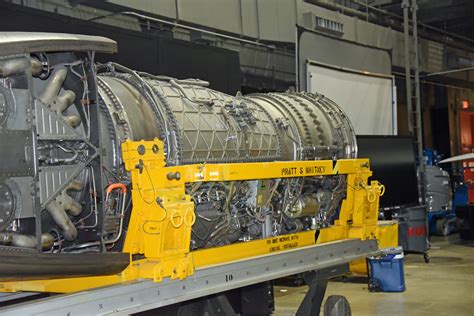
The F-22 Raptor is powered by two Pratt & Whitney F119-PW-100 turbofan engines, each capable of generating 156 kN of thrust. This high-bypass augmented turbofan engine is specifically designed for sustained supersonic cruise (supercruise) without the need for afterburners, a capability that significantly enhances combat efficiency and range.
The thrust vectoring nozzles provide +/- 20 degrees of pitch-axis movement, allowing for unparalleled maneuverability. The seamless integration of the F119 engine and the 2D nozzle enables the Raptor to perform rapid pitch and yaw maneuvers, making it one of the most agile air superiority fighters in existence.
Enhanced Aerodynamics and Control
- High Angle of Attack (AoA) Stability: The vectoring nozzles improve high-AoA control, essential for executing post-stall maneuvers like the Cobra maneuver.
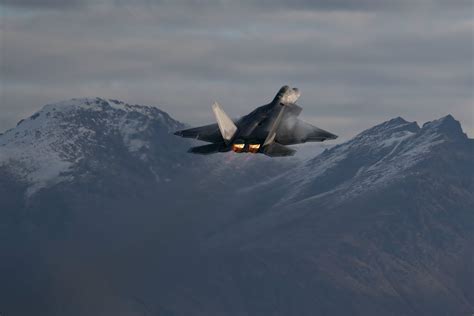
- Reduced Infrared Signature: By directing exhaust gases in a controlled manner, the F-22’s nozzle lowers the heat signature, reducing susceptibility to infrared-guided missiles.
- Optimized Airflow: The nozzle design also improves the turbulent flow interaction, optimizing fuel efficiency and performance.
Infrared Suppression and Heat Management
The F-22’s nozzle system incorporates several heat suppression techniques to counteract infrared detection. Since modern IR-guided missiles such as the AIM-9X Sidewinder and Russian R-73 rely on thermal tracking, minimizing the exhaust heat signature is critical.
Infrared Reduction Strategies
- Cooling Airflow Layers: By introducing cool air layers around the hot exhaust stream, the F-22 mitigates heat dissipation, reducing infrared detectability.
- Advanced Heat-Resistant Coatings: The internal nozzle lining features materials designed to absorb and disperse heat effectively.
- Flat Exhaust Plume Dispersion: The elongated, rectangular exhaust allows for more even heat dissipation compared to circular nozzle plumes.
Upgrades and Future Evolution
Despite its advanced design, the F-22’s nozzle system continues to undergo enhancements. The 2025 U.S. defense budget has allocated resources for sensor integration and thermal management improvements, which indirectly benefit the exhaust system.
Potential Upgrades
- Adaptive Engine Transition Program (AETP): New engine developments, such as the XA100 engine, may influence future thrust vectoring nozzles.
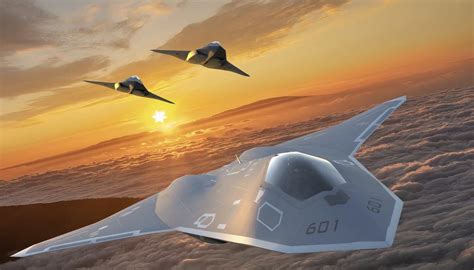
- Next-Generation Air Dominance (NGAD) Influence: The sixth-generation fighter programs are likely to refine stealth nozzle designs, leveraging technologies from the F-22.
- Enhanced Thermal Coatings: Upgrades in heat-resistant composites could further reduce infrared emissions.
Conclusion
The F-22 Raptor’s nozzle design is an engineering masterpiece that balances stealth, performance, and maneuverability. Through two-dimensional vectoring, infrared suppression, and seamless integration with the F119-PW-100 engine, the exhaust system enhances air combat effectiveness. Although the F-22 production line has ended, ongoing technological advancements ensure that its nozzle design continues to serve as a benchmark for future fighter aircraft.
FAQ
1. Why does the F-22 use a two-dimensional nozzle instead of a circular one?
The 2D nozzle design minimizes radar reflections, reduces infrared signatures, and enhances thrust vectoring for agility. Unlike traditional circular nozzles, it aligns with the aircraft’s stealth profile and improves high-AoA control.
2. How does the F-22’s nozzle contribute to its stealth capabilities?
The flat exhaust nozzle reduces the radar cross-section by preventing strong radar wave reflections. Additionally, its infrared suppression mechanisms, including cooling airflow layers and thermal coatings, lower heat emissions, making it harder for IR-guided missiles to track the jet.
3. Will future fighters use a similar nozzle design?
Yes, future sixth-generation fighters under the NGAD program are expected to adopt advanced nozzle designs, further refining stealth characteristics and thrust vectoring. The F-22’s nozzle serves as a reference for next-gen air combat platforms.