Generational Differences and Core Design Concepts
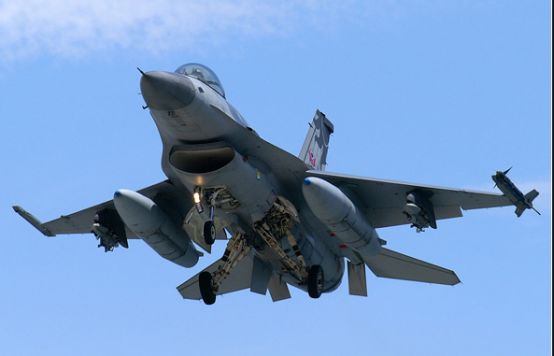
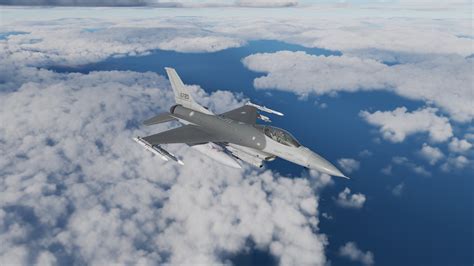
The F-16 Fighting Falcon belongs to the fourth generation of fighter jets, initially designed in the 1970s as a lightweight, highly maneuverable, and cost-effective aircraft. The latest variant, F-16V, incorporates an AN/APG-83 active electronically scanned array (AESA) radar and modern avionics, but it still lacks stealth capabilities. The airframe remains largely based on the original design, limiting its ability to compete with newer aircraft in stealth and networked warfare.
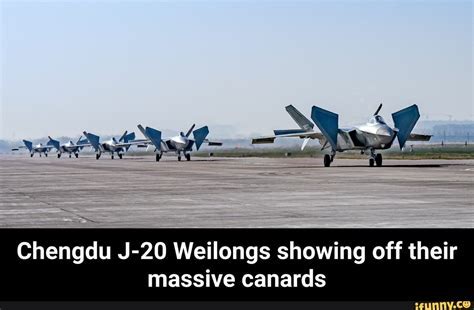
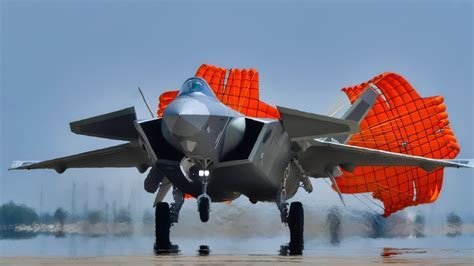
In contrast, the J-20 Mighty Dragon is a fifth-generation stealth fighter developed by China with a focus on stealth, supercruise, supermaneuverability, and advanced avionics. Its canard-delta wing configuration, all-moving vertical stabilizers, and stealth coating significantly reduce its radar cross-section (RCS). The J-20’s frontal RCS is approximately 0.5 square meters, vastly lower than the F-16V’s 3 square meters, making it far less detectable by enemy radars.
Radar and Situational Awareness
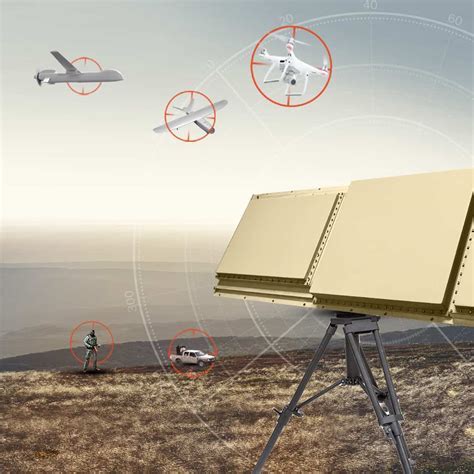
The F-16V is equipped with the AN/APG-83 AESA radar, which has a detection range of around 180 kilometers against a target with a 3 square meter RCS. While an improvement over earlier models, it is still a simplified version of the APG-81 radar used in the F-35, with reduced power and cooling capabilities due to the F-16’s original airframe limitations.
The J-20, on the other hand, employs a more advanced AESA radar with a detection range exceeding 220 kilometers. It also integrates Electro-Optical Distributed Aperture System (EODAS) and an Infrared Search and Track (IRST) system, allowing it to detect and track threats without relying on radar, thus minimizing its electromagnetic signature and making it harder to detect. This provides the J-20 with a major situational awareness advantage over the F-16V.
Weapons Systems and Beyond-Visual-Range Combat
The F-16V relies on a mix of AIM-120D AMRAAM (120 km range) for beyond-visual-range (BVR) combat and AIM-9X Sidewinder for close-range dogfights. However, the F-16V requires support from AWACS (Airborne Warning and Control System) aircraft to maximize its combat effectiveness.
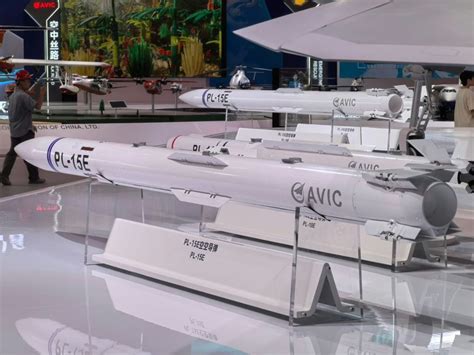
The J-20 is armed with the PL-15 long-range air-to-air missile, which boasts a range of over 200 kilometers, significantly outclassing the AIM-120D. The PL-15 uses a dual-pulse motor and a two-way data link, allowing for a “launch and guide” (A-shot-B-guide) capability. Additionally, the PL-10E short-range missile offers superior off-boresight targeting and infrared tracking, with an estimated range of 60 kilometers, far exceeding the AIM-9X’s 19-kilometer range.
In a BVR engagement, the J-20’s stealth capabilities, superior radar, and longer-range missiles give it a decisive edge, allowing it to engage and neutralize threats before being detected.
Maneuverability and Close-Range Combat
The F-16V features a lightweight airframe and a fly-by-wire control system, granting it high instantaneous turn rates and a roll rate of 100 degrees per second. However, it still uses the F100-PW-220 engine, which provides a lower thrust-to-weight ratio than modern competitors like the J-10C and J-20.

The J-20 incorporates canards, thrust vectoring, and a high-power WS-10C engine capable of producing over 14 tons of thrust, enhancing supermaneuverability and sustained supersonic flight. While the F-16V can perform aggressive dogfighting maneuvers, the J-20’s superior high-speed agility, infrared stealth, and advanced missile systems mean it can engage or evade an F-16V without needing to enter a close-range fight.
Combat Networking and Survivability
The F-16V lacks stealth features, making it highly vulnerable to radar detection and missile lock-on. It is also limited in data-linking capabilities, making it difficult to integrate into modern, network-centric warfare scenarios. During combat, the F-16V relies heavily on AWACS and support aircraft. If the enemy disrupts or eliminates these assets, the F-16V’s combat effectiveness drops significantly.
The J-20 serves as a battlefield command node, capable of coordinating with J-10C and J-16 fighters, early warning aircraft, and ground-based air defense systems. It uses a low-probability-of-intercept (LPI) radar and secure data links, allowing it to transmit targeting information without revealing its position. Its stealth attributes make it challenging for an F-16V to detect, track, or effectively engage.
Conclusion
While the F-16V has undergone modernization, it remains a fourth-generation fighter with inherent limitations against fifth-generation aircraft like the J-20. The F-16V’s lack of stealth, shorter-range missiles, and weaker situational awareness make it highly disadvantaged in modern air combat.
The J-20’s superior stealth, radar capabilities, long-range weaponry, and networked warfare integration give it a decisive advantage. In a real combat scenario, the J-20 would likely detect, engage, and neutralize an F-16V before the latter could respond, reinforcing its role as a dominant fifth-generation air superiority fighter.
Frequently Asked Questions (FAQs)
1. How does the J-20 compare to the F-35?
The J-20 is designed for long-range air superiority, with a larger frame and longer range than the F-35, which is optimized for multirole stealth operations and carrier compatibility. The F-35 has superior avionics and electronic warfare capabilities, while the J-20 excels in speed, range, and stealth in BVR combat.
2. Can an upgraded F-16V defeat a J-20?
Despite modern avionics and upgraded weaponry, the F-16V lacks stealth and long-range engagement capability. The J-20’s stealth and advanced missile systems would give it a decisive edge, making it unlikely that an F-16V could defeat a J-20 in one-on-one combat.
3. Is the J-20 operationally deployed?
Yes, the J-20 has been in service with the PLAAF (People’s Liberation Army Air Force) since 2017 and is undergoing continuous upgrades. It is deployed in increasing numbers to key strategic regions, enhancing China’s aerial dominance.