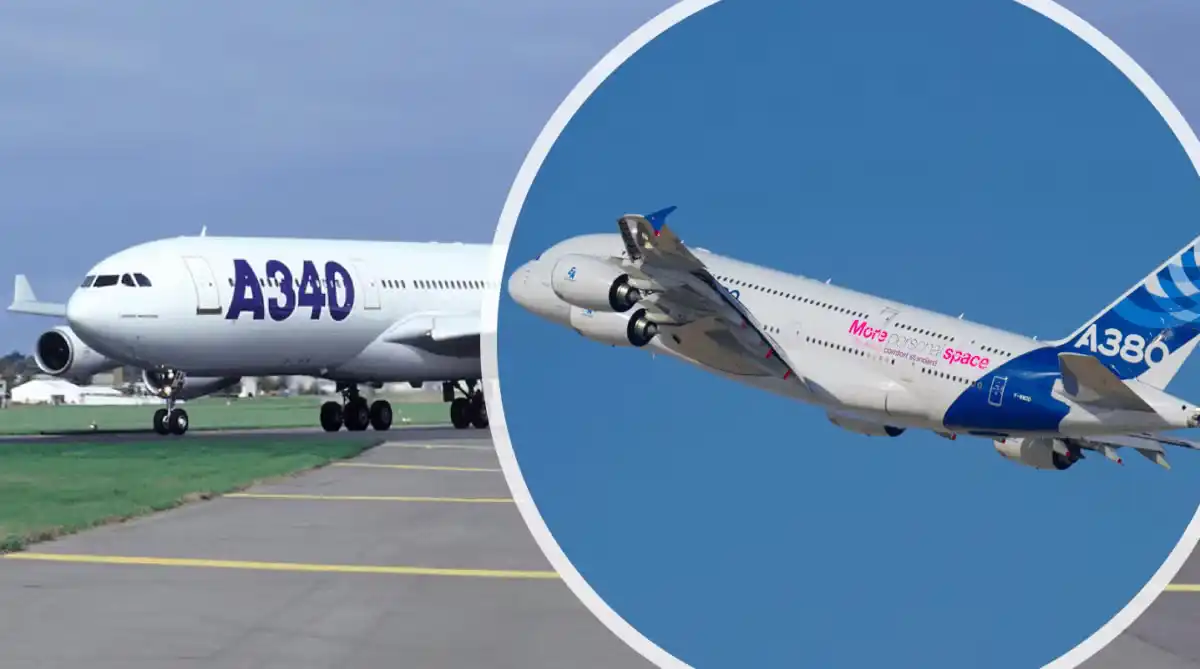
The aviation world has long debated the operational efficiency of the Airbus A380 versus the Airbus A340, two of Airbus’ most iconic quad-engined aircraft. Although both were designed to serve different market needs, their performance, particularly in terms of fuel efficiency per seat mile, remains a topic of great interest to airlines, aviation analysts, and enthusiasts. Understanding their efficiency involves examining not only raw fuel consumption but also the broader design philosophies, engine technologies, and operational contexts that shaped their development.
The Airbus A340: A Quad-Jet Built for a Different Era
Introduced in 1993, the Airbus A340 was developed as a long-haul workhorse when ETOPS (Extended-range Twin-engine Operational Performance Standards) limitations prevented twin-engine aircraft from flying over vast oceanic routes. Its design was closely tied to the Airbus A330, sharing a common wing structure but with the addition of four CFM56 engines in its early variants, later replaced with Rolls-Royce Trent 500s for the stretched A340-500 and A340-600 models. These engines, producing between 55,780 and 61,902 lbf of thrust, gave the aircraft a significant operational range, enabling ultra-long-haul missions.
Despite its capabilities, the A340’s four-engine configuration was a double-edged sword. While it provided redundancy for safety over remote areas, it also resulted in higher overall fuel burn compared to twin-engine competitors as the industry transitioned toward more efficient ETOPS-compliant aircraft. The largest A340 variant, the A340-600, could accommodate 320–370 passengers in a three-class configuration and had a maximum takeoff weight (MTOW) of 840,000 lbs, making it one of the most ambitious quadjets of its time.
The Airbus A380: The Superjumbo’s Bold Ambition
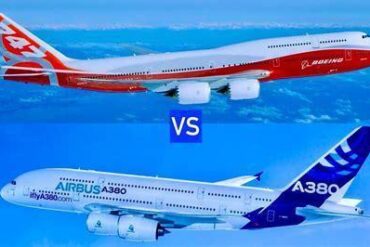
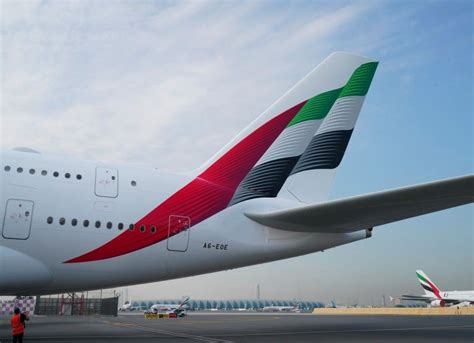
When the Airbus A380 entered service in 2007, it was heralded as a revolution in commercial aviation. Designed to alleviate congestion at hub airports like London Heathrow and Singapore Changi, the A380 offered unparalleled capacity, with a theoretical maximum of 853 passengers in an all-economy layout and typical three-class configurations accommodating 525–615 passengers. Its MTOW of 1,268,000 lbs dwarfs that of the A340, reflecting its massive size and ambitious design philosophy.
The A380’s power came from either the Rolls-Royce Trent 900 or the Engine Alliance GP7000 engines, generating up to 76,752 lbf of thrust each. While four engines inherently consume more fuel than two, the A380 compensated with advanced aerodynamics, higher passenger capacity, and newer-generation engines compared to the A340. This allowed it to achieve impressive fuel efficiency figures on a per-seat basis, especially on long-haul routes with high load factors.
Fuel Efficiency: Gallons Per Seat-Mile Analysis
At first glance, comparing the fuel consumption of these two quadjets might seem straightforward: the A340 is smaller and burns less fuel overall than the superjumbo A380. But this overlooks a crucial metric: fuel consumption per seat-mile, which reflects how efficiently each aircraft moves passengers over a given distance.
According to Aircraft Commerce, on the Frankfurt–New York JFK route:
- Airbus A380-800: 0.0196 US gallons per seat-mile
- Airbus A340-600: 0.0205 US gallons per seat-mile
- Airbus A340-500: 0.0240 US gallons per seat-mile
On the Frankfurt–Chicago O’Hare route, the results were similar, with the A380 burning 0.0197 gallons per seat-mile compared to the A340-600’s 0.0207 gallons. These figures show that while the A380 consumes more fuel in total, it carries significantly more passengers, giving it a lower per-seat fuel burn.
Why the A380 Performs Better Per Seat
The A380’s efficiency advantage lies in a combination of factors:
- Higher Passenger Capacity: With configurations exceeding 600 passengers in some airlines (like Emirates), the A380 spreads fuel consumption across more travelers.
- Modern Engine Technology: The Trent 900 and GP7000 engines are more advanced than the Trent 500s on the A340.
- Optimized Long-Haul Design: The A380’s fuel efficiency improves on longer sectors, where its size and range advantages are fully realized.
Despite this, the A380’s design also included compromises. Its wings were optimized for a future A380-900 stretch variant, meaning the A380-800 flies with larger-than-necessary wings, which adds drag and weight.
Lufthansa’s Perspective: Balancing Quadjets
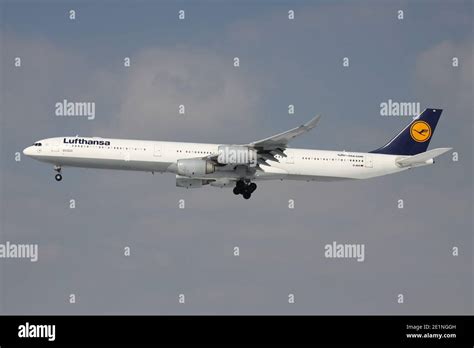
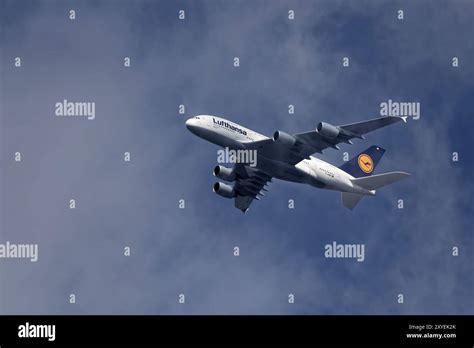
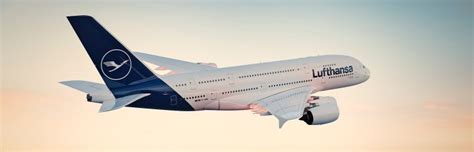
Germany’s Lufthansa remains one of the few airlines operating both types. The carrier claims its A340-600 consumes about 4.1 liters per 100 passenger-kilometers, while its A380 burns roughly 12% less fuel than other widebody jets. However, Lufthansa’s fleet strategy indicates a long-term phase-out for both aircraft as it transitions toward Airbus A350s, Boeing 787-9s, and the future Boeing 777-9.
As of 2024, Lufthansa operates:
- 16 Airbus A340-300s
- 6 Airbus A340-600s
- 8 Airbus A380-800s
- 8 Boeing 747-400s
- 19 Boeing 747-8is
The A340’s Decline and the A380’s Future
Both the A340 and A380 have seen limited success compared to expectations. A340 production ended in 2012, while A380 production ceased in 2021, marking the end of Airbus’ quadjet era. Airlines like Qatar Airways publicly lamented purchasing the A380, with CEO Akbar Al Baker calling it the airline’s “biggest mistake.” Malaysia Airlines, Air France, and China Southern have already retired their A380s, while Korean Air and Lufthansa maintain small fleets awaiting replacements.
By contrast, the A340 has found niche roles with carriers in sanctioned countries like Iran’s Mahan Air and Venezuela’s Conviasa, where access to newer aircraft is limited. These aircraft are kept flying through parts sourced from the secondary market and cannibalized jets.
Twinjets: The Final Nail in the Quadjet Coffin
Ultimately, both the A340 and A380 were overtaken by the twinjet revolution. Modern aircraft like the Airbus A350 and Boeing 787 Dreamliner deliver up to 20% lower fuel burn per seat-mile than quadjets, with lighter airframes, composite materials, and ultra-efficient engines like the Rolls-Royce Trent XWB and GE9X. Airlines now favor these twinjets for long-haul efficiency, sealing the fate of older four-engine models.

Conclusion: Which Wins the Miles Per Gallon Battle?
In terms of fuel efficiency per seat-mile, the Airbus A380 outperforms the Airbus A340, particularly on long-haul, high-capacity routes. While the A380’s total fuel consumption is undeniably higher, its ability to carry hundreds more passengers results in lower fuel burn per traveler. However, the broader context reveals that both aircraft are outdated compared to modern twinjets, which dominate the future of long-haul travel.
As the aviation industry marches toward greater efficiency and sustainability, both the A340 and A380 are destined for niche roles or retirement. Still, they remain icons of an era when aircraft design prioritized capacity and redundancy over raw efficiency, leaving behind a legacy that continues to spark debates among aviation experts and enthusiasts alike.