Maritime engineering has always lived at the edges of what seems possible. The world’s largest vessels—towering container ships, steel-clad naval giants, and long-haul cargo leviathans—demand powerplants that make even the most extreme land-based engines look quaint. Diesel technology, with its immense torque and long-life reliability, became the backbone of global shipping for this reason. Where a high-performance car engine screams its lungs out to reach peak power, a ship engine merely rumbles at slow RPMs, unleashing titanic strength that can push millions of pounds of steel, fuel, and cargo across unforgiving oceans.
The engines explored here stand among the most formidable mechanical creations in human history. Some rise as high as mid-sized apartment buildings. Others generate torque figures so absurd that they rewrite the limits of mechanical endurance. These machines are more industrial cathedrals than engines—carefully engineered ecosystems that power world trade.
Wärtsilä-Sulzer RTA84C: The Giant That Redefined Scale
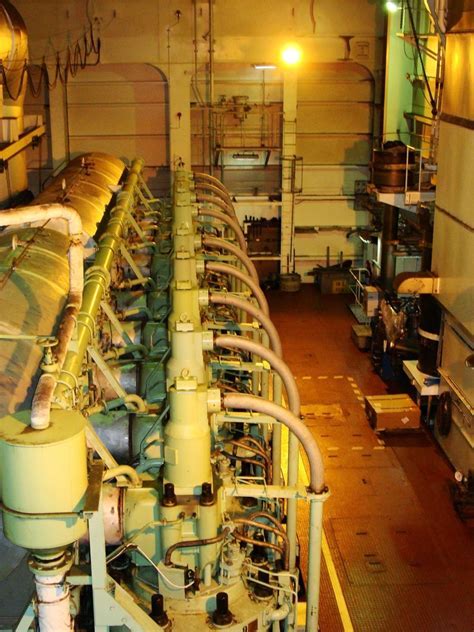
When the Wärtsilä-Sulzer RTA84C emerged in 1988, it instantly reset the boundary of what a diesel engine could be. Built long before the modern era of record-breaking container ship propulsion, it was already producing around 70,000 horsepower—a figure unheard of at the time. What made this feat even more astonishing was its operating behavior. Unlike automotive engines that need thousands of RPM to generate big power, the RTA84C delivered its output at just 102 RPM, a leisurely rotational pace that enabled its enormous components to operate for decades with minimal wear.
Each of the 12 cylinders rises to the height of a multi-story structure. The engine itself, more than 50 feet tall, turns every ship it powers into a floating industrial powerhouse. Though the precise number of installations remains buried in proprietary company records, estimates suggest that at least 155 ships were equipped with this remarkable engine across its operational lifetime.
This engine dominated the seas before the explosion of mega-container ships and represents a defining moment in maritime propulsion: the era when ship engines began evolving from large machines into cyclopean engines of global logistics.
MAN B&W 11G95ME-C: A Modern Marine Titan
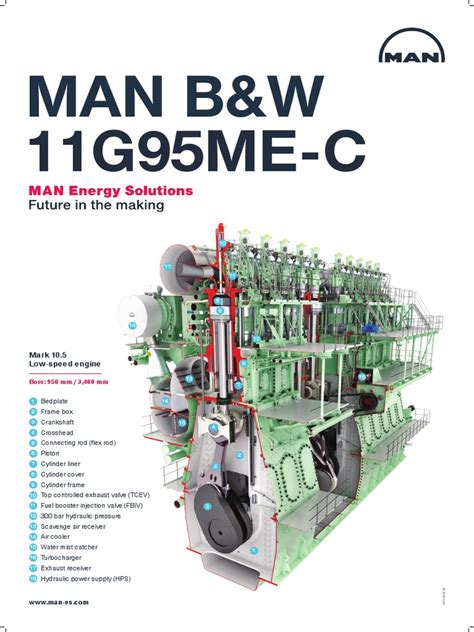
The MAN B&W 11G95ME-C (and its sibling designations such as the G95ME-C9.5) debuted in 2015 as MAN Energy Solutions’ declaration that the future of ultra-large ship engines had arrived. With an output of around 103,000 horsepower, this engine instantly became an industry cornerstone. That figure is so colossal that even multiplying the combined output of legendary Dodge performance engines tenfold still falls far short of what this single ship engine can produce.
Its physical presence rivals its mechanical significance. Weighing 2,230 tons and standing 59 feet tall, the engine is longer than many two-story homes. This slow-turning, two-stroke, 12-cylinder unit transformed the possibilities for next-generation container ships.
The engine’s most famous deployment came in 2020 with the launch of the HMM Algeciras, at the time the largest container ship ever constructed. The 11G95ME-C made the impossible feel routine: pushing a skyscraper-sized vessel across oceans with enough torque to move mountains.
Wärtsilä-Sulzer RTA96-C: The Legend That Ruled the Ocean
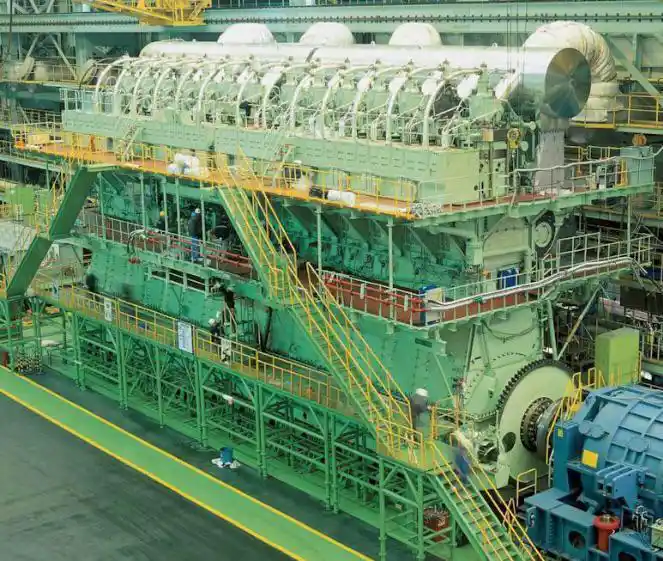
Type the phrase strongest diesel engine ever made into any search engine, and the Wärtsilä-Sulzer RTA96-C dominates the results. Introduced in 1994 and continually refined over the next decade, the RTA96-C became a legend—not simply because of its enormous power, but because of the engineering audacity behind it.
In its ultimate form, the engine reached 107,390 horsepower, a number that edges into the surreal. Yet horsepower only hints at its sheer might. The torque output—7,603,850 Nm, or about 5.6 million ft-lb—defies conventional engineering comparison. This is torque on a geological scale, enough to twist steel beams the size of trees.
Its 14 cylinders each displace 1,820 liters, giving a total displacement of 25,000 liters. To comprehend this, imagine each cylinder being larger than a compact car. Engineers do not “assemble” this engine so much as they construct it like a building.
The RTA96-C powered some of the world’s largest container vessels and helped cement Wärtsilä-Sulzer’s reputation as the undisputed titan of maritime propulsion during the late 20th century.
Wärtsilä-Sulzer RT-flex96C: The Colossus With a Digital Heart
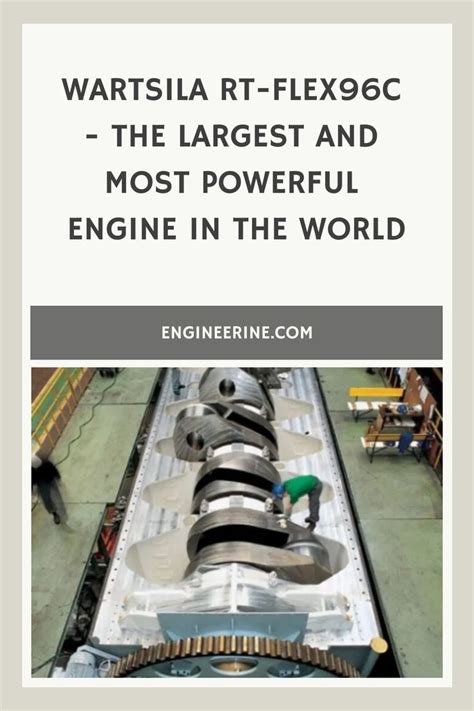
The RT-flex96C, introduced in 2006, took the RTA96-C’s immense mechanical foundation and ushered it into the modern age with electronic control systems. This was not merely an update; it was an evolution. Rated at 108,920 horsepower, the RT-flex96C became the largest and most powerful diesel engine in the world upon its debut.
The move from mechanically controlled fuel injection to common-rail electronic control dramatically improved efficiency, reliability, and emissions performance. Yet the heart of the engine remained familiar: a 14-cylinder, two-stroke behemoth capable of pushing the biggest ships on Earth.
Visitors to vessels powered by the RT-flex96C often compare walking around the engine to touring a mid-sized building. Multiple staircases lead around its structure. Engineers climb floors to reach service platforms. The turbocharger system—augmented by a steam-assisted turbine driven by waste heat—turns thermal energy into additional propulsion.
This engine famously powers the Emma Maersk, which reigned as the largest container ship globally at the time of its completion and became a symbol of the era’s rapid expansion in global shipping.
MAN B&W 12G95ME-C10.5-LGIM: The Newest Powerhouse of Maritime Propulsion
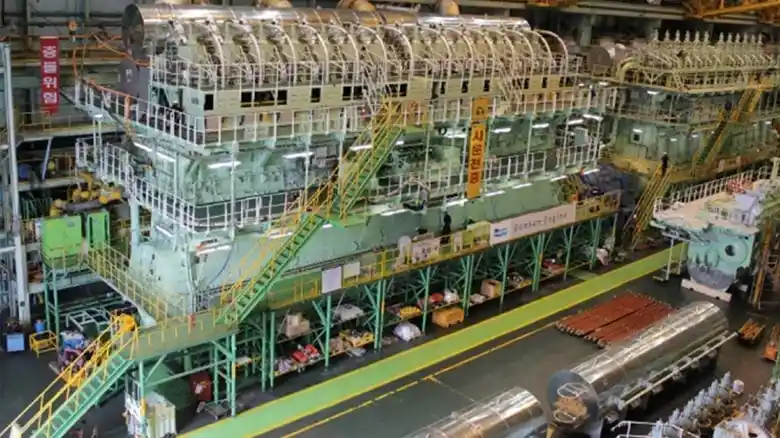
While methanol-capable engines are the future of sustainable shipping, diesel remains a critical part of that transition. The MAN B&W 12G95ME-C10.5-LGIM, unveiled in May 2025, represents the cutting edge of hybrid-fuel megaship propulsion. It can run primarily on methanol—an increasingly favored low-carbon fuel—but retains full diesel capability when required.
Rated at 82,440 kW (around 110,000 horsepower), this 14-cylinder, two-stroke, turbocharged giant becomes the most powerful engine on this list. MAN designed it for a fleet of 12 massive cargo vessels commissioned by some of the world’s largest shipping companies, signaling a new era where power and sustainability must coexist.
A key innovation is its two-string exhaust gas recirculation system, currently the largest of its kind worldwide. By recapturing and redistributing exhaust energy, the engine improves efficiency and reduces emissions without sacrificing brute force.
This model embodies a transitional philosophy: powerplants that can deliver extreme performance while adapting to new fuel infrastructures. It proves that diesel’s story in shipping is far from finished—it is simply evolving.
The Enduring Reign of Mega-Marine Diesel Engines
Each of these engines marks a milestone in the pursuit of maritime scale. They do more than power ships—they power economies, connect continents, and form the invisible backbone of global trade. Their staggering torque, monumental dimensions, and endurance under relentless load place them in a class of machinery all their own.
Even as the industry shifts toward lower-carbon fuels and emerging propulsion systems, these diesel giants remain indispensable. The next generation may blend electronic controls, hybrid fuels, and advanced turbocharging, but the philosophy remains unchanged: build engines capable of moving impossibly large ships through the most unforgiving environments on Earth.
In the future, we may see even greater achievements—larger engines, cleaner fuels, smarter systems—but the legacy of these five titans will continue echoing through every deep-sea shipping corridor on the planet.