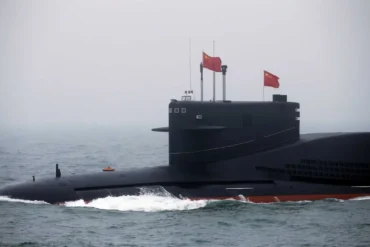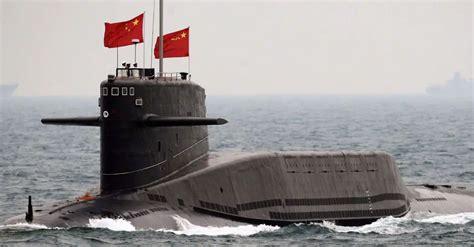
The Type 094 nuclear-powered ballistic missile submarine (SSBN), known by its NATO designation as the Jin-class, marks a pivotal leap in China’s strategic military capabilities, solidifying its role in Beijing’s quest for credible sea-based nuclear deterrence. As tensions simmer across the Indo-Pacific and global military postures evolve, the Type 094 represents China’s most advanced operational nuclear submarine to date, underscoring the nation’s determination to modernize its underwater fleet and project power across the world’s oceans.
Emerging as the successor to the problematic Xia-class, the Type 094 signals China’s transition from regional defense towards global nuclear reach. With at least six Jin-class submarines in active service under the People’s Liberation Army Navy (PLAN), the strategic calculus in the Pacific has shifted dramatically.
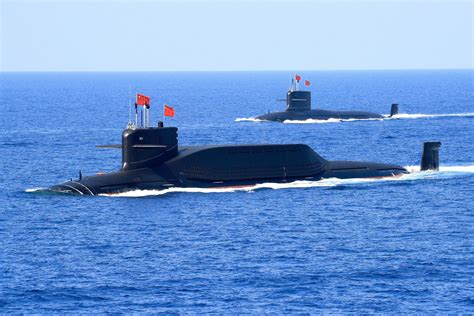
China’s Sea-Based Nuclear Ambitions: The Rise of the Jin-Class
The Type 094 submarines form the cornerstone of China’s nuclear triad, complementing its land-based intercontinental ballistic missiles (ICBMs) and air-delivered nuclear arsenal. With the ability to launch submarine-launched ballistic missiles (SLBMs) while submerged, these submarines provide a critical “second-strike” capability — the assurance that China can retaliate even if its land-based assets are neutralized in a first strike.
The JL-2 SLBM, currently deployed aboard the Type 094, has a range of up to 9,000 kilometers (5,600 miles), enabling Beijing to target territories such as Hawaii, Alaska, and portions of the continental United States from the relative safety of Chinese coastal waters. This marks a considerable improvement over the Xia-class’s limited, unreliable deterrent potential.
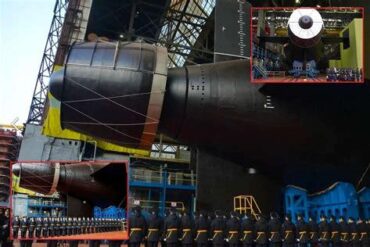
Importantly, more recent iterations of the Jin-class — specifically the Type 094A variant — are believed to be equipped with upgraded JL-2A missiles, potentially extending their strike envelope to encompass the entire U.S. mainland. While unconfirmed by Chinese authorities, satellite imagery and Western intelligence suggest notable design modifications, particularly in missile compartment structures, aligning with the expected JL-2A deployment.
Stealth Shortcomings: The Type 094’s Noisy Legacy
Despite these advancements, the Jin-class submarines face critical technical challenges, foremost among them being excessive acoustic signatures. Multiple defense assessments indicate that the Type 094’s noise levels are comparable to or exceed those of the aging Soviet-era Delta III-class submarines, which were introduced in the 1970s.
This high noise output significantly undermines the submarine’s stealth, rendering it more detectable to advanced anti-submarine warfare (ASW) assets operated by the United States, Japan, Australia, and other regional actors. The Type 094’s sheer size — as one of the largest military submarines ever constructed — further exacerbates detection risks.
Such vulnerabilities constrain the Jin-class’s operational flexibility. While they can conduct deterrence patrols within the relatively sheltered South China Sea, venturing into open-ocean environments exposes them to considerable tracking and interception threats, limiting their utility in high-threat contested waters.
Strategic Implications: Shaping Indo-Pacific Power Dynamics
The deployment of the Type 094 fleet has already forced regional adversaries to recalibrate their maritime strategies. The United States, in particular, has expanded ASW surveillance operations, deploying advanced P-8 Poseidon aircraft, undersea sensor networks, and nuclear-powered attack submarines to monitor Jin-class movements.
Additionally, China’s investment in protected bastions, such as the heavily fortified Yulin Naval Base on Hainan Island, underscores its intent to shield these high-value assets. From such locations, Type 094 submarines can patrol strategic chokepoints like the South China Sea, while remaining under the protective umbrella of China’s surface fleet and air assets.
Nevertheless, questions persist regarding the credibility of China’s sea-based deterrent. Until the Jin-class achieves stealth parity with Western or Russian SSBN designs, its role may remain largely symbolic, more valuable as a political tool than as a survivable nuclear platform in an all-out conflict scenario.
Technological Evolution: From Type 094 to the Next Generation Type 096
Recognizing these limitations, Chinese naval development has pivoted towards the upcoming Type 096 SSBN, a next-generation platform promising significant improvements in stealth, endurance, and firepower. Slated to carry the JL-3 SLBM, the Type 096 could dramatically enhance China’s nuclear reach.
The JL-3, still under development, is expected to possess a range exceeding 10,000 kilometers (6,200 miles), enabling strikes against virtually any target within the continental United States from Chinese coastal waters, obviating the need for dangerous open-ocean deployments.
Improvements in acoustic quieting, hull design, and advanced reactor systems are anticipated to address the Type 094’s glaring stealth deficiencies. If successful, the Type 096 would mark China’s entry into the elite cadre of nations possessing genuinely survivable sea-based nuclear deterrence.
Until the Type 096 becomes operational, however, the Jin-class remains the PLAN’s primary strategic submarine force. Despite their shortcomings, the presence of these submarines compels rivals to commit substantial resources to detection, tracking, and potential neutralization efforts.
Conclusion: The Type 094’s Enduring Strategic Role
In the complex web of global nuclear deterrence, the Type 094 stands as a symbol of China’s strategic ambition, technological progress, and enduring challenges. Its deployment has transformed regional military calculations, introducing a credible — if imperfect — second-strike capability for Beijing.
Though hampered by acoustic shortcomings, the Jin-class underscores China’s blue-water aspirations, providing vital experience in operating nuclear-armed submarines and projecting power beyond its shores. The lessons learned from the Type 094 program will undoubtedly inform the development of the quieter, more capable Type 096, marking the next chapter in China’s undersea nuclear evolution.
As the PLAN modernizes and expands its SSBN fleet, the global security landscape faces heightened uncertainty. The interplay between technological innovation, strategic posturing, and evolving deterrence doctrines will determine whether China’s sea-based nuclear forces emerge as truly survivable or remain vulnerable in the face of Western maritime dominance.
For now, the Type 094 occupies a critical, if transitional, role in Beijing’s pursuit of a robust, credible nuclear deterrent, signaling that China’s undersea ambitions are only just beginning to take shape.