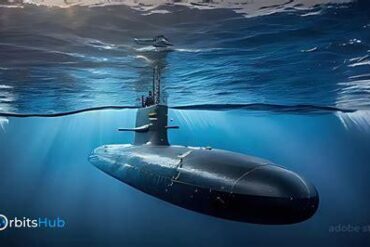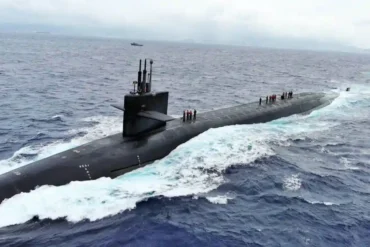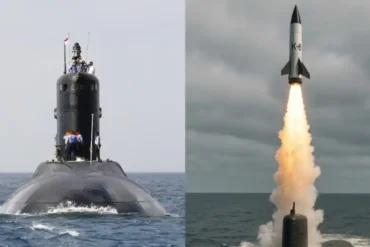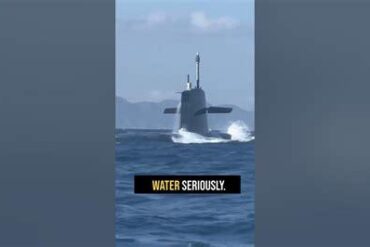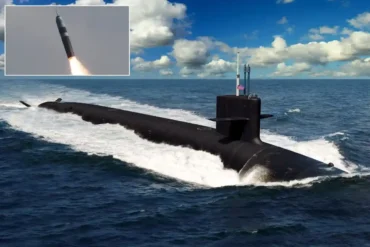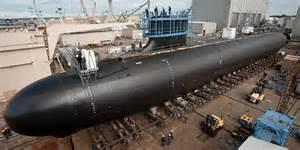
Nuclear submarines represent the pinnacle of naval engineering, combining stealth, endurance, and devastating firepower into a single platform capable of shaping global military balance. Unlike conventional submarines, these vessels are powered by nuclear reactors that allow them to remain submerged for months at a time, limited only by human endurance and onboard supplies. That single advantage transforms them from mere warships into strategic instruments of deterrence, surveillance, and rapid strike capability.
What makes modern nuclear submarines truly remarkable is not just their ability to stay hidden, but their capacity to operate as self-contained underwater fortresses. They generate their own oxygen, purify seawater into drinking supplies, and navigate vast oceans without surfacing. In a world where visibility often determines vulnerability, these submarines thrive in invisibility, becoming nearly impossible to track when operating at peak stealth.
The global landscape of nuclear submarine operators is remarkably exclusive. Only a handful of nations—the United States, Russia, China, the United Kingdom, France, and India—have mastered this complex technology. Within this elite circle, certain classes of submarines stand apart, representing the cutting edge of underwater warfare innovation, acoustic stealth, and multi-role combat capability.
Astute-Class Submarines – Britain’s Digital-Age Hunter-Killers
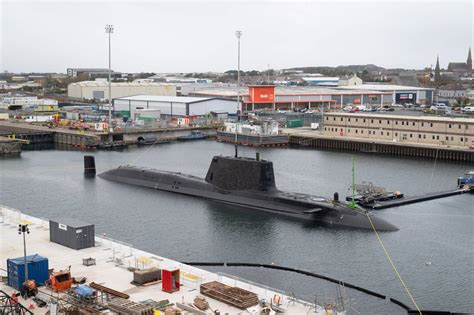
The Astute-class submarines mark a bold leap forward for the Royal Navy, blending digital precision with raw underwater power. Introduced in 2010, these submarines are among the most technologically sophisticated attack submarines ever built, designed entirely using 3D computer modeling, a first in submarine construction.
One of their most distinctive features is the absence of traditional periscopes. Instead, they rely on advanced electro-optical masts, streaming high-definition video feeds to control rooms deep within the hull. This innovation not only enhances situational awareness but also allows for more flexible internal design, eliminating the need for a direct line-of-sight periscope shaft.
Armed with Tomahawk Land Attack Missiles (TLAMs) and Spearfish heavyweight torpedoes, Astute-class submarines can strike both land and sea targets with precision. Their missiles can reach targets over 1,000 miles away, while their torpedoes are engineered for high-speed underwater engagements.
Operational endurance is another defining strength. These submarines can remain submerged for months, producing their own oxygen and drinking water. In practice, patrols often last around ten weeks, constrained only by food supplies rather than technical limitations. This combination of stealth, endurance, and firepower makes the Astute-class a cornerstone of Britain’s modern naval strategy.
Borei-A-Class Submarines – Russia’s Nuclear Deterrence Vanguard
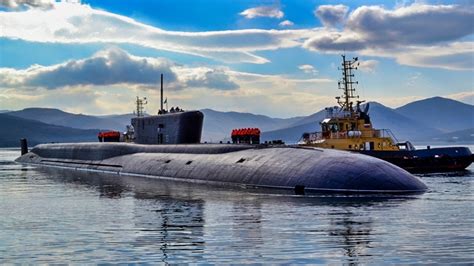
Russia’s Borei-A-class submarines embody the evolution of strategic nuclear deterrence beneath the waves. As a refined version of the original Borei-class, these submarines introduce improved stealth characteristics, quieter propulsion systems, and enhanced maneuverability in deep-sea environments.
Each vessel is equipped with 16 submarine-launched ballistic missiles (SLBMs), capable of delivering nuclear warheads across distances exceeding 6,000 miles. These missiles often carry MIRVs (Multiple Independently Targetable Reentry Vehicles), allowing a single launch to strike multiple targets simultaneously—a capability that significantly amplifies their strategic impact.
The Borei-A’s design reflects a careful balance between stealth and destructive power. Noise reduction technologies reduce acoustic signatures, making them harder to detect compared to earlier Russian submarines. At the same time, their payload ensures they remain one of the most formidable components of Russia’s nuclear triad.
Their role is not to engage in direct combat but to remain hidden, undetected, and ready. In that sense, they operate as silent guarantors of mutually assured destruction, a concept that continues to define global nuclear stability.
Virginia-Class Submarines – America’s Multi-Mission Workhorse
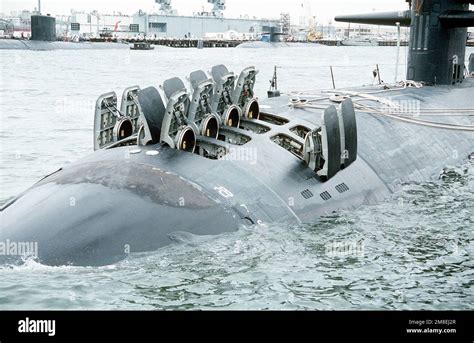
The Virginia-class submarines are the backbone of the U.S. Navy’s modern attack submarine fleet. Designed for versatility, these submarines excel in everything from intelligence gathering and surveillance to precision strike and special operations support.
Unlike earlier submarine classes optimized for deep-ocean warfare, the Virginia-class is particularly effective in shallow coastal waters, where modern conflicts are increasingly concentrated. Their advanced sonar systems and maneuverability allow them to operate close to shorelines without compromising stealth.
A standout feature is the reconfigurable torpedo room, which can be adapted to deploy special operations forces. Combined with a built-in lock-in/lock-out chamber, these submarines can insert and extract divers without surfacing—an invaluable capability for covert missions.
Armed with Tomahawk cruise missiles and Mk48 ADCAP torpedoes, Virginia-class submarines strike a balance between precision and lethality. With over two dozen active units, they form a flexible and scalable force that can respond to a wide range of global threats.
Vanguard-Class Submarines – Britain’s Nuclear Backbone
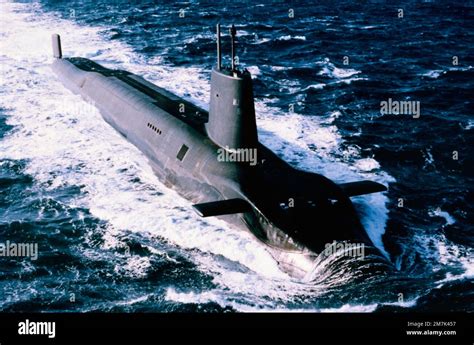
The Vanguard-class submarines serve as the United Kingdom’s primary nuclear deterrent, carrying the immense responsibility of maintaining continuous at-sea deterrence. Each submarine is equipped with Trident II D5 ballistic missiles, capable of delivering multiple nuclear warheads across intercontinental distances.
While technologically older compared to newer submarine classes, their strategic importance remains unmatched. These vessels operate in complete secrecy, ensuring that at least one submarine is always on patrol, ready to respond if necessary.
Their design emphasizes reliability and survivability over cutting-edge innovation. Even so, they maintain competitive speeds and are equipped with Spearfish torpedoes for defensive and offensive engagements.
The Vanguard-class is expected to be replaced by the Dreadnought-class submarines in the coming decade, signaling a new era for Britain’s nuclear deterrent. Until then, they remain a critical pillar of national security, quietly patrolling the depths.
Barracuda-Class Submarines – France’s Silent Precision Strike Platform
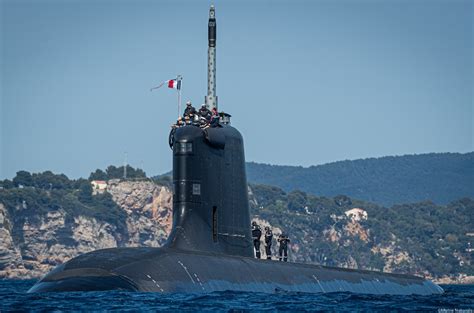
France’s Barracuda-class submarines, led by the Suffren, represent a new generation of compact yet highly capable nuclear attack submarines. Despite being smaller than many counterparts, they are densely packed with advanced technology designed to maximize stealth and combat effectiveness.
These submarines can dive beyond 350 meters and sustain missions lasting up to 70 days. Their reduced size contributes to lower acoustic signatures, making them harder to detect in contested waters.
The Barracuda-class is armed with a diverse arsenal, including cruise missiles, torpedoes, anti-ship weapons, and naval mines. This versatility allows them to perform a wide range of missions, from intelligence gathering to precision strikes against land targets.
A particularly notable feature is their support for special operations forces, including facilities for deploying combat swimmers and underwater vehicles. This capability transforms them into platforms for both conventional and unconventional warfare.
Type 093 Shang-Class – China’s Quiet Leap Forward
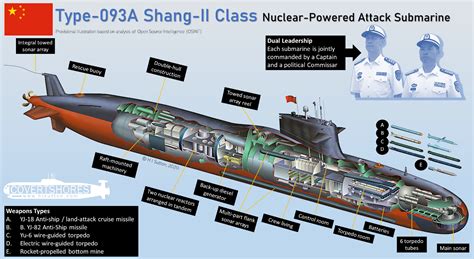
China’s Type 093 Shang-class submarines mark a significant advancement in the People’s Liberation Army Navy’s underwater capabilities. Compared to earlier Chinese submarines, the Shang-class demonstrates a substantial improvement in acoustic stealth and operational performance.
The Type 093A variant, in particular, has been described as the first truly quiet Chinese nuclear submarine. This leap in stealth technology reflects China’s broader ambition to close the gap with Western naval powers.
Equipped with torpedo tubes capable of launching anti-ship missiles like the YJ-82, these submarines can engage both surface and underwater targets. More advanced variants feature vertical launch systems, enabling long-range cruise missile strikes against land targets.
While not yet matching the quietest Western submarines, the Shang-class represents a critical step in China’s evolution into a formidable undersea force. It’s less a finished masterpiece and more a rapidly improving platform with serious strategic implications.
Seawolf-Class Submarines – America’s Underwater Apex Predator
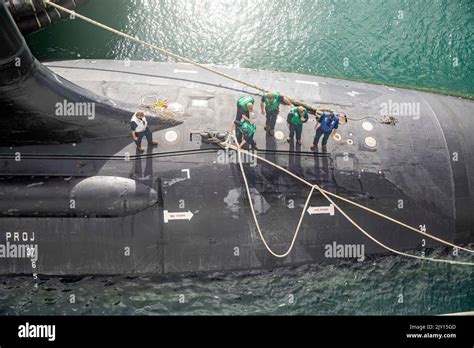
Few submarines inspire as much respect as the Seawolf-class, often regarded as the fastest and one of the quietest submarines ever built. Originally conceived during the Cold War to counter advanced Soviet submarines, the program was cut short due to its immense cost—resulting in only three vessels.
That rarity only adds to their mystique. With speeds exceeding 40 mph underwater and the ability to dive beyond 800 feet, Seawolf-class submarines are engineered for extreme performance in hostile environments.
Their acoustic stealth is exceptional, making them extraordinarily difficult to detect. Combined with a heavy payload of Tomahawk missiles and Mk48 torpedoes, they are capable of overwhelming enemy forces before being noticed.
The USS Jimmy Carter, a modified Seawolf submarine, includes additional capabilities for special missions and intelligence operations, further extending the class’s already impressive versatility.
Yasen-Class Submarines – Russia’s Multi-Role Powerhouse
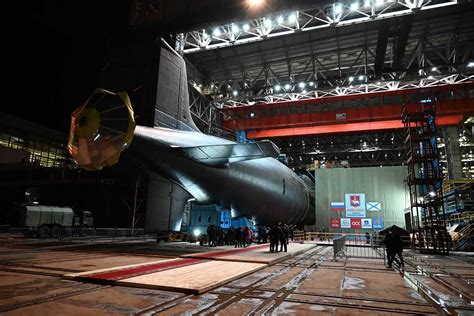
The Yasen-class submarines, particularly the upgraded Yasen-M variants, are among the most advanced attack submarines in the Russian Navy. These submarines are designed as multi-role platforms, capable of engaging ships, submarines, and land targets with equal effectiveness.
Their hybrid hull design strikes a balance between stealth and structural resilience. This innovative approach reduces noise while maintaining durability, enhancing survivability in combat scenarios.
Yasen-class submarines are heavily armed with Oniks supersonic anti-ship missiles and long-range cruise missiles capable of striking targets nearly 1,500 miles away. This extensive arsenal allows them to operate as floating missile batteries, projecting power far beyond their immediate vicinity.
Compared to many Western counterparts, the Yasen-class emphasizes firepower and versatility, making it a formidable adversary in any naval conflict.
Type 094 Jin-Class – China’s Strategic Nuclear Shield
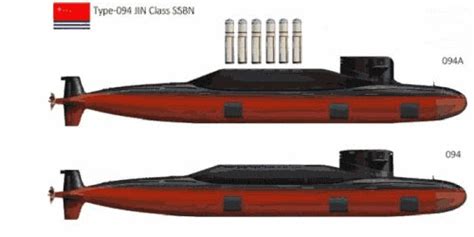
The Type 094 Jin-class submarines are central to China’s nuclear deterrence strategy. Designed as ballistic missile submarines, their primary mission is to remain hidden while carrying nuclear-armed SLBMs capable of striking distant targets.
Armed with JL-2 and JL-3 missiles, these submarines can deliver nuclear payloads across intercontinental distances. The JL-3, in particular, represents a major leap forward in range and payload capability.
However, the Jin-class faces challenges, particularly in terms of acoustic stealth. They are generally considered noisier than their Western counterparts, making them more vulnerable to detection. Still, their long-range missile systems compensate for this weakness, allowing them to operate farther from adversary coastlines.
In strategic terms, they serve as a credible second-strike capability, ensuring that China retains the ability to respond in the event of a nuclear attack.
Ohio-Class Submarines – The Most Powerful Underwater Arsenal
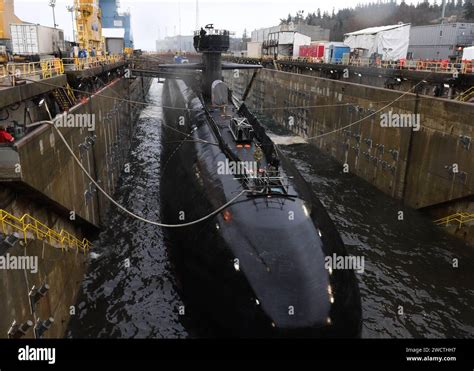
The Ohio-class submarines are widely regarded as the most powerful nuclear submarines ever deployed. Serving as the backbone of the United States’ sea-based nuclear deterrent, these vessels combine immense firepower with long-endurance stealth patrols.
Each Ohio-class submarine can carry up to 24 Trident II D5 ballistic missiles, each capable of delivering multiple nuclear warheads. In total, a single submarine can deploy dozens of nuclear weapons across vast distances, making it one of the most destructive platforms ever created.
In addition to their ballistic missile role, some Ohio-class submarines have been converted into guided missile submarines (SSGNs), capable of carrying up to 154 Tomahawk cruise missiles. This transformation adds a powerful conventional strike capability to an already formidable platform.
Despite their size, these submarines are remarkably stealthy and can operate at depths exceeding 800 feet. Their endurance allows for extended patrols lasting months, ensuring a constant and invisible presence beneath the oceans.
They are not just weapons—they are strategic assets that define the balance of power, embodying the ultimate fusion of engineering, stealth, and destructive capability.
In the silent depths of the ocean, these submarines operate far from public view, yet their influence is immense. They deter wars that never happen, gather intelligence that shapes global decisions, and stand ready to act in moments of crisis. Each class represents a different philosophy—some prioritize stealth, others firepower, and a few attempt to master both.
And here’s the fascinating part: despite all this cutting-edge technology, the real limiting factor isn’t the reactor, the weapons, or even the hull—it’s still the humans onboard deciding when (and whether) to act. Not exactly comforting… but definitely impressive.