Spain is experiencing one of the strongest tourism surges in its modern history. More than 100 million international visitors are expected to arrive in the country this year, turning airports from Madrid to Malaga into increasingly crowded gateways between Europe and the rest of the world. Transatlantic travel in particular has exploded. Airlines across the United States and Canada are racing to add new nonstop services to Spanish cities once considered too small or too seasonal for long-haul operations.
Yet one major urban center continues to stand out for what it lacks rather than what it offers.
Valencia, Spain’s third-largest city, still has no direct flights to the United States.
For a city with Mediterranean beaches, a booming culinary reputation, globally recognized festivals, modern business infrastructure, and a metropolitan population approaching 1.6 million people, the absence of nonstop US connectivity appears increasingly strange. Travelers flying from New York, Miami, Chicago, Dallas, or Los Angeles still need to connect through Madrid, Barcelona, Paris, Amsterdam, or Lisbon before reaching Valencia.
That disconnect has become more noticeable as smaller Spanish markets leap ahead. Bilbao already has direct US flights. Malaga continues attracting more North American services every year. Even Santiago de Compostela, located in northwestern Spain, has entered the transatlantic conversation thanks to the arrival of new-generation aircraft capable of operating thinner long-haul routes profitably.
Valencia, meanwhile, remains stuck in limbo.
The question is no longer whether Valencia deserves nonstop flights to America. The real question is why airlines still hesitate to commit.
After more than a decade of negotiations, route studies, airport expansion plans, and tourism campaigns, the city continues waiting for its long-promised return to the transatlantic map.
Valencia Is Bigger Than Many Cities With US Flights
The paradox surrounding Valencia becomes obvious the moment passenger statistics are examined.
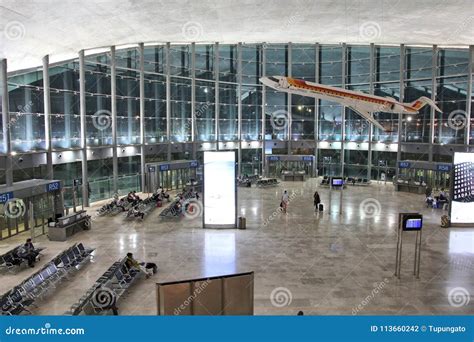
Valencia Airport handled nearly 12 million passengers in 2025, more than double the figures recorded just a decade earlier. Traffic growth has been fueled by tourism, low-cost airline expansion, cruise activity, business travel, digital nomads, and rising international visibility. The city itself has transformed from a secondary Spanish destination into one of Europe’s fastest-growing urban tourism markets.
Its appeal is broad rather than niche.
Unlike Ibiza, Valencia is not purely a party destination. Unlike Malaga, it is not overwhelmingly dependent on British leisure tourism. Unlike Madrid, it is not dominated by corporate traffic. Valencia instead sits somewhere in the middle — part leisure hotspot, part cultural city, part business center, and part residential destination.
Ironically, that balanced profile may actually be hurting its chances.
Airlines increasingly prefer highly specialized long-haul markets. If a route is premium-heavy, carriers can maximize yields with business-class demand. If it is purely leisure-focused, airlines can fill aircraft seasonally with tourists willing to tolerate less frequency. Valencia does not fit neatly into either category.
That creates uncertainty.
A route from New York to Valencia would likely carry a mixture of tourists, visiting friends and relatives, cruise passengers, small-business travelers, Erasmus students, and connecting travelers. While that sounds diversified, airlines often prefer predictable demand structures rather than fragmented ones.
The economics of long-haul aviation have become brutally selective since the pandemic. Aircraft remain in short supply. Pilot shortages continue affecting scheduling flexibility. Airlines are prioritizing routes with the highest returns per aircraft deployed.
Valencia has demand, but airlines remain unconvinced it has enough high-yield demand.
Delta Air Lines Already Tried — And Failed
Valencia’s lack of US connectivity is not because airlines never experimented with the market.
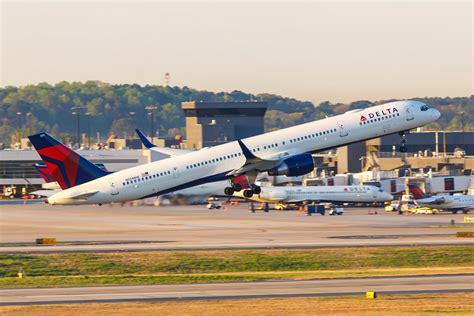
Delta Air Lines operated flights between New York JFK and Valencia in 2012 using the Boeing 757-200, an aircraft that once became legendary for opening long and thin transatlantic routes. The service operated four times weekly but ultimately disappeared after weak profitability and rising operational costs undermined the route’s viability.
At the time, Valencia simply lacked the tourism momentum it has today.
The city had not yet fully emerged as a global lifestyle destination. Spain itself was still recovering from economic turbulence following the financial crisis. International awareness of Valencia outside Europe remained relatively limited compared to Barcelona or Madrid.
Today, conditions are very different.
Tourism numbers are dramatically higher. Valencia’s culinary reputation has exploded internationally. The city regularly appears in rankings of Europe’s best places to live. Digital infrastructure improvements have attracted international remote workers. Cruise traffic through the Port of Valencia continues expanding. Luxury hospitality investment has accelerated.
Yet the shadow of Delta’s failed route still lingers over airline planning departments.
Executives remember unsuccessful experiments for years, especially when alternative opportunities now exist elsewhere in Europe with clearer revenue potential.
The Rise Of The Airbus A321XLR Changes Everything
The single biggest reason Valencia may finally have a realistic shot at securing US flights is not tourism marketing or government lobbying.
It is aircraft technology.
For decades, airlines needed relatively large widebody aircraft to cross the Atlantic efficiently. Operating a Boeing 767, Airbus A330, or Boeing 787 required substantial passenger demand because these aircraft carried hundreds of seats. Smaller European cities simply could not consistently fill them at profitable fares.
That equation has changed with the arrival of the Airbus A321XLR.
The aircraft is reshaping transatlantic strategy across the industry because it combines narrowbody economics with long-haul range. Airlines can now serve secondary European cities without taking the financial risk associated with larger widebody aircraft.
For Valencia, this matters enormously.
Routes once impossible with 250-seat aircraft suddenly become viable with 155-seat narrowbodies optimized for efficiency and premium demand. Airlines can operate year-round frequencies without relying exclusively on peak summer tourism.
The A321XLR is effectively turning secondary cities into realistic intercontinental markets.
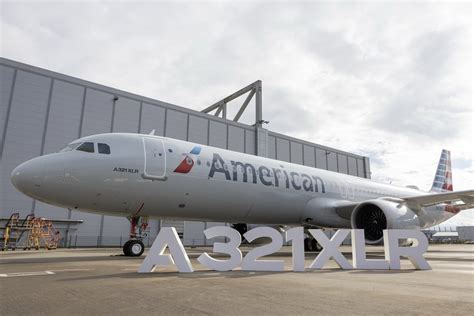
Iberia has already demonstrated how transformative the aircraft can be for Spain’s transatlantic network strategy. Air Canada is deploying it on new leisure-oriented European routes. American Airlines has openly stated that the aircraft will unlock numerous secondary destinations across Europe.
Valencia fits perfectly into that trend.
American Airlines Appears To Be The Strongest Candidate
Among all US airlines, American Airlines increasingly looks like the carrier most likely to launch Valencia flights first.
Several clues point in that direction.
Valencia’s regional tourism authorities have publicly mentioned Miami and Dallas as destinations “moving forward” during discussions with airlines. Those comments immediately attracted attention because both airports are core American Airlines hubs.
American already dominates US-Spain connectivity more aggressively than many travelers realize. Although the airline currently focuses mainly on Madrid and Barcelona, it offers enormous transatlantic capacity through its joint business agreement with Iberia and other oneworld partners.
Adding Valencia would strengthen that network strategically.
Unlike Delta or United, American possesses a particularly strong incentive to expand deeper into Spain beyond the country’s two largest hubs. The airline also now has greater flexibility to experiment thanks to incoming aircraft deliveries and its growing A321XLR fleet.
Among the possible routes, Miami-Valencia may actually be the most commercially attractive.
Miami offers more than local Florida tourism demand. It functions as the primary gateway between North America and Latin America, creating substantial connecting opportunities. Spain’s cultural and business ties with Latin America remain exceptionally strong, and Valencia could potentially capture connecting traffic flowing through Miami from dozens of destinations across the Americas.
The challenge lies in aircraft size.
Miami-Valencia may require larger aircraft like the Boeing 787-8, increasing financial risk. By contrast, a route from Philadelphia or New York could likely operate using the smaller A321XLR more efficiently.
Philadelphia in particular is quietly becoming one of the most logical possibilities.
American Airlines already uses Philadelphia as its primary transatlantic gateway, offering extensive European connectivity. Operationally, the route distance works well for the A321XLR, while connecting opportunities throughout the northeastern United States remain substantial.
Why New York Still Matters
Despite discussions around Miami and Dallas, New York continues hovering over Valencia’s transatlantic ambitions.
The logic is obvious.
The New York metropolitan area contains one of the world’s largest concentrations of Spanish-speaking travelers, European tourists, and premium international demand. It also generates enormous outbound leisure traffic toward Mediterranean destinations.
For Valencia, New York represents both prestige and practicality.
The route benefits from recognizable branding, strong tourism appeal, and relatively manageable stage length compared to deeper US destinations. Travelers already understand Valencia’s Mediterranean identity more easily when linked to New York than when linked to inland hubs like Dallas.
There is also emotional resonance.
When Delta abandoned JFK-Valencia in 2012, many local officials viewed it as a temporary setback rather than a permanent rejection. Ever since, restoring New York connectivity has remained symbolic for the region’s tourism ambitions.
But symbolism alone does not guarantee profitability.
Modern airlines care less about prestige routes and more about aircraft utilization, premium yields, and seasonal performance consistency. A New York-Valencia route must survive not only during July and August but also through quieter winter months when leisure demand softens.
That is where narrowbody long-haul aircraft become essential.
The economics no longer require filling 250 or 300 seats daily. Airlines can target smaller but more sustainable passenger volumes while maintaining higher average fares.
Valencia Suffers From Madrid And Barcelona Leakage
One of Valencia’s biggest hidden problems is geographic convenience.
Spain already possesses two massive intercontinental hubs: Madrid-Barajas and Barcelona-El Prat. Both airports offer extensive nonstop networks to North America, Latin America, Asia, and the Middle East.
For airlines, this creates “catchment leakage.”
Many passengers who technically belong to Valencia’s market simply travel through Madrid or Barcelona instead. Spain’s excellent rail infrastructure makes this leakage even worse. High-speed AVE trains allow passengers to reach Madrid quickly and conveniently, reducing the urgency for direct flights from Valencia itself.
Airlines see this behavior in booking data.
If enough Valencia-origin passengers are already connecting efficiently through Madrid, carriers may conclude that nonstop service adds insufficient incremental revenue. Instead of stimulating entirely new traffic, the route merely redistributes existing passengers.
This challenge is particularly severe because Iberia’s Madrid hub functions extremely well operationally.
A traveler from Valencia can already reach dozens of US destinations with relatively smooth one-stop itineraries via Madrid. From an airline perspective, introducing a nonstop Valencia route only makes sense if it generates substantial new demand or captures premium travelers willing to pay significantly more for convenience.
That threshold is difficult to achieve.
Canada May Become Valencia’s North American Success Story First
Ironically, Valencia’s strongest transatlantic performance currently comes not from the United States but from Canada.
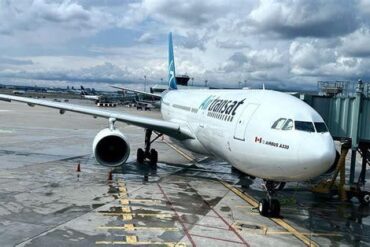
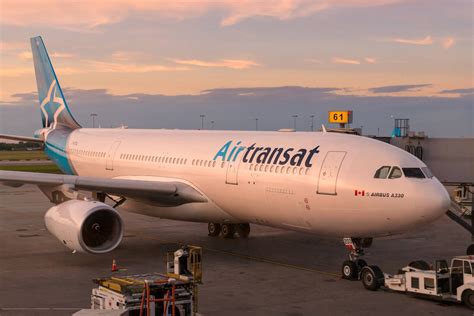
Air Transat launched Montreal-Valencia flights last year and rapidly expanded the service after strong results. What began as a limited seasonal experiment evolved into a longer operational schedule with increased frequencies.
That growth matters.
Canadian leisure airlines are often highly disciplined about route performance. Air Transat’s willingness to expand suggests Valencia possesses stronger North American demand fundamentals than skeptics assumed.
Montreal works especially well because of its large European travel market and substantial francophone leisure demand. Valencia offers an attractive alternative to overcrowded Mediterranean destinations while remaining relatively affordable compared to Barcelona or the French Riviera.
Toronto could eventually follow.
Air Canada is also watching secondary Spanish markets aggressively as the airline expands its A321XLR operations. New routes to Palma de Mallorca and Tenerife demonstrate how Canadian carriers increasingly view Spain as fertile ground for thinner long-haul services.
Valencia aligns naturally with that strategy.
Why Orlando And Dallas Look Far Less Realistic
Not every proposed Valencia route carries equal credibility.
Orlando frequently appears in tourism discussions because of Florida’s enormous visitor economy. However, the route faces major structural problems. Orlando is not a major transatlantic hub for US legacy airlines, limiting onward connectivity. The market is also heavily leisure-oriented and extremely price-sensitive.
That combination rarely produces sustainable long-haul economics.
A Valencia-Orlando route would likely depend almost entirely on outbound Spanish tourism toward Florida theme parks rather than balanced two-way premium demand. Such services usually fit charter or leisure airlines better than network carriers.
Dallas faces a different problem: geography.
Although Dallas-Fort Worth is American Airlines’ largest hub, the route distance from Valencia becomes significantly longer than East Coast alternatives. Longer flights increase fuel burn, require larger aircraft, and reduce operational flexibility.
More importantly, Dallas lacks the natural local demand base that New York or Miami can provide.
Without substantial connecting traffic, profitability becomes difficult.
Valencia’s Asia Ambitions Remain Unrealistic For Now
Local officials have also floated the possibility of flights to Asia and China, but these ambitions remain far removed from commercial reality.
The economics simply do not support such operations today.
Flights between Valencia and China would require large widebody aircraft operating ultra-long sectors with uncertain premium demand. Chinese tourism to Spain continues recovering unevenly, while business connectivity remains concentrated overwhelmingly in Madrid and Barcelona.
Airlines considering Spain-China routes naturally prioritize larger gateways first.
Valencia’s most realistic pathway toward Asia is indirect connectivity through Gulf carriers such as Qatar Airways or flydubai. A Doha or Dubai connection would instantly provide one-stop access to dozens of Asian destinations without requiring Valencia to sustain direct ultra-long-haul demand independently.
That model has already transformed connectivity for many secondary European cities.
The Missing Ingredient Is Timing
Valencia’s transatlantic future increasingly feels inevitable.
The city possesses the population base, tourism growth, infrastructure investment, lifestyle appeal, and geographic positioning necessary to support North American flights eventually. Airport expansion projects are moving forward. Government promotion budgets are increasing aggressively. Airlines now possess aircraft specifically designed for secondary long-haul markets.
Yet aviation decisions are ultimately shaped by timing.
Airlines currently face aircraft shortages, supply chain disruptions, pilot constraints, and intense competition for profitable route opportunities. Even if Valencia makes strategic sense, executives may still prioritize destinations with slightly stronger premium demand profiles or lower operational uncertainty.
That does not mean Valencia lacks potential.
In many ways, the city resembles where Porto, Bilbao, or even Malaga stood years ago before airlines finally committed serious transatlantic capacity. Once one carrier succeeds, competitors often move quickly to avoid losing market share.
A single profitable route can completely change perceptions.
The arrival of the Airbus A321XLR may ultimately become the moment Valencia has been waiting for all along. Suddenly, routes no longer require massive demand volumes or risky widebody deployments. Airlines can test the market gradually, refine schedules, and scale capacity based on performance.
For Valencia, the issue is no longer whether nonstop flights to America are technically possible.
The real battle is convincing an airline that now is finally the right moment to move first.