American Airlines stands in a league of its own, not merely as one of the largest carriers by passengers or fleet size, but as the undisputed global leader in the number of operational hubs. While many airlines focus on consolidating traffic through a handful of mega-centers, American has engineered a sprawling, intricately connected network that leverages ten strategic hubs across the United States. This approach has allowed the airline to maximize connectivity, optimize passenger flows, and maintain a dominant presence in both domestic and international aviation markets.
Founded in 1936 and headquartered in Fort Worth, Texas, American Airlines has grown through decades of calculated expansion, mergers, and operational innovation. Its integration with US Airways in 2013 significantly reshaped its network, adding critical hubs and enhancing its geographic reach. Today, the airline operates over 1,000 mainline aircraft, supported by a robust regional network under American Eagle, enabling it to offer more than 6,800 daily flights to over 350 destinations worldwide.
This scale is not just impressive—it is strategic. By distributing traffic across multiple hubs, American Airlines reduces congestion risks, increases routing flexibility, and captures demand from diverse regional markets. The result is a network that feels less like a traditional hub-and-spoke model and more like a multi-core aviation ecosystem designed for resilience and reach.

A Ten-Hub Empire: The Core of American Airlines’ Network Strategy
At the heart of American Airlines’ dominance lies its ten-hub system, the largest of any airline in the world. These hubs are not evenly distributed by accident; each plays a specific role in feeding traffic, supporting international routes, or anchoring regional demand.
The airline’s hubs include:
- Dallas/Fort Worth (DFW) – The flagship and largest hub
- Charlotte (CLT) – A powerhouse for domestic connectivity
- Chicago O’Hare (ORD) – A competitive Midwestern gateway
- Los Angeles (LAX) – A Pacific-facing international hub
- Miami (MIA) – The primary gateway to Latin America
- New York JFK (JFK) – A premium transatlantic hub
- LaGuardia (LGA) – High-frequency domestic operations
- Philadelphia (PHL) – A major European gateway
- Phoenix (PHX) – A key western domestic hub
- Washington National (DCA) – Strategic access to the U.S. capital
This network allows American Airlines to capture traffic flows in nearly every major U.S. region, ensuring that passengers are rarely more than one connection away from their destination. The breadth of this system is what elevates the airline beyond competitors who rely on fewer, more centralized hubs.
Northeastern Hubs: Precision and Premium Connectivity
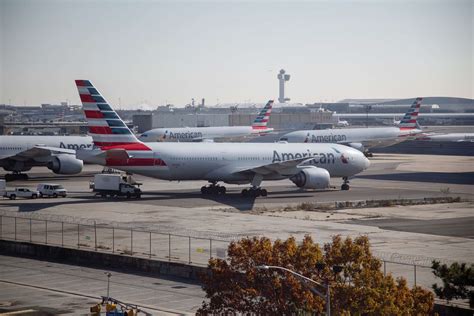
In the northeastern United States, American Airlines operates a trio of hubs that balance high-frequency domestic service with premium international routes. New York’s JFK Airport stands out as a critical long-haul gateway, particularly for transatlantic travel.
From JFK, American serves major global cities such as London Heathrow, Paris Charles de Gaulle, and Rome Fiumicino, routes that are both highly competitive and highly profitable. Despite facing strong competition from Delta Air Lines and JetBlue, American maintains a significant 12% market share, reinforcing its position as a key player in one of the world’s busiest aviation markets.
Philadelphia International Airport, however, is where American truly dominates in the region. With approximately 46% of all flights, it functions as the airline’s primary northeastern hub. Philadelphia excels as a gateway to Europe, offering efficient connections and less congestion compared to New York airports. Meanwhile, LaGuardia complements the network with dense domestic frequencies, catering to business travelers who prioritize convenience and speed.
Southern Strongholds: The Engine of Operational Power
If the northeastern hubs provide precision, the southern hubs deliver sheer operational muscle. At the center of this system is Dallas/Fort Worth International Airport, where American Airlines controls an astonishing 66% of all flights. This hub is not just large—it is a global superhub, capable of handling massive volumes of both domestic and international traffic.
With up to seven runways operating simultaneously, DFW enables American to maintain exceptional scheduling flexibility, minimizing delays and maximizing connectivity. The airport supports routes to major global destinations including London, Madrid, Seoul, and Mexico City, alongside a vast domestic network.
Miami International Airport plays a different but equally vital role. As the airline’s primary gateway to Latin America and the Caribbean, Miami connects North America with cities across South America, Central America, and beyond. Its 57% market share underscores American’s dominance in this region.
Charlotte Douglas International Airport and Washington National Airport round out the southern hubs. Charlotte, with a commanding 69% market share, is a domestic powerhouse with growing international reach. Washington National, meanwhile, offers strategic access to political and business centers, reinforcing American’s presence in high-value markets.

Midwestern Presence: Battling for Dominance in Chicago
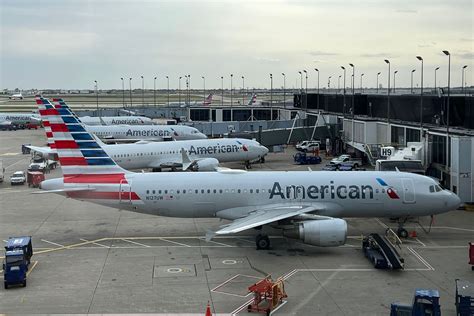
In the Midwest, American Airlines operates a single but crucial hub at Chicago O’Hare International Airport. This hub presents a unique challenge, as it is also a stronghold for United Airlines. Despite holding a smaller 22% market share, American remains deeply competitive, operating on all major domestic routes and several key international services.
Chicago serves as a strategic battleground, where maintaining presence is as important as expanding it. Routes to London Heathrow, Toronto, and Cancun are particularly significant, offering both business and leisure demand. The hub’s value lies not only in its traffic volume but also in its role as a connector between the eastern and western United States.
Western Expansion: Gateway to the Pacific and Beyond
On the western front, American Airlines operates hubs at Phoenix Sky Harbor International Airport and Los Angeles International Airport, each serving distinct strategic purposes. Phoenix acts as a domestic connector, particularly for routes across the western and central United States. With a 31% market share, it remains a stronghold despite competition from low-cost carriers.
Los Angeles, by contrast, is a global gateway. As one of the busiest airports in the world, LAX enables American to connect passengers to the Pacific Rim and beyond. Long-haul routes to Tokyo, Sydney, and London highlight its international importance, while seasonal services expand its reach even further.
Fleet Scale and Operational Depth: Supporting the Hub Network
A network of this magnitude demands an equally impressive fleet. American Airlines operates a diverse mix of Boeing and Airbus narrowbody aircraft, alongside an all-Boeing widebody fleet for long-haul routes. With an average fleet age of around 12 years, the airline balances modernization with operational efficiency.
The airline’s commitment to innovation is evident in its order for Boom Overture supersonic aircraft, signaling a forward-looking approach to premium travel. Maintenance operations are distributed across major bases in Tulsa, Pittsburgh, Dallas/Fort Worth, and Charlotte, ensuring reliability across its विशाल network.
American Eagle: The Quiet Force Behind Connectivity
Behind the scenes, American Eagle plays a pivotal role in sustaining the airline’s hub dominance. Comprising both wholly owned subsidiaries and partner carriers, this regional network feeds passengers into major hubs, enabling seamless connections to long-haul and high-demand routes.
Operating aircraft such as the Embraer 175 and CRJ900, American Eagle ensures that even smaller cities are integrated into the broader network. This feeder system is essential for maintaining high load factors and supporting the viability of less-traveled routes.

Global Reach Through Strategic Alliances
American Airlines’ hub network is further amplified by its membership in the oneworld alliance. Partnerships with carriers like British Airways, Qatar Airways, Cathay Pacific, and Japan Airlines extend its reach far beyond its own fleet capabilities.
These alliances enable codesharing and joint ventures, allowing passengers to travel seamlessly across continents while benefiting from coordinated schedules and shared loyalty programs. The result is a network that feels global, even when operated through regional hubs.
Why Hub Quantity Matters More Than Ever
In an era where efficiency often drives consolidation, American Airlines’ decision to maintain the largest number of hubs globally might seem counterintuitive. Yet, this strategy offers distinct advantages. Multiple hubs reduce dependency on any single airport, provide greater routing flexibility, and allow the airline to adapt quickly to changing demand patterns.
This distributed model also enhances resilience. Weather disruptions, air traffic constraints, or regional demand shifts can be absorbed more effectively when traffic is spread across multiple centers. In practical terms, it means fewer cascading delays and more consistent service for passengers.
The Competitive Edge of a Distributed Network
Ultimately, American Airlines’ expansive hub system is not just about scale—it is about control, flexibility, and reach. By anchoring operations in ten strategically positioned hubs, the airline has built a network that can move millions of passengers efficiently while maintaining global connectivity.
Competitors may rival its fleet size or passenger numbers, but none match its breadth of hub operations. This distinction is more than a statistic; it is a reflection of a carefully engineered system designed to dominate one of the most complex industries in the world.
And if aviation is a game of connections, American Airlines isn’t just playing—it’s running the board.