In a striking revelation that underscores both the precision of modern military aviation and the political weight of covert operations, former U.S. President Donald Trump publicly commended the extraordinary skill of B-2 bomber pilots during a recent Fox News interview. The discussion centered around Operation Midnight Hammer, a controversial mission aimed at undermining Iran’s nuclear infrastructure.
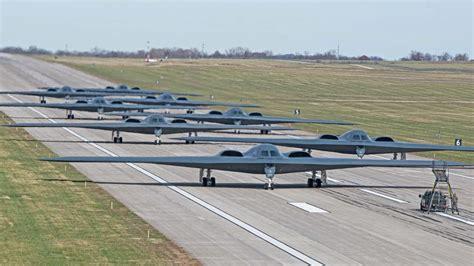
Trump detailed how B-2 Spirit stealth bomber crews executed an exceptionally difficult task: hitting targets “half the size of a refrigerator door” from an altitude of 50,000 feet, traveling at high speed. The operation showcased not only the technological prowess of the United States Air Force but also the endurance and discipline of its elite pilots.
The Challenge of Hitting Small Targets From 50,000 Feet
Precision in modern aerial warfare is often romanticized, but the reality is far more complex and demanding. At an altitude of 50,000 feet—more than nine miles above the Earth’s surface—accurately striking a target as small as “half the size of a refrigerator door” requires a confluence of advanced technology, meticulous planning, and pilot expertise.
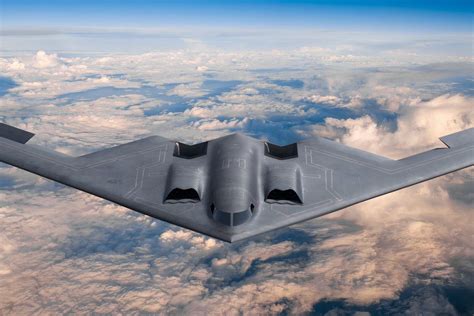
The B-2 Spirit, developed by Northrop Grumman, is among the most sophisticated aircraft in the world. Its stealth capabilities allow it to penetrate deep into hostile territory undetected, delivering both conventional and nuclear ordnance with pinpoint accuracy. However, the technology alone doesn’t guarantee success.
Trump emphasized the near-impossible task facing these pilots, stating: “They hit a target the size of a circle — a little target, they say, half the size of a refrigerator door, from 50,000 feet up in the air going at a rapid speed. They hit it every single time, and then they knocked out two other sites aside from that.”
Inside Operation Midnight Hammer: A Covert Strike on Iran’s Nuclear Sites
Operation Midnight Hammer, shrouded in secrecy, targeted Iranian nuclear facilities believed to be integral to the nation’s weapons development program. While details remain classified, sources suggest the mission involved multiple B-2 bombers launching from U.S. soil, refueling mid-air, and traversing thousands of miles to reach strategic targets.
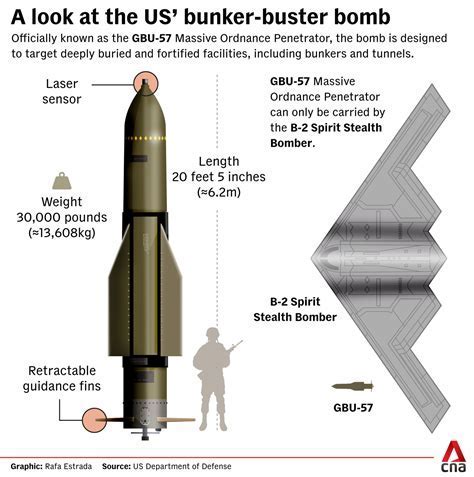
The operation marked the first combat deployment of the GBU-57 Massive Ordnance Penetrator (MOP), a bunker-busting bomb designed to obliterate fortified underground facilities. Each GBU-57 weighs approximately 30,000 pounds and is capable of penetrating over 200 feet of reinforced concrete before detonation.
Though specific strike locations have not been disclosed, the successful use of the MOP underscores U.S. concerns over Iran’s subterranean nuclear capabilities. Reports indicate the B-2 crews not only destroyed their primary objective but also neutralized two additional high-value sites.
Life Aboard the B-2 Spirit: A Grueling 36-Hour Mission
While the B-2’s sleek exterior and stealth capabilities are widely known, the experience inside the cockpit during extended missions is less glamorous. Trump noted that the pilots spent “36 hours in a little space on a big plane mostly occupied by bombs,” highlighting the physical and psychological demands of such operations.
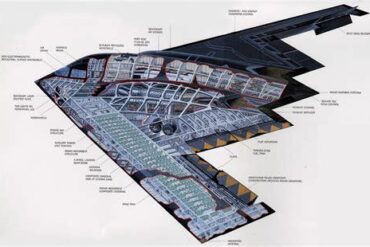
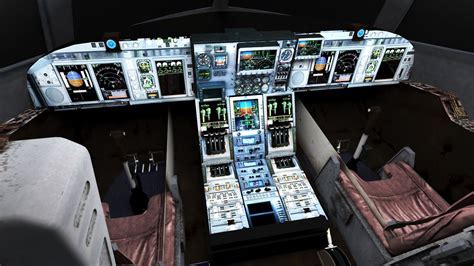
Each B-2 mission is crewed by two pilots. The cockpit, though state-of-the-art, offers limited space. Behind the seats lies a narrow area equipped with a foldable cot or camping pad where pilots can rest. A small heater allows for warming food, but given the mission’s duration and intensity, most opt for simple meals like sandwiches.
“You fly 36 hours, barely sleeping, mostly surrounded by bombs, and still, they deliver that kind of precision,” Trump remarked, underlining the dedication and resilience of these aviators.
Both pilots are required to be fully alert during takeoff, landing, mid-air refueling, and any period spent over enemy territory. Fatigue management becomes critical, particularly on missions involving multiple refueling operations and complex navigation across contested airspace.
Secrecy and Preparation: The Hidden World of B-2 Pilots
The identities of the B-2 pilots who participated in Operation Midnight Hammer remain classified. However, accounts from former B-2 operators provide insight into their rigorous preparation and the culture of secrecy surrounding such missions.
Before deployment, B-2 crews undergo extensive training in high-fidelity simulators designed to replicate long-duration flights and simulate mission profiles. This includes rehearsing mid-air refueling, precision bombing, and emergency procedures. Notably, pilots are often unaware of the actual mission details, including timing and targets, until immediately before deployment.
According to defense experts, this approach minimizes operational leaks and preserves mission integrity. “They are some of the most disciplined aviators on the planet,” noted a retired U.S. Air Force colonel familiar with B-2 operations.
Political Fallout and Global Implications
Operation Midnight Hammer reignited debates over U.S. military intervention and the potential for escalation in the Middle East. Critics questioned the strike’s effectiveness, arguing that even successful precision bombing may only temporarily delay Iran’s nuclear ambitions.
Trump, however, framed the operation as a testament to American military dominance and strategic resolve. His invitation to the B-2 pilots to visit the White House further spotlighted the mission, signaling support for the armed forces while deflecting criticism over the broader policy.
Internationally, the strike sent a clear message regarding U.S. capabilities. The B-2’s ability to fly undetected, deploy bunker-busting ordnance, and strike fortified targets with surgical precision exemplifies the advanced reach of American airpower. It also highlighted the evolving threat environment, where underground facilities and asymmetric warfare tactics present new challenges.
Technological Marvel: The B-2 Spirit’s Capabilities
First introduced in the late 1980s, the B-2 Spirit remains a cornerstone of the U.S. Air Force’s long-range strike arsenal. Its distinctive flying wing design reduces radar cross-section, making it nearly invisible to enemy detection systems.
The aircraft boasts:
- Intercontinental range, capable of global missions with aerial refueling
- Stealth technology, including radar-absorbent materials and minimized heat signature
- Payload capacity for both conventional and nuclear weapons, including the GBU-57 MOP
- Advanced avionics and mission systems for high-precision targeting
Despite its decades of service, continuous upgrades have kept the B-2 operationally relevant, bridging the gap until the arrival of the next-generation B-21 Raider.
Conclusion: Precision, Endurance, and Strategic Messaging
The account shared by Trump offers a rare glimpse into the covert world of strategic air operations, where precision is measured in inches, endurance is tested over days, and success can reshape geopolitical landscapes.
The image of B-2 pilots, confined within the metallic belly of a flying wing, enduring 36-hour missions, and executing strikes with near-perfect accuracy, serves as both a symbol of American technological prowess and the immense human effort behind military dominance.
As the B-2 Spirit continues to project power across the globe, its legacy is defined not just by stealth and firepower but by the relentless professionalism of those who fly it. Operation Midnight Hammer, regardless of the long-term effects on Iran’s nuclear ambitions, underscores the enduring intersection of military precision, political strategy, and the human spirit of those tasked with defending national interests from 50,000 feet above.