A high-stakes revelation from retired U.S. Colonel Douglas MacGregor has reignited debate around the recent U.S. airstrikes targeting Iran’s nuclear infrastructure, after he disclosed that Tehran was warned two hours in advance. The startling admission comes amid intensifying geopolitical tensions, with major questions now swirling around the effectiveness of the strike, the future of Iran’s uranium program, and the credibility of Washington’s deterrence posture.
Advance Warning: Strategic Calculus or Diplomatic Signal?
According to MacGregor, the U.S. notified Iranian officials just two hours before launching precision airstrikes on nuclear-related sites. He made this disclosure in a public post on X, raising eyebrows across military and diplomatic circles.
This contradicts former President Donald Trump’s earlier claim that Iran was unaware of the planned attack. Trump had previously touted the strikes as a bold surprise maneuver, claiming it shattered any notion that facilities like Fordow were untouchable.
Yet, MacGregor’s statement now suggests the U.S. may have chosen a path of calculated escalation — a signal to Tehran rather than a decapitating blow. Analysts believe the motive behind the advanced notice may have included avoiding full-scale retaliation, preventing civilian casualties, or maintaining backdoor diplomatic channels.
Damage Report: What Was Hit — And What Survived
The three targeted locations, believed to be critical to Iran’s atomic capabilities, were hit on June 13 following Israel’s own military action. While Iranian Foreign Minister Abbas Araghchi confirmed “serious” damage, no detailed assessment has been made public.
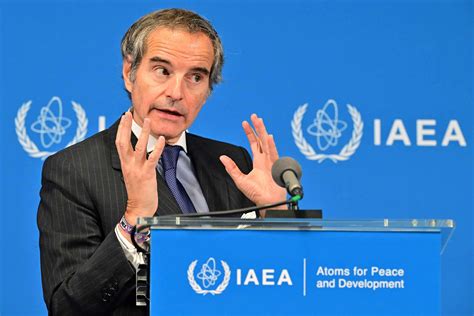
U.S. officials described the operation as a targeted degradation of Iran’s uranium enrichment capacity. However, Rafael Grossi, head of the International Atomic Energy Agency (IAEA), offered a sobering assessment. “Some is still standing,” Grossi told CBS, referring to Iran’s core enrichment capabilities.
He warned that Tehran could resume uranium enrichment within months, even in the aftermath of the U.S.-led strikes. “They can have a few cascades of centrifuges spinning… in a matter of months, or even less,” he noted.
The Fordow Factor: A Symbol of Strategic Defiance
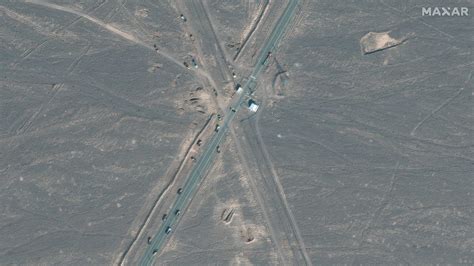
The Fordow facility, buried deep within a mountain and considered one of the most fortified nuclear sites in the world, became a focal point. Trump had earlier declared that striking Fordow was unimaginable due to its presumed invulnerability. But new intelligence suggests that even this site was partially hit during the raids.
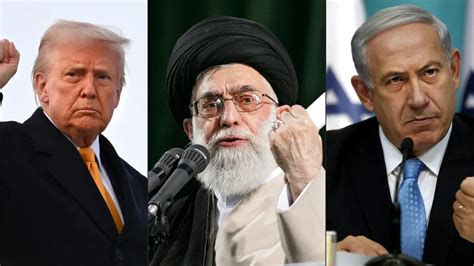
Tehran, however, denied catastrophic damage. Supreme Leader Ayatollah Ali Khamenei downplayed the strike’s impact, characterizing it as “a slap in the face” to Washington, and claimed that Iran retained control of its nuclear destiny.
Enrichment Stockpile: What Happened to the Uranium?
One of the most pressing uncertainties surrounds the fate of Iran’s highly enriched uranium stockpile — estimated at over 408.6 kilograms of uranium enriched to 60%. This is well beyond civilian requirements and, if further refined, sufficient to create nine or more nuclear weapons.
“We don’t know where this material could be,” admitted Grossi. “Some could have been destroyed… some could have been moved.” His remarks underscore a critical intelligence blind spot that could determine whether Iran retains a viable breakout capacity.
Trump, meanwhile, expressed confidence that the stockpile was not moved prior to the attack, citing the short notice and logistical difficulty. “They didn’t move anything,” he said on Fox News. But without on-site inspections, this remains speculative.
IAEA Locked Out: Tehran Halts Cooperation
Following the airstrikes, Iran’s parliament voted to suspend cooperation with the IAEA, a significant blow to global nuclear monitoring efforts. Tehran also rejected Grossi’s request to visit key sites, particularly Fordow, further fueling concerns about what might now be happening out of sight.
“We need to ascertain what is there, where it is, and what happened,” Grossi emphasized. But without access, even the most advanced surveillance networks offer limited insight into actual ground conditions.
Political Fallout: Trump’s Rhetoric Escalates
As the situation intensified, Trump returned to his Truth Social platform with a series of striking claims. Chief among them was the assertion that he had personally prevented the assassination of Ayatollah Khamenei.
“I SAVED HIM FROM A VERY UGLY AND IGNOMINIOUS DEATH,” Trump posted, asserting that both the U.S. and Israel had precise information on Khamenei’s location. His tone shifted from self-congratulatory to menacing, stating unequivocally that the U.S. would strike again if Iran resumed weapons-grade enrichment.
“If we see even the hint of weapons-grade activity, we will bomb them again — without question,” he told reporters.
Israel’s Role: A Parallel Offensive
The strikes were preceded by an Israeli bombing campaign targeting Iranian defense and nuclear infrastructure. While Israel has not disclosed full details, the operation was widely interpreted as a preemptive move to keep Tehran from approaching nuclear breakout status.
The coordination — or lack thereof — between U.S. and Israeli forces remains unclear. However, Washington’s follow-up action suggests some level of strategic alignment, even if the two governments pursue divergent narratives on timing and scale.
Unanswered Questions: Was the Strike a Bluff or a Blunder?
The mixed messaging and contested damage assessments raise serious doubts about the strike’s effectiveness. On one hand, U.S. officials portray it as a deterrent success; on the other, international inspectors suggest Iran’s core nuclear architecture remains intact.
Was the two-hour warning a gesture of restraint or a signal of weakness? Did Iran’s program merely absorb a tactical hit while retaining its strategic momentum?
These questions matter because Iran has demonstrated the technical capability and political will to reconstitute its enrichment infrastructure quickly. If it relocated key centrifuge parts or enriched uranium beforehand — as some suspect — the strike may have had little strategic impact.
Diplomatic Limbo: Sanctions, Backchannels, and Uncertainty
With Iran suspending its IAEA cooperation and refusing site inspections, Washington faces limited options short of further military action. Trump, who initially explored sanctions relief for Iran, has since reversed course.
“They got beat to hell,” he said, “but if they try anything else, it’s going to be worse.” This zero-tolerance stance could foreclose avenues for diplomacy just as Iran inches closer to nuclear weaponization.
Meanwhile, U.S. Secretary of State Marco Rubio expressed strong support for the IAEA’s oversight role, commending Grossi’s “dedication and professionalism.” Yet, without Tehran’s cooperation, even the best diplomatic support cannot offset intelligence shortfalls and nuclear ambiguity.
Conclusion: A Fragile Deterrence Hangs in the Balance
The aftermath of the U.S. strike on Iran’s nuclear facilities leaves the world no clearer on whether Tehran’s nuclear ambitions have truly been curbed. The two-hour warning, the partial damage, and Iran’s sudden opacity all contribute to a complex strategic picture.
If the intent was to shock and awe Iran into halting enrichment, the result may have been mere delay, not dismantlement. And with inspectors locked out and uranium stockpiles unaccounted for, the nuclear clock may still be ticking — louder than ever.