Tanzania’s government is taking a bold step towards enhancing its national revenue and bolstering the insurance sector by exploring the implementation of mandatory travel insurance for all foreign non-residents entering the country. This significant initiative, aimed at ensuring that international travelers are adequately protected during their stay, is expected to be included in the budget for the 2025/2026 fiscal year. Under this proposed scheme, international visitors would be required to pay for an insurance policy upon arrival, irrespective of the purpose of their visit, marking a notable shift in the travel landscape in Tanzania.
The proposed fee of USD 44 per person is designed to cover a wide range of services, which include essential protections against medical emergencies, accidents, and baggage-related issues. This insurance policy would be valid for 62 days from the date of arrival, offering travelers a safety net during their time in Tanzania. However, it’s crucial to note that the policy would be non-refundable, meaning that travelers who leave the country earlier than planned would not be able to reclaim the cost of the insurance. Such terms may raise concerns among tourists who plan flexible itineraries.
Exemptions to the new requirement are under consideration for citizens of East African Community (EAC) member states, which include neighboring countries like Kenya, Uganda, and Rwanda. Furthermore, discussions are ongoing regarding potential exemptions for nationals from the Southern African Development Community (SADC), although no official announcements have been made to confirm this. The administration of this mandatory travel insurance scheme is anticipated to be managed by the National Insurance Company (NIC), with authorized agents overseeing the distribution of policies to ensure compliance with the new regulations.

A significant concern raised by industry stakeholders, particularly those within the tourism sector, is whether travelers will have the option to purchase this insurance online before their arrival. If online pre-purchase is not available, visitors could face confusion or delays at entry points, especially at busy airports or border crossings. Such scenarios could lead to negative experiences for travelers and create bottlenecks at immigration, ultimately tarnishing Tanzania’s reputation as a welcoming tourist destination.
Local tour operators, especially those situated in major tourist hubs like Arusha, have expressed alarm over the potential financial burden this insurance requirement could impose on travelers. Many argue that international visitors often arrive with their own travel insurance, which typically covers medical emergencies and other issues usually included in the proposed mandatory policy. From the perspective of these operators, the additional fee could be seen as redundant, and it may even deter budget-conscious travelers from choosing Tanzania as their destination. As one operator succinctly put it, “This could make Tanzania less competitive compared to other destinations in Africa, where such policies are not in place.”
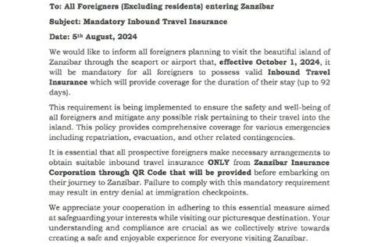
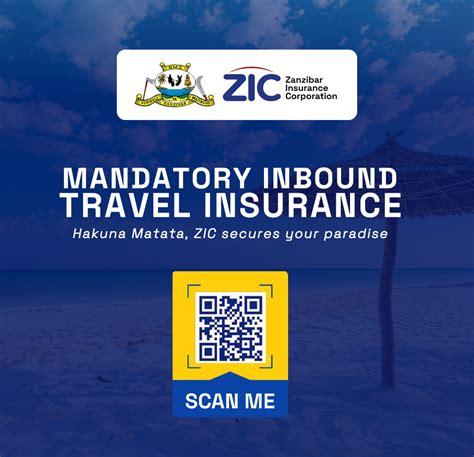
Interestingly, this move mirrors a similar policy introduced by Zanzibar in October 2024, where foreign visitors are required to pay for insurance as part of their travel entry requirements. Zanzibar, while part of Tanzania, has its own autonomous government, and its travel insurance requirement has already drawn attention for its potential impact on tourism. Under this Zanzibar policy, foreign adults must pay USD 44 for insurance, while children aged 3 to 17 are charged USD 22. Infants are exempt from this charge, and travelers must purchase the insurance through the Zanzibar Insurance Corporation (ZIC).
The proposed policy by the Tanzanian government to implement a national travel insurance fee for foreign visitors aligns with a broader trend observed in several countries seeking to enhance their domestic insurance markets while providing greater security for visitors. The introduction of this fee could also serve as a new revenue stream for Tanzania, which could assist in funding various government projects, including vital infrastructure development. However, the policy may have unintended consequences for the tourism industry, particularly by adding an extra cost to an already expensive global travel experience.
Tourism industry experts are closely monitoring the situation, as numerous questions remain unanswered regarding the details of the policy’s implementation. For instance, there is uncertainty about whether the insurance will be available for online purchase in advance or if travelers will need to pay for it upon arrival. Moreover, how the policy will be enforced at various entry points across Tanzania remains a critical concern. The potential impact of the proposed insurance policy on Tanzania’s tourism sector could be profound. While it may provide additional financial protection for travelers and contribute to local insurance markets, it also introduces an extra cost that could discourage tourists, particularly those on a budget, from selecting Tanzania as their destination.
Moreover, the mandatory insurance fee may present administrative challenges for the government, as it strives to manage and enforce the new requirement across busy entry points. The success of this initiative will largely depend on how effectively it is implemented and whether it adversely affects the country’s competitiveness in the tourism market.
In conclusion, the introduction of a mandatory travel insurance fee in Tanzania holds the potential to support the country’s insurance industry while providing enhanced protection for travelers. However, the government must carefully balance the advantages of this new insurance requirement with the potential challenges it may pose to the tourism sector. With the right approach, Tanzania can continue to thrive as a premier travel destination, offering safety and security to its visitors while maintaining its allure in the competitive global tourism landscape.