An ornithopter is a flying machine that generates both lift and thrust by flapping its wings, mimicking the natural motion of birds, bats, and insects. Unlike conventional fixed-wing aircraft or rotary drones, ornithopters offer unique advantages in maneuverability, energy efficiency, and stealth, especially at smaller scales. From ancient sketches to modern robotic reconnaissance, ornithopters have traced a long, ambitious arc through human ingenuity.
The Origins of Flight: From Myth to Mechanical Aspirations
The dream of flight predates written history, but the concept of flapping-wing aircraft crystallized in several historic attempts that straddle the line between legend and engineering curiosity. In the 9th century, Abbas Ibn Firnas of Andalusia purportedly constructed and tested glider-like wings, while in the 11th century, Eilmer of Malmesbury, an English monk, tried to soar from a tower using a rudimentary glider. These early pioneers lacked the materials and scientific knowledge for success, but they set the foundation for centuries of exploration.
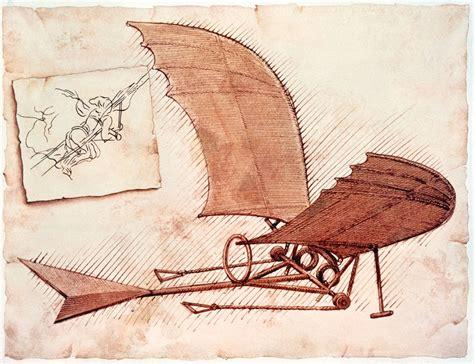
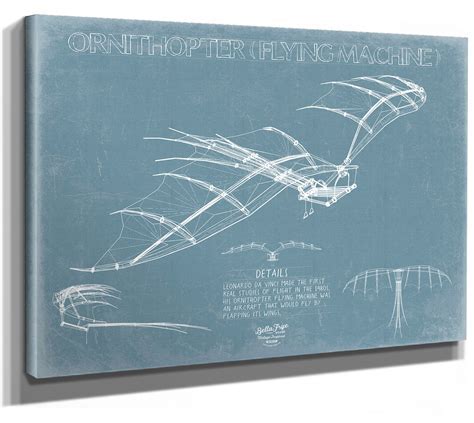
By 1485, Leonardo da Vinci had drawn detailed blueprints of a flapping-wing machine powered by human strength through a complex system of pulleys and levers. Although da Vinci’s designs were never built in his lifetime, their anatomical precision and conceptual foresight foreshadowed the mechanics of modern ornithopters.
Nineteenth Century: Ornithopters Take Flight
The 1800s marked the transition from speculation to experimentation. In 1841, a blacksmith named Manojlo allegedly launched a crude ornithopter from a rooftop in Belgrade. But the real breakthroughs came from French inventors such as Jobert, whose rubber-band-powered models mimicked insect wings, and Victor Tatin, whose torsion-wing design introduced a new way to store and release energy.
Gustave Trouvé further revolutionized ornithopters by employing gunpowder propulsion, achieving an 80-meter flight in 1890. Around the same time, Lawrence Hargrave introduced separate small wings solely for thrust generation—a fundamental design shift that informed future development.
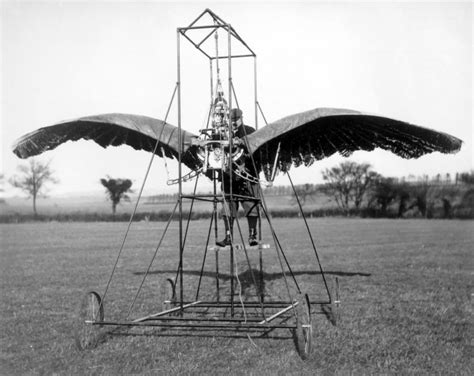
Meanwhile, E.P. Frost began constructing ornithopters powered first by steam and then by internal combustion, eventually building them to human scale. These experimental prototypes paved the way for understanding the power-to-weight ratios essential for human and engine-powered flight.
Twentieth Century: Human and Engine-Powered Achievements
The 20th century saw dramatic advances in both human-powered and engine-driven ornithopters. The German engineer Alexander Lippisch, working under the Nazi regime, produced advanced models with bending wings, dramatically improving aerodynamic realism. Erich von Holst developed rubber-band-powered prototypes that introduced internally powered mechanisms, increasing efficiency and flight duration.
One of the earliest successful human-powered ornithopters was flown by Adalbert Schmid in 1942. Schmid managed to fly nearly 900 meters purely through muscle power and later extended this using a 7.5 kW Sachs engine. This dual-power approach proved the feasibility of augmenting human input with lightweight motors.
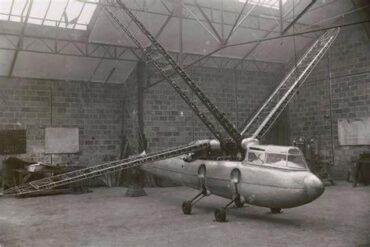
The 1937 Riout 102T Alérion, a French prototype, represented the most sophisticated pre-21st-century design with articulated wings and advanced control systems. Although it never achieved consistent flight, it highlighted the potential for ornithopters as practical vehicles.
In the 21st century, Todd Reichert’s “Snowbird” achieved a human-powered flight lasting 20 seconds over 145 meters, while Yves Rousseau made 212 attempts before achieving a 64-meter flight in 2006. At the University of Toronto Institute for Aerospace Studies (UTIAS), James DeLaurier’s jet-assisted ornithopter flew successfully in 2006 for 14 seconds, marking a milestone in hybrid propulsion.
Military and Robotic Applications: Biomimicry in Action
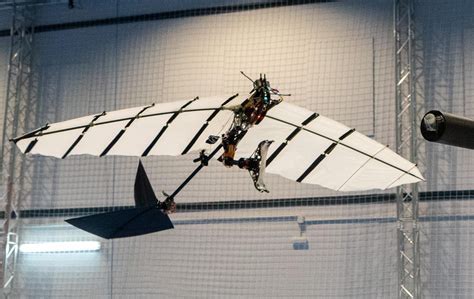
Modern engineering increasingly leverages biomimicry, and ornithopters play a central role in this revolution. In 2011, AeroVironment introduced the Nano Hummingbird, a tiny drone capable of hovering and maneuvering like a real bird, designed for stealth reconnaissance in urban environments.
Earlier, in the 1980s, Paul MacCready’s Quetzalcoatlus—a remote-controlled flying pterosaur replica—pushed the boundaries of aerodynamic modeling. Other innovative projects include the “entomopter” developed at Georgia Tech, which uses chemical reactions to simulate muscle contractions.
SRI International is developing synthetic polymer-based muscles, while Sweden’s Chalmers University uses evolutionary algorithms to optimize wing flapping patterns. Theo van Holten’s ornicopter introduces torque-free rotors, a unique departure from traditional thrust systems.
Airport safety has also benefited from ornithopter technology. In 2008, robotic hawks began clearing birds from airfields, followed by the launch of RoBird® in 2012, a flapping-wing device modeled on falcons that discourages wildlife by mimicking predatory behavior. Since 2015, Animal Dynamics Ltd has been developing dragonfly-inspired ornithopters for military applications.
Ornithopters in Popular Culture and Hobbyist Circles
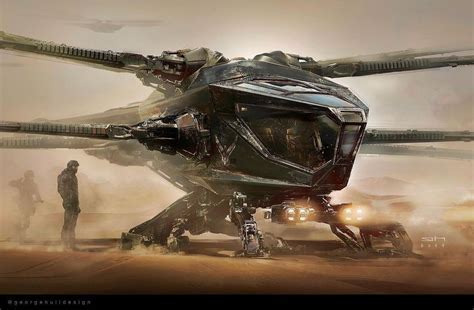
Beyond labs and airfields, ornithopters have captured the public imagination. Frank Herbert’s “Dune” series famously features them as the primary airborne transport across the desert planet Arrakis, visualized as agile, beetle-like aircraft with flapping wings.
Hobbyists, too, have long been fascinated. Since 1879, the mechanical toy Tim Bird has been a staple of flapping-wing entertainment. The 2000s introduced WowWee’s Dragonfly, blending toy-grade robotics with lifelike wing motion.
High-performance hobby ornithopters now achieve remarkable flight durations. Roy White holds an indoor endurance record with a rubber-band-powered ornithopter that flew for 21 minutes and 44 seconds. Designs range from biologically inspired birds to bat-like configurations, and enthusiasts often refer to resources such as Nathan Chronister’s Ornithopter Design Manual and The Ornithopter Zone for technical guidance.
Aerodynamic Principles: Unsteady Flow and Lift-Thrust Coupling
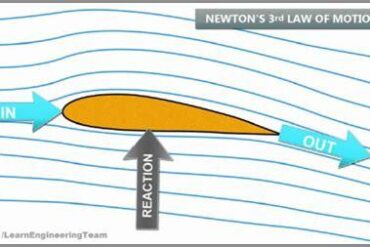
The key aerodynamic distinction of an ornithopter lies in unsteady flow dynamics. Unlike fixed wings, flapping foils generate lift and thrust simultaneously by oscillating. These interactions are complex, with wingtip vortices, delayed stall, and wake capture playing major roles.
Flapping wings also allow vertical takeoff and landing (VTOL), improved maneuverability, and energy conservation through cyclic motion. However, predicting performance requires computational models beyond steady-state assumptions, making design and testing a highly iterative process.
Material Science and Wing Design Innovation
Building a viable ornithopter requires a delicate balance between thrust, lift, weight, and durability. Leonardo’s original sketches already imagined the need for ribbed, fabric-covered wings—concepts still relevant today. Modern materials include carbon fiber, composite plastics, and thermoplastics that provide both rigidity and flexibility.
The most efficient wings incorporate aeroelastic properties that exploit the natural bend and twist of materials to store and release energy. By optimizing phase lag between pitch and plunge motions, engineers can extract more useful aerodynamic work per cycle. Some designs apply double-surface airfoils, mimicking the dual-membrane construction found in bats and large insects.
Recent laboratory tests on the Fullwing ornithopter achieved 8 pounds of lift, 0.88 pounds of thrust, and 54% efficiency, metrics considered excellent for experimental platforms. Higher wingbeat frequencies were shown to increase thrust significantly, enabling faster forward motion without proportional energy cost.
Conclusion: The Future of Flapping-Wing Flight
Once seen as an impractical fantasy, ornithopters have evolved into potent tools for scientific exploration, military reconnaissance, and aviation innovation. Advances in robotics, aerodynamics, and material science have pushed the field beyond novelty toward utility. As designers continue to blend nature’s wisdom with cutting-edge technology, ornithopters may yet define the next frontier of aerial mobility, especially in environments where conventional aircraft falter.
Whether soaring like falcons, fluttering like dragonflies, or roaring across fictional deserts, ornithopters represent the persistent human quest to master flight not just through imitation, but through transformation.