Lift is one of the four fundamental aerodynamic forces acting on an aircraft, and it plays a critical role in enabling sustained flight. In aerodynamics, lift is the force that directly opposes the weight of an airplane and holds it aloft in the atmosphere. It is a mechanical force produced by the relative motion of an aircraft through the air, involving complex interactions between solid surfaces and fluid dynamics.
The Nature of Lift: A Mechanical Aerodynamic Force
Lift is inherently a vector quantity, possessing both magnitude and direction. It acts through the center of pressure of the aircraft and is always directed perpendicular to the oncoming airflow. Unlike gravitational or electromagnetic forces, lift requires physical contact between a solid body and a fluid medium — in this case, air. Without air, as in the vacuum of space, traditional lift cannot be generated, emphasizing the principle “no fluid, no lift.”
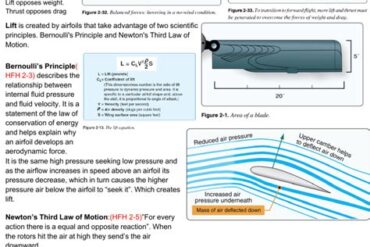
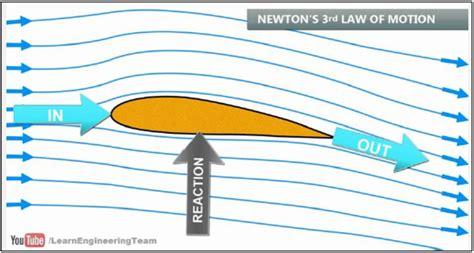
Understanding the generation of lift requires a deep appreciation of fundamental physics. Although various explanations exist, not all are accurate. The most reliable description roots itself in Newton’s Third Law of Motion, which states that for every action, there is an equal and opposite reaction. As an aircraft moves through the atmosphere, its wings turn the airflow downward; in reaction, the wings experience an upward force — lift.
Flow Turning and the True Mechanism Behind Lift
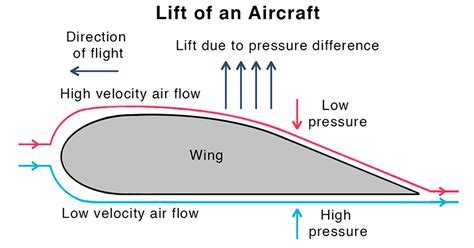
The phenomenon of lift generation is largely attributed to the turning of the airflow around the wing structure. Both the upper and lower surfaces of a wing are instrumental in deflecting air. The upper surface often contributes significantly, a fact frequently overlooked in simplistic models that emphasize only the pressure difference above and below the wing.
Neglecting the role of the upper surface can lead to erroneous theories, such as the misapplication of the Bernoulli Principle alone to explain lift. While pressure differentials certainly exist, they are consequences of the broader interaction where the wing modifies the path of airflow, creating lift through the redirection of momentum.
The Essential Factors Influencing Lift
The magnitude of lift generated by an aircraft is not static; it depends on several critical factors:
- Shape of the Wing (Airfoil): The curvature and thickness of the airfoil influence the amount of airflow turning and the resultant lift.
- Angle of Attack (AoA): The angle between the chord line of the wing and the oncoming airflow critically determines the lift produced.
- Velocity of the Aircraft: Greater speed relative to the air enhances lift production.
- Air Density: Higher air density — influenced by altitude, temperature, and atmospheric pressure — results in more lift for the same flight conditions.
- Surface Area: Larger wing areas capture and turn more airflow, generating greater lift.
Each of these factors interplays dynamically during flight, meaning pilots must adjust flight parameters continuously to maintain optimal lift.
No Motion, No Lift: The Role of Relative Velocity
It is crucial to recognize that without motion between the solid body and the fluid, no lift can be generated. This motion can result from the aircraft moving through stationary air or the air moving around a stationary aircraft, such as in a wind tunnel. Regardless of perspective, the presence of relative velocity is mandatory.
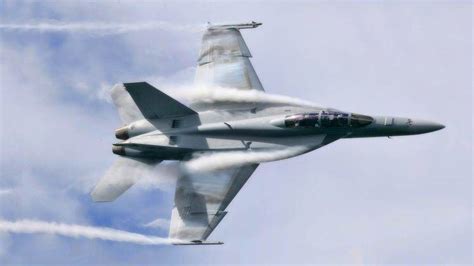
Lift acts perpendicularly to the relative motion, contrasting with drag, which acts directly against the object’s movement through the fluid. The coexistence of lift and drag forms the basis of aerodynamic control and efficiency in aircraft design.
Aerodynamic Shape and Airfoil Design: Maximizing Lift Efficiency
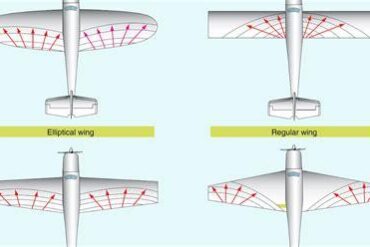
The design of an airfoil — the cross-sectional shape of a wing — is meticulously crafted to optimize lift while minimizing drag. Most airfoils are asymmetrical, meaning the upper surface is more curved than the lower surface. This configuration helps in efficiently turning the airflow, enhancing lift without demanding excessive angles of attack that could lead to airflow separation and stall.
Airfoil characteristics such as camber, thickness, and leading-edge shape are customized depending on the mission profile of the aircraft, whether it be for high-speed jet fighters, slow-speed gliders, or heavy transport aircraft.
The Impact of Angle of Attack and Stall Phenomena
As the angle of attack increases, the lift also increases — up to a critical point. Beyond this point, known as the critical angle of attack, the smooth airflow over the wing breaks down, resulting in a stall. A stall is characterized by a sudden loss of lift and a dramatic increase in drag.
Pilots must therefore manage the angle of attack carefully, especially during critical flight phases such as takeoff and landing, to maintain sufficient lift and prevent inadvertent stalls.
Misconceptions and Incorrect Theories About Lift
In many educational materials, Bernoulli’s Principle is often cited exclusively as the explanation for lift. While Bernoulli’s Principle — relating fluid speed and pressure — is valid within its context, it does not comprehensively explain lift generation. In reality, the physics of lift involves:
- Newtonian Action-Reaction Forces: The downward turning of airflow leads to an upward reactive force.
- Conservation of Momentum: The wing imparts a change in momentum to the airflow, resulting in a lifting force.
- Pressure Distributions: Variations in pressure around the wing contribute to the net force experienced as lift.
A comprehensive understanding recognizes that lift results from the complex interaction of these principles rather than any single isolated effect.
Real-World Applications of Lift Beyond Fixed-Wing Aircraft
The principles of lift extend beyond traditional airplane wings to other flying vehicles and devices:
- Helicopter Rotor Blades: Function as rotating wings, generating lift through motion relative to the air.
- Paragliders and Hang Gliders: Utilize flexible airfoils to manipulate airflow and generate lift.
- Spacecraft During Atmospheric Reentry: Although primarily subject to drag, controlled lift can be used for maneuvering.
Understanding lift is essential for the engineering of all types of flying machines, from drones to hypersonic vehicles.
Conclusion: The Foundation of Sustained Flight
In the intricate dance between a solid body and the atmosphere, lift emerges as the critical enabler of flight. Without the deflection of air, the establishment of pressure differentials, and the interplay of forces dictated by the laws of physics, humanity would not have conquered the skies. Every flight is a testament to the profound principles of aerodynamics, where lift — born from motion, shaped by design, and governed by immutable physical laws — upholds the marvel of aviation.
As we continue to push the boundaries of flight, from supersonic travel to interplanetary exploration, a deep understanding of lift remains as vital as ever to innovation and safety in aerospace engineering.