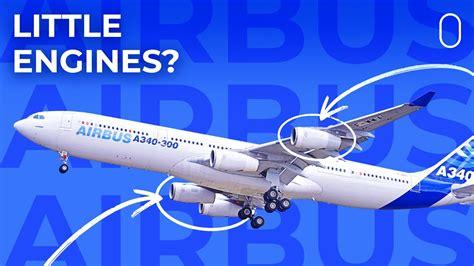
The Airbus A340 has long carried a reputation that swings between admiration and mockery. On one hand, it is a graceful, long-haul workhorse designed for intercontinental endurance. On the other, it has been the subject of persistent jokes—most famously the claim that it was powered by “four Boeing 737 engines.” That idea sounds absurd at first glance, almost like suggesting a freight train runs on lawnmower motors. Yet the rumor has endured for decades, fueled by visual similarities, shared engineering lineage, and a few uncomfortable truths about performance.
To understand where perception diverges from reality, it’s necessary to move beyond surface-level comparisons and into the engineering DNA of the aircraft. The Airbus A340 was not lazily assembled with off-the-shelf narrowbody engines. It was, however, shaped by a chain of decisions and setbacks that forced Airbus into a compromise—one that would define the aircraft’s legacy in ways few could have predicted.
The truth is more nuanced than the myth, and far more interesting. It reveals how a single design pivot, combined with rapidly evolving aviation technology, turned a promising flagship into one of the most debated widebody aircraft ever built.
The Origin of the “Four Boeing 737 Engines” Myth
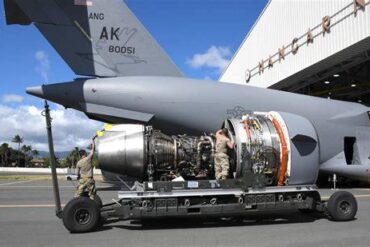
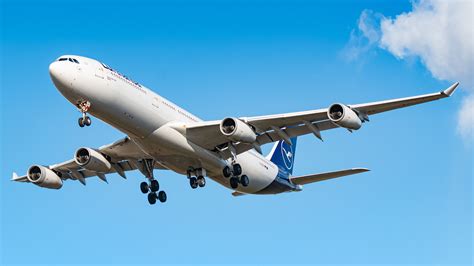
At the core of the myth lies a technical connection that is easy to oversimplify. The early Airbus A340-200 and A340-300 variants were powered by the CFM56-5C, a member of the same engine family that powered the Boeing 737 Classic and Next Generation series. That shared lineage is the spark that ignited the misconception.
However, equating these engines directly is like claiming two high-performance cars are identical because they share a common engine block. The CFM56 family is a broad platform, not a single uniform engine. Each variant is tailored for specific aircraft requirements, with substantial differences in size, thrust, and internal configuration.
The Boeing 737-300 used the CFM56-3, while later 737NG models relied on the CFM56-7B. The A340’s CFM56-5C, by contrast, was engineered specifically for long-haul, high-altitude operations. It was the most powerful version of the CFM56 ever developed at the time, incorporating structural and aerodynamic modifications that set it apart from its narrowbody cousins.
Yet to the untrained eye, the resemblance is undeniable. Four relatively small engines mounted under a widebody wing create a visual impression that reinforces the narrative. And in aviation, perception can be just as powerful as data.
Engineering Reality: Same DNA, Different Beast
While the engines share a common heritage, the differences between them are not cosmetic—they are fundamental. The CFM56-5C features a significantly larger fan diameter, measuring approximately 72.3 inches, compared to around 60 inches on the 737’s variants. This increase allows for greater airflow, which is essential for generating thrust on a heavier aircraft.
Internally, the A340’s engine is also more complex. It includes additional compressor and turbine stages designed to improve efficiency during long-duration flights at cruising altitude. These enhancements were critical for an aircraft expected to cross oceans without diversion.
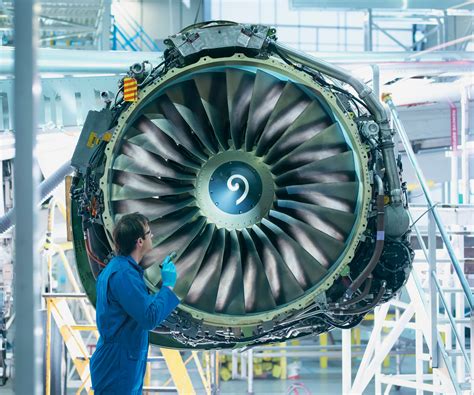
Despite these upgrades, the engine remained constrained by its original design architecture. The CFM56 was originally conceived for smaller aircraft, and while it was stretched to its limits for the A340, there was only so much performance that could be extracted from the platform.
This limitation created a unique situation: the A340 was powered by the most advanced version of a highly successful engine family, yet it still struggled to deliver the kind of thrust expected from a long-haul widebody.
The SuperFan Collapse: A Turning Point That Changed Everything
The A340’s story cannot be understood without examining the engine it was supposed to have. In its earliest design phase, Airbus intended the aircraft to be powered by the IAE SuperFan, a revolutionary geared turbofan that promised dramatically higher thrust and fuel efficiency.
The SuperFan was not just an incremental upgrade—it was a leap forward. It would have provided the A340 with the kind of power that could rival or exceed anything on the market at the time. The aircraft’s aerodynamics, weight distribution, and overall performance targets were built around this engine.
Then, in 1987, the program was abruptly canceled.
The impact was immediate and severe. Airbus was left with a nearly complete airframe and no suitable engine to power it. Developing a new engine from scratch was not an option within the required timeline, leaving the manufacturer with a stark choice: adapt an existing engine or abandon the project.
They chose adaptation. The CFM56-5C became the only viable solution.

This decision saved the program but introduced a permanent compromise. The A340 was no longer powered by a cutting-edge, high-thrust engine—it was powered by the best available alternative, one that was fundamentally less capable than originally intended.
Why the A340 Feels Underpowered in Practice
The perception of the A340 as underpowered is not entirely unfair. It stems from the relationship between thrust and weight, a critical factor in aircraft performance.
A Boeing 737-300 uses two engines to move roughly 138,000 pounds. The A340-300, by contrast, relies on four engines to move over 600,000 pounds at maximum takeoff weight. Even with each engine producing up to 34,000 pounds of thrust, the overall thrust-to-weight ratio is less favorable.
This imbalance becomes most apparent during takeoff and initial climb. Pilots often describe the A340-300 as having a deliberate, unhurried ascent, especially when fully loaded. It lacks the aggressive climb performance seen in aircraft like the Boeing 777 or even smaller twinjets.

The famous joke—that the A340 “doesn’t climb, it waits for the Earth to curve away beneath it”—captures this characteristic with biting humor. While exaggerated, it reflects a genuine difference in performance that passengers and crew alike can feel.
Timing Is Everything: Enter the Twin-Engine Revolution
Even if the A340 had met all its original performance targets, it would still have faced a formidable challenge: the rise of highly capable twin-engine aircraft.
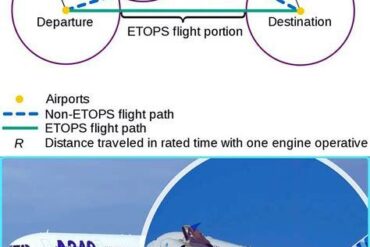
In the 1990s, regulatory changes allowed twinjets to operate long-haul routes previously restricted to aircraft with more engines. At the same time, engine technology advanced rapidly, producing powerplants with unprecedented thrust and efficiency.
The Boeing 777 epitomized this shift. Equipped with engines like the GE90, it could generate more thrust from two engines than the A340 could from four. It also carried more passengers and consumed less fuel per seat.
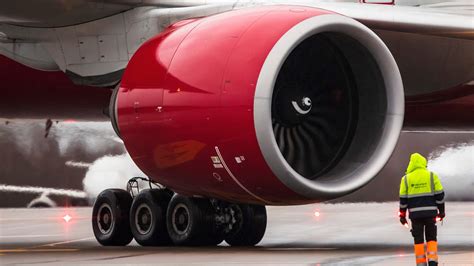
The comparison was stark. Airlines quickly recognized that operating two large engines was more economical than maintaining four smaller ones. The A340’s primary advantage—its four-engine redundancy—became less relevant in a world where twin-engine reliability had dramatically improved.
The A340-500 and A340-600: Power at a Price
Airbus responded to criticism by redesigning the A340 with more powerful engines. The later A340-500 and A340-600 models abandoned the CFM56 entirely in favor of the Rolls-Royce Trent 500.
These engines delivered up to 60,000 pounds of thrust each, nearly doubling the power available on earlier variants. The transformation was significant. The A340-600, in particular, became a capable high-capacity aircraft with improved climb performance and range.
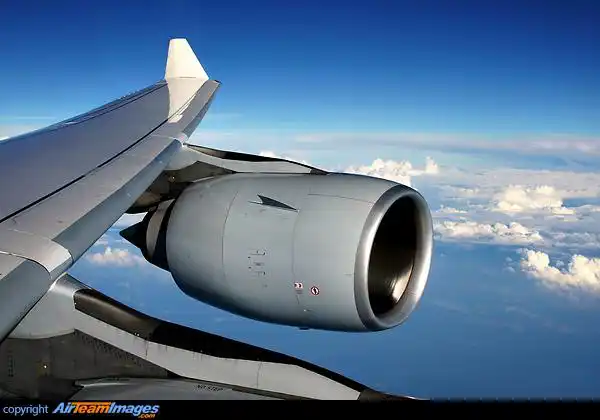
However, this increase in power came with a trade-off. Four large engines consume more fuel than two, regardless of efficiency improvements. As fuel prices rose, the economic disadvantage of the quad-engine design became increasingly difficult to ignore.
The A340 evolved from being perceived as underpowered to being viewed as uneconomical—a different problem, but one just as damaging in a competitive industry.
A Legacy Defined by Compromise and Context
The Airbus A340 occupies a unique place in aviation history. It is neither a failure nor a flawless success. Instead, it is an aircraft shaped by circumstances—technological transitions, market shifts, and one critical engine program cancellation.
The claim that it was powered by “four Boeing 737 engines” is technically incorrect, but it points to a deeper truth. The A340’s engines were derived from a platform originally designed for smaller aircraft, and that heritage influenced its performance in ways that could not be fully overcome.
The Final Verdict: Myth vs. Reality
The idea that Airbus simply installed four narrowbody engines onto a widebody aircraft is an oversimplification that ignores the complexity of aerospace engineering. The CFM56-5C was a highly advanced, purpose-built engine that represented the pinnacle of its family.
Yet the myth persists because it captures something real: the A340 was, in its early forms, operating at the edge of what its engines could deliver. It was not poorly engineered—it was constrained by circumstance.

In the end, the A340’s story is not about being underpowered in absolute terms. It is about being outpaced—by newer technologies, by shifting economics, and by an industry that moved faster than anyone anticipated.
That tension between capability and expectation is what makes the A340 so fascinating. It is a reminder that even in a field defined by precision, success is often determined not just by engineering, but by timing.