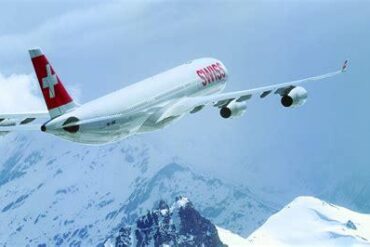
The Airbus A340 stands as one of the most fascinating case studies in modern aviation—a sleek, long-haul widebody that chose four engines in an era increasingly obsessed with efficiency. At first glance, the decision feels counterintuitive. Why would Airbus commit to a quad-engine design just as twin-engine aircraft were beginning to dominate? The answer lies not in hindsight, but in the complex intersection of regulation, risk management, and market timing.
Understanding the A340 means stepping back into the aviation landscape of the 1980s—a world where long-haul travel was still shaped by strict safety rules, evolving engine technology, and uncertain regulatory trajectories.
The 1980s Aviation Landscape: A World Not Ready for Twinjets
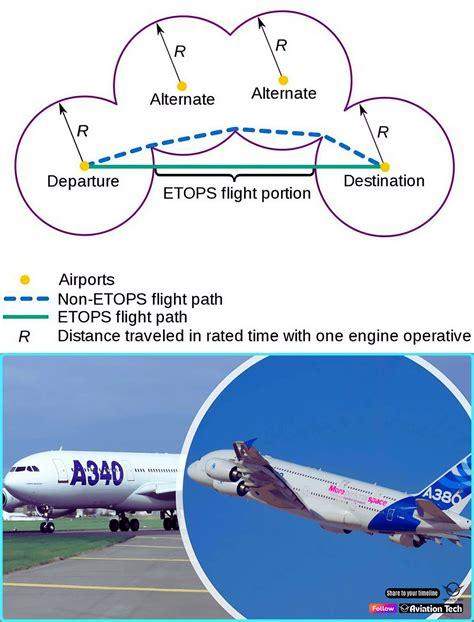
When Airbus launched the A340 program in 1987, the global aviation environment was fundamentally different from today. Twin-engine jets, while efficient, were severely restricted in how far they could fly from diversion airports. These rules, rooted in earlier decades of less reliable engine technology, were enforced by regulators like the Federal Aviation Administration (FAA).
At the time, the infamous 60-minute rule limited twin-engine aircraft to routes that never strayed more than one hour from a suitable airport. Even as this evolved into ETOPS-120, the restrictions still carved out massive portions of the globe—especially transoceanic routes across the Pacific and remote polar regions—as inaccessible to twinjets.
For Airbus, this wasn’t a minor inconvenience. It was a market opportunity hiding in plain sight.
Airlines needed aircraft that could fly ultra-long routes without operational constraints, and the only reliable solution was more engines. Four engines meant unrestricted routing freedom, allowing carriers to operate the most lucrative long-haul flights without regulatory headaches.
The Strategic Twin: A340 and A330 as a Calculated Bet
Airbus didn’t just build the A340 in isolation. It launched it alongside its twin-engine sibling, the Airbus A330, in one of the most strategically brilliant moves in commercial aviation.
This dual-program approach allowed Airbus to hedge against uncertainty:
- If ETOPS rules remained strict → A340 dominates long-haul routes
- If ETOPS relaxed quickly → A330 becomes the efficiency leader
Rather than gamble on a single future, Airbus built both futures simultaneously.
From a design perspective, the A340 and A330 shared a common fuselage cross-section, cockpit design, and systems architecture, dramatically reducing development costs while maximizing market coverage. Airlines could operate both aircraft with minimal pilot retraining, a powerful selling point.
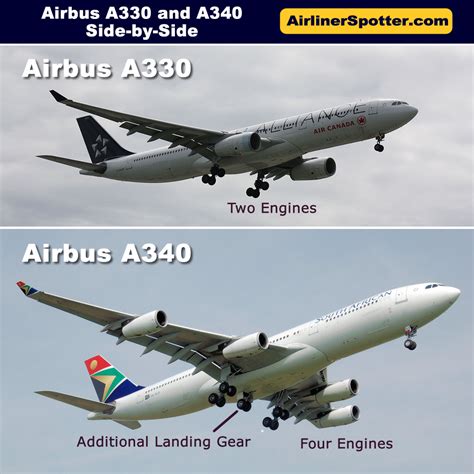
This wasn’t just engineering efficiency—it was commercial foresight.
Four Engines, Maximum Reach: The Core Advantage of the A340
The defining strength of the A340 was simple: it could go anywhere.
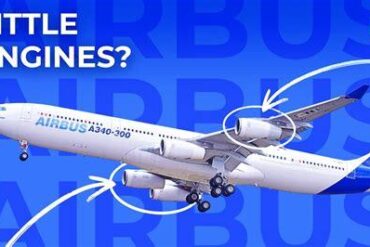
Equipped initially with CFM56 engines, the early variants—the A340-200 and A340-300—were optimized for long-range operations without ETOPS limitations. This gave airlines unprecedented flexibility in route planning, especially on thin, ultra-long-haul routes where diversion airports were scarce.
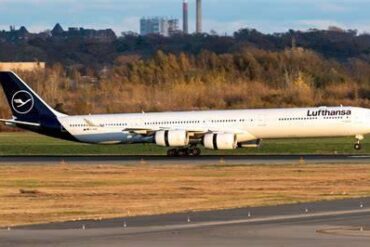
Later variants, including the A340-500 and A340-600, pushed boundaries even further. With Rolls-Royce Trent 500 engines, these aircraft delivered:
- Ranges exceeding 10,000 nautical miles
- Seating capacities up to 370 passengers
- Maximum takeoff weights approaching 380 tons
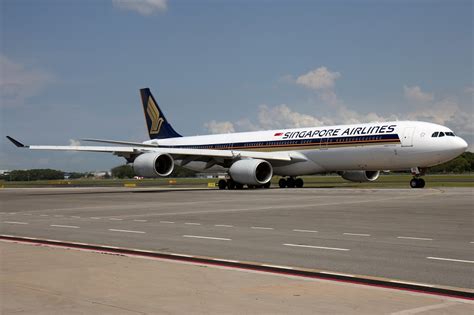
One of the most iconic examples of the A340’s capability came when Singapore Airlines operated the world’s longest nonstop flight between Newark and Singapore using the A340-500.
This wasn’t just an aircraft—it was a tool for rewriting the limits of global connectivity.
The Regulatory Shock: ETOPS Changes Everything
Just as Airbus committed to the A340’s four-engine philosophy, the regulatory landscape shifted—fast.
In 1988, the FAA introduced ETOPS-180, allowing twin-engine aircraft to fly routes up to three hours from a diversion airport. This single policy change unlocked 95% of the Earth’s surface for twinjets.
The implications were enormous.
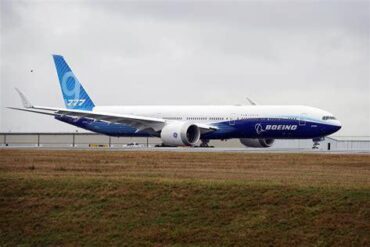
Aircraft like the Boeing 777, which entered service in the mid-1990s, could now match or exceed the A340’s route flexibility—but with half the engines, lower fuel burn, and reduced maintenance costs.
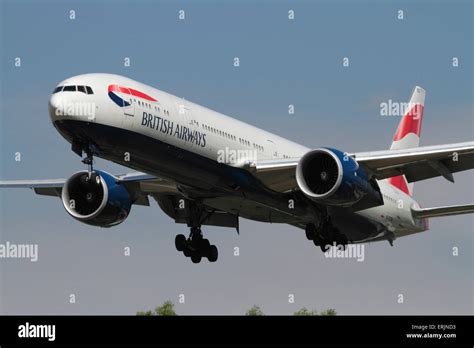
Airbus had anticipated gradual regulatory relaxation. Instead, the industry experienced a rapid transformation that undercut the A340’s core advantage almost overnight.
The Economics Problem: Four Engines, Four Cost Centers
While the A340 excelled in range and flexibility, it struggled where it mattered most to airlines: operating economics.
Fuel represents the largest single cost for any airline. Four engines inherently consume more fuel than two, even when individually smaller. Add to that:
- Higher maintenance requirements
- Increased overhaul costs
- Greater weight and drag penalties
The result was an aircraft that, while technically impressive, became economically disadvantaged compared to newer twinjets.
Against competitors like the Boeing 777, the A340 simply couldn’t keep up. Airlines began to prioritize efficiency over redundancy, especially as engine reliability improved dramatically.
This wasn’t a marginal gap—it was a decisive shift in airline economics.
Why Airbus Didn’t Backtrack Immediately
Despite these challenges, Airbus didn’t abandon the A340 overnight. In fact, it doubled down with the A340-500 and A340-600, targeting a different segment of the market.
Rather than competing directly with efficient twinjets, these variants were designed to:
- Replace aging Boeing 747 fleets
- Offer high-capacity, long-range solutions
- Deliver lower per-seat costs on dense routes
In this context, the four-engine configuration wasn’t a liability—it was aligned with the segment’s expectations. After all, the aircraft it aimed to replace were also quad-engine giants.
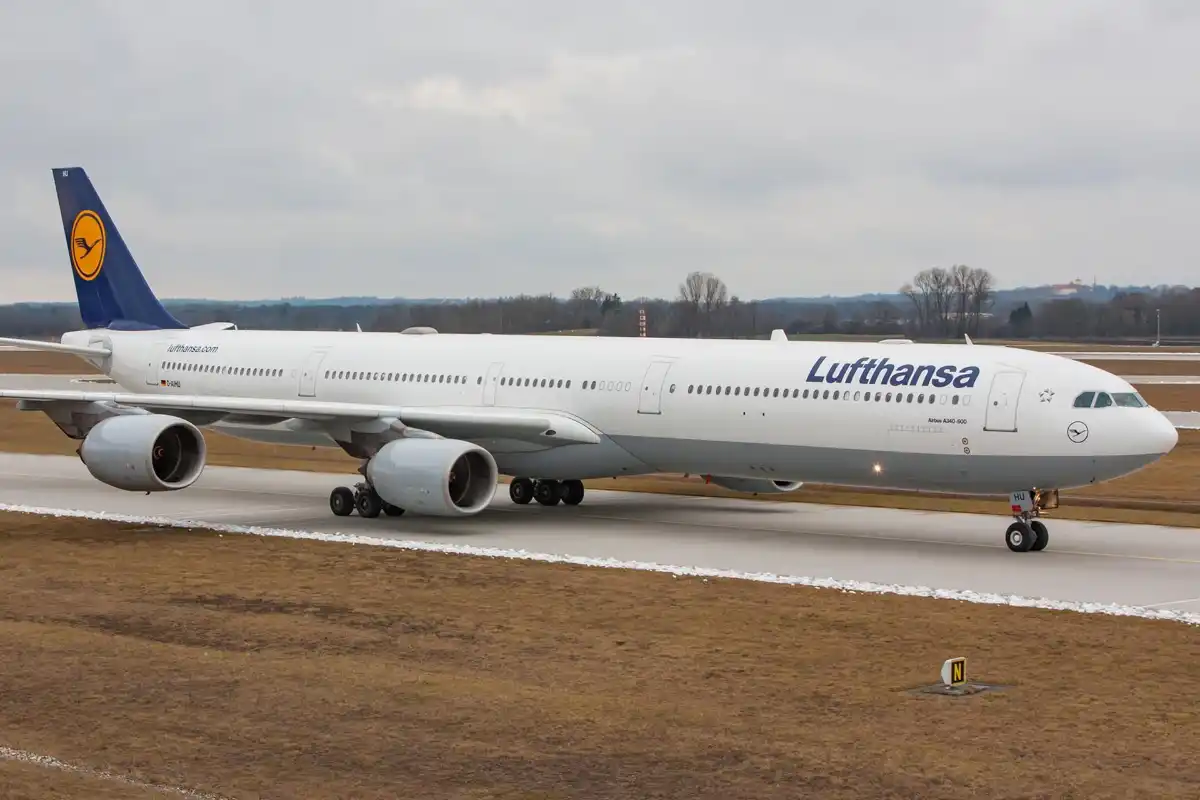
This pivot highlights Airbus’ adaptability. The company recognized that while the original premise of the A340 had weakened, the platform still had strategic value in specific niches.
The Final Blow: The Rise of Ultra-Efficient Twinjets
By the 2000s, the trajectory was clear. Twin-engine aircraft were no longer just catching up—they were surpassing quadjets in every meaningful metric.
Advancements in engine technology, particularly in high-bypass turbofans, delivered:
- Unprecedented fuel efficiency
- Longer maintenance intervals
- Higher reliability than ever before
Regulatory frameworks evolved alongside these improvements. ETOPS extended beyond 180 minutes, eventually reaching 240, 330, and even 370 minutes.
This effectively erased the final advantage of four-engine aircraft.
The arrival of next-generation aircraft like the Airbus A350 marked the definitive end of the quadjet era in commercial aviation.
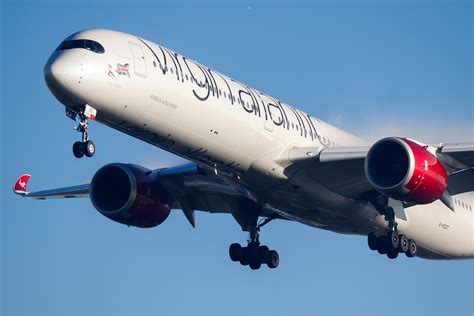
With its ETOPS-370 certification, the A350 could operate virtually anywhere on Earth, rendering the A340’s original value proposition obsolete.
Production Reality: A Strong Start, A Limited Legacy
Despite its challenges, the A340 was far from a failure. Airbus produced 377 units, a respectable number for a widebody program. The aircraft served major airlines worldwide and proved reliable, versatile, and محبوب among pilots for its handling characteristics.
However, certain variants struggled significantly. The A340-200, for example, saw just 28 orders, reflecting limited demand in its segment.
The broader picture reveals a program that was commercially viable but strategically constrained by rapidly changing industry dynamics.
A Calculated Decision, Not a Mistake
Labeling the A340 as a misstep oversimplifies a far more nuanced reality. Airbus didn’t build a four-engine aircraft out of stubbornness—it did so based on the best available data, regulatory forecasts, and market conditions at the time.
In fact, the decision was entirely rational:
- Regulations limited twin-engine viability
- Engine reliability, while improving, wasn’t yet proven at scale
- Airlines demanded unrestricted long-haul capability
- The competitive landscape lacked a dominant ultra-long-range twinjet
Airbus responded with a solution that perfectly matched the moment.
The Real Legacy of the Airbus A340
The A340’s story isn’t about failure—it’s about timing.
It represents a transitional era in aviation, where the industry moved from redundancy-driven design to efficiency-driven engineering. The aircraft bridged a critical gap, enabling airlines to expand global networks at a time when alternatives were limited.
More importantly, it demonstrated Airbus’ ability to think strategically, hedge risks, and execute complex programs with precision.
Without the A340, the success of the A330—and later the A350—might not have been as profound. The lessons learned shaped Airbus’ future, influencing how it approached efficiency, range, and market alignment.
Conclusion: Four Engines That Made Perfect Sense—Until They Didn’t
The Airbus A340 was built with four engines because, at the time, it was the smartest possible choice. It offered unmatched range, regulatory freedom, and operational flexibility in a world that hadn’t yet fully embraced the potential of twin-engine aircraft.
But aviation evolves relentlessly. As technology advanced and regulations adapted, the very advantages that defined the A340 became obsolete.
What remains is not a relic, but a remarkable example of engineering aligned with its era—a machine that solved yesterday’s problems with elegance and precision.
And in doing so, it helped pave the way for the ultra-efficient, long-range aircraft that now dominate the skies.