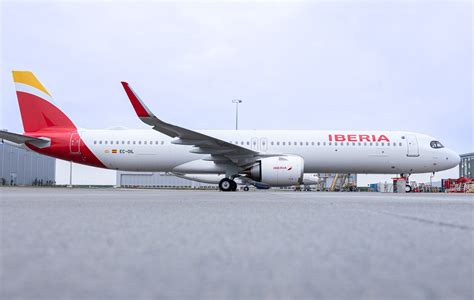
The Airbus A321XLR has been widely celebrated as a game-changer for long-range narrowbody travel. Built on the success of the A321neo platform, the A321XLR extends its transatlantic reach with a maximum range of 4,700 nautical miles, allowing airlines to efficiently connect city pairs that were once unviable with widebodies. However, beneath this promise of versatility lies a constraint that continues to shadow its performance ambitions: engine thrust limitations. While the aircraft’s overall design is optimized for fuel efficiency and route economics, its engines—either the CFM LEAP-1A or the Pratt & Whitney PW1100G—are fast approaching the edge of their performance envelope. This poses a significant concern as airlines look to push the A321XLR into more demanding operational profiles.
The Heart Of The Issue: Modern Engines With Constraints
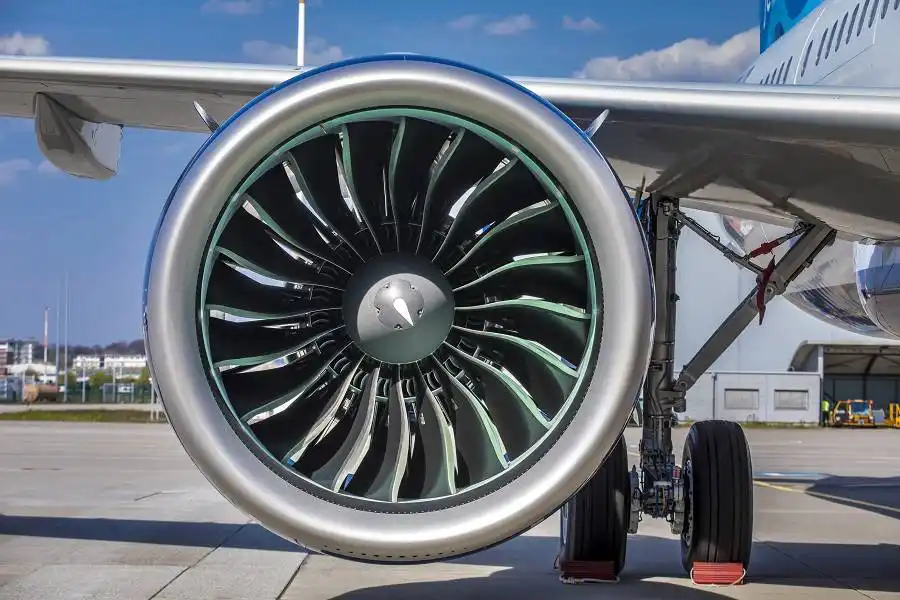
Both the LEAP-1A and the PW1100G are cutting-edge high-bypass turbofans, reflecting the best of what modern engine engineering has to offer. The PW1100G, with its revolutionary geared turbofan design, allows different parts of the engine to rotate at optimized speeds, improving both fuel efficiency and noise reduction. Meanwhile, the LEAP-1A leverages advanced materials such as ceramic matrix composites to withstand higher temperatures and pressures, achieving a fine balance between durability and thermal efficiency.
Yet, even with these innovations, neither engine breaks the 34,000 lbs thrust barrier. The PW1100G tops out at 33,110 lbs, and the LEAP-1A at 32,160 lbs. These numbers, while perfectly adequate for a standard A321neo or even the slightly heavier A321LR, start to show their limits when stretched to accommodate the increased Maximum Takeoff Weight (MTOW) of the A321XLR at 101 metric tons. This is particularly stark when compared to the aircraft the XLR is often seen as replacing: the legendary Boeing 757-200.
The Boeing 757’s Muscle Legacy Still Looms
Designed with short-field performance in mind, the 757 was a power-lifter in narrowbody disguise. Equipped with engines such as the Pratt & Whitney PW2000 or the Rolls-Royce RB211, the aircraft routinely delivered over 42,000 lbs of thrust. This sheer power gave the 757 unmatched performance at hot-and-high airports, short runways, or during rapid climbs, allowing it to operate in marginal conditions with full payloads.
The A321XLR, despite its technological superiority in range and fuel burn, simply does not match this brawn. Its engines are optimized for efficiency, not brute force. As a result, the A321XLR faces runway performance penalties in certain operational conditions. These can include high temperatures, high-altitude airports, and routes that require both full payload and maximum fuel—scenarios where engine thrust becomes a bottleneck.

Operational Constraints At Performance Margins
Take Denver International Airport as an illustrative case. Located at 5,430 ft above sea level and frequently experiencing summer temperatures above 100°F (38°C), it presents a classic high-hot scenario. United Airlines currently operates Boeing 757s on routes from Denver to Hawaii, a demanding flight for any narrowbody. If replaced with an A321XLR, these flights would likely face payload restrictions, meaning either fewer passengers, less cargo, or reduced fuel—none of which are economically ideal.
At sea level, the 757 can lift off in under 8,000 feet with Flaps 20. In contrast, the A321XLR often requires between 8,000 to 9,000 feet to take off at full weight, even under optimal conditions. Factor in high altitude, and that performance gap becomes a real-world limitation. In such environments, the XLR’s engines are operating close to their maximum certified capabilities, leaving no margin for weight growth, adverse weather, or longer missions.
Limitations On Future Growth Potential
The problem isn’t just present—it’s inhibiting future development. Airbus has long teased the possibility of a stretched variant of the A321neo, informally known as the Airbus A322. A longer fuselage would allow more passengers and potentially increase revenue per flight. But stretching the fuselage inevitably means more structural weight, more fuel needed to maintain range, and—critically—more thrust required to get the aircraft safely off the ground.
Yet, neither the PW1100G nor the LEAP-1A in their current iterations can offer a significant enough power increase without sacrificing reliability or maintenance cycles. Both engines are already the upper-end models of their families. Pushing them further risks thermal overload, reduced time on wing, and higher maintenance costs, which could erode the very cost advantages that make the A321XLR attractive in the first place.
A Technological Bottleneck: The Engine OEM Dilemma
Both CFM International and Pratt & Whitney face significant hurdles in squeezing out more thrust. The LEAP-1A’s 11:1 bypass ratio and the PW1100G’s 12.5:1 ratio already reflect the cutting edge of what’s feasible in a narrowbody nacelle size. Increasing these figures demands either larger fan diameters—impossible without significant airframe redesign—or drastically new engine architectures.
A potential solution might come from next-generation turbofans like the RISE program (Revolutionary Innovation for Sustainable Engines) announced by CFM, which explores open-fan architectures. But these are at least a decade away from commercial service. Until then, Airbus remains locked into engine thrust ceilings that cap how far it can grow the A321XLR platform.
Field Performance Tradeoffs and Customer Impact
For most routes, the A321XLR’s thrust limitation is an acceptable tradeoff. Airlines prioritize fuel burn efficiency, fleet commonality, and lower trip costs—all strengths of the A321XLR. For transatlantic routes such as Madrid to Boston, the aircraft delivers exceptional economics, matching the mission profile with fuel capacity rather than power.
However, for more exotic missions or high-utilization fleets that demand flexibility, the aircraft’s lack of raw power remains a concern. Operators like United Airlines and American Airlines, who use the 757 in a wide variety of operating conditions, must re-evaluate route viability when transitioning to the A321XLR. This could result in some routes being upgauged to widebodies or discontinued entirely.
Software Versus Aerodynamic Pitfalls: Lessons From 737 MAX
Interestingly, the A321XLR has not encountered the same aerodynamic quirks as its Boeing counterpart, the 737 MAX, despite having similarly upsized engines. Boeing’s decision to place the larger LEAP-1B engines further forward and higher on the MAX’s wing led to undesirable pitch-up characteristics, necessitating the controversial MCAS software system.
By contrast, Airbus mounted the PW1100G and LEAP-1A engines slightly higher without moving them forward, avoiding major aerodynamic instability. When a sudden pitch-up issue arose on early A321neo models in 2019, the culprit turned out to be flight control software, not engine-induced airflow disruption. A software patch resolved the issue, reaffirming the A321neo/XLR’s stable aerodynamic foundations.
The Balance Of Efficiency Vs. Performance
The Airbus A321XLR represents a monumental leap in single-aisle capability, one that redefines transcontinental operations for narrowbodies. Its value lies in range, efficiency, and commonality, but its Achilles heel is power. While Airbus engineered the aircraft to be a fuel-efficient 757 successor, the A321XLR cannot replicate the brute takeoff performance that made the 757 famous in challenging operational theaters.
That power deficit is manageable today, but it presents a strategic ceiling for the platform’s future. Whether in the form of a stretched A322, a heavier XLR+, or even broader adoption into hot-and-high markets, any future iteration of the A321 platform will eventually need more powerful engines.
Until then, the A321XLR remains a formidable tool—just one bound by the limits of its propulsion.