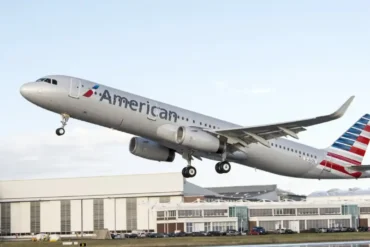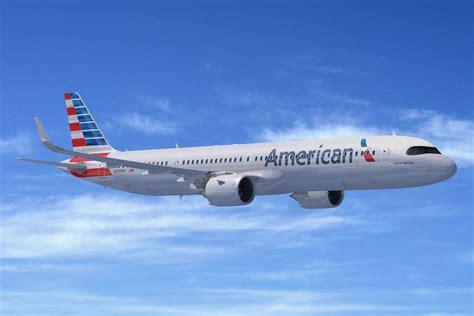
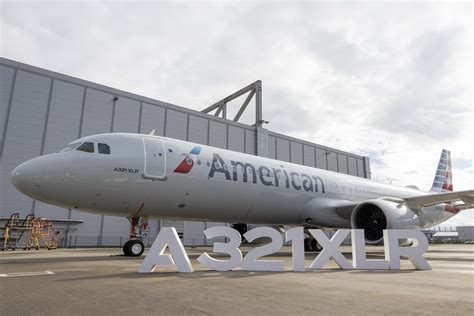
The arrival of the Airbus A321XLR represents one of the most structurally important fleet developments in modern network planning. While many airlines will deploy the aircraft to experiment with thinner long-haul routes, American Airlines is uniquely positioned to extract disproportionate value from its capabilities. The aircraft is not simply a range extension of the A321neo; it is a strategic instrument that allows American to rebuild lost international ground, optimize seasonal demand, and reinforce geographic strengths that no U.S. competitor can replicate at scale.
At a recent internal leadership summit, American offered a revealing glimpse into its future thinking. Conference participants were invited to vote on ten prospective long-haul destinations—most of them perfectly calibrated for the A321XLR’s long-range narrowbody economics. While the exercise was speculative, the shortlist functioned like a strategic mood board, illustrating where the airline sees opportunity once sufficient aircraft enter service.
The destinations ranged from established European capitals to secondary leisure markets and even one South American outlier. Berlin, Brussels, Vienna, Seville, Bordeaux, Mallorca, Shannon, Casablanca, and Córdoba formed a network blueprint built less on prestige and more on precision—routes where right-sized capacity matters more than sheer volume.
A Fleet Gap Finally Filled
To understand why the A321XLR will work better for American than any other airline, one must rewind to the pandemic era. During that period, American accelerated the retirement of its Boeing 757s, 767s, and Airbus A330s. The move simplified the fleet but hollowed out mid-capacity long-haul capability.
Competitors took a different path. Delta Air Lines and United Airlines retained older widebodies, giving them tactical flexibility when international demand rebounded. They could reopen secondary European destinations quickly, even if yields were uncertain.
American, by contrast, faced a structural bottleneck. It had the demand, the hubs, and the partnerships—but not the aircraft size category needed to profitably serve thinner long-haul markets. Large widebodies were too much airplane; narrowbodies lacked the range.
The A321XLR closes that capability gap with surgical precision. With a range approaching 4,700 nautical miles and dramatically lower trip costs than widebodies, it enables routes that were previously economically marginal to become viable year-round or seasonal services.
Transatlantic Catch-Up Mode
American’s transatlantic network today reflects that earlier fleet contraction. The absence of cities like Berlin, Brussels, and Vienna is not due to lack of demand but lack of right-sized lift. These are business and cultural capitals with strong O&D (origin-and-destination) traffic, yet insufficient volume to justify daily widebody service outside peak months.
From New York JFK and Philadelphia, however, the A321XLR can reach nearly all of them within operational range. Philadelphia in particular—long overshadowed by JFK and Charlotte—emerges as a stealth transatlantic powerhouse when paired with long-range narrowbodies.
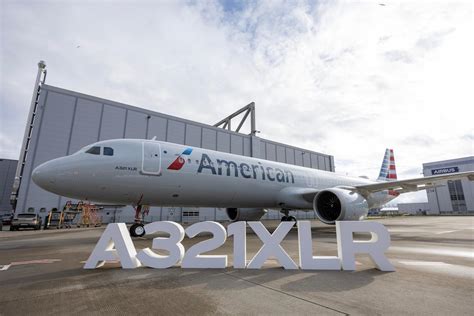
American has already signaled this direction. Announced routes such as JFK–Edinburgh and Philadelphia–Porto demonstrate how the aircraft will open markets that blend leisure demand with diaspora and business travel.
These are not vanity routes. They are algorithmically sensible—cities with high seasonal peaks, strong alliance feed, and limited nonstop competition.
The Seasonality Problem—and Its Elegant Solution
Secondary European markets share a common trait: seasonal volatility. Summer demand surges with tourism, festivals, and favorable weather. Winter demand, meanwhile, softens dramatically outside major capitals.
Operating widebodies year-round in such markets is like heating a cathedral for two parishioners—technically possible, economically painful.
American’s network planners, led by SVP Brian Znotins, have outlined two complementary solutions.
The first is seasonal down-gauging—deploying widebodies in summer, then switching to A321XLRs in winter while maintaining route continuity. This preserves market presence without hemorrhaging capacity.
The second strategy is more imaginative and far more powerful: redeploy the aircraft south when Europe cools.
The “Follow-The-Sun” Strategy
Here lies the masterstroke. American possesses something no other U.S. airline can match: an immense Latin American and Caribbean network anchored in Miami.
When European demand weakens, the southern hemisphere enters peak travel season. Beaches, cruise gateways, VFR (visiting friends and relatives) traffic, and business flows all intensify.
Instead of letting aircraft sit idle or underperform, American can rotate its A321XLR fleet geographically—north in summer, south in winter.
This “follow-the-sun” model maximizes utilization, yield, and network connectivity simultaneously. Aircraft become migratory assets, chasing demand across hemispheres like metallic birds with optimized balance sheets.
No rival carrier combines such transatlantic catch-up needs with such a dominant Latin American foundation.
Why Córdoba Was the Telltale Clue
Among the conference’s proposed destinations, Córdoba, Argentina stood out. Unlike the European cities listed, Córdoba is not a conventional long-haul target for U.S. airlines.
Its inclusion was revealing.
American briefly operated Miami–Córdoba in 2019 before the pandemic forced its suspension. The route’s traffic profile—steady but not massive—made it unsuitable for widebodies yet too long for standard narrowbodies.
Enter the A321XLR.
At roughly 3,500 nautical miles, the route fits squarely within the aircraft’s performance envelope while aligning capacity with real demand.
Córdoba’s reappearance in strategic discussions signals American’s intent to rebuild secondary South American connectivity using right-sized aircraft rather than oversized jets.
Brazil: The Highest-Priority Growth Engine
If one zooms out across the continent, Brazil becomes the most logical expansion theater. It is South America’s largest economy and geographically ideal for narrowbody long-haul from Miami.
American has served many Brazilian secondary cities before—Brasília, Manaus, Recife, Salvador, Belo Horizonte, Porto Alegre, Curitiba, Campinas—but widebody economics made sustained service difficult.
The A321XLR changes the cost equation.
Lower trip costs, fewer seats to fill, and long range combine to transform previously marginal routes into profitable niche markets. Instead of chasing only São Paulo and Rio de Janeiro, American can spiderweb into the country’s interior economic centers.
Beyond Brazil: Underserved Capitals and Emerging Markets
Network planners are also eyeing thinner, strategically valuable destinations across the continent.
Cities like La Paz, Santa Cruz, Paramaribo, and Asunción represent aviation white space—markets with diplomatic, commercial, or diaspora relevance but insufficient widebody demand.
Asunción is particularly notable. Regulatory certification at Silvio Pettirossi International Airport has cleared the final barrier for nonstop U.S. flights, making it ripe for narrowbody long-haul experimentation.
Each of these routes fits the same formula: modest but resilient demand, limited competition, and strong connectivity via Miami.
Miami: The Hemisphere’s Natural Launchpad
American’s Miami hub is not merely large; it is structurally dominant. The airline serves nearly 100 destinations across Latin America and the Caribbean from this single gateway.
That density creates self-reinforcing feed. Passengers from smaller U.S. cities funnel into Miami, then disperse across the hemisphere.
The A321XLR allows American to extend that web deeper inland without committing widebodies that would dilute yields.
In network science terms, Miami functions as a high-gravity node. Adding long-range narrowbodies increases the node’s reach without requiring proportional increases in capacity.
New South American Routes From Non-Miami Hubs
Perhaps the most intriguing frontier lies outside Florida.
Historically, American’s hubs at Dallas/Fort Worth, Charlotte, Chicago O’Hare, and Philadelphia have had limited or no nonstop service to deep South America. Range and economics made such routes impractical.
The A321XLR alters that geometry.
Flights such as DFW–Lima, ORD–Medellín, or PHL–Bogotá move from speculative to plausible. These routes would diversify connectivity, reduce Miami congestion, and capture regional corporate traffic that currently requires connections.
Right Aircraft, Right Market, Right Time
Aircraft economics operate on a simple but unforgiving principle: profitability lives in the space between demand and capacity.
Too many seats dilute fares. Too few constrain revenue.
The A321XLR’s 180–220 seat range occupies a sweet spot that widebodies overshoot in secondary markets. Its fuel efficiency and lower crew requirements further compress operating costs.
For American—still rebuilding long-haul breadth—the aircraft is less an experiment and more a structural repair tool.
Competitive Positioning Against Delta and United
Delta and United will also deploy the A321XLR, but their strategic contexts differ.
Delta already possesses a robust transatlantic joint venture footprint and retained mid-capacity aircraft through the pandemic. United, meanwhile, has aggressively expanded widebody international flying from multiple hubs.
Neither airline faces the same dual imperative: catch up in Europe while expanding in Latin America.
American does—and that duality is precisely where the XLR thrives.
Fleet Scale Matters
American has ordered 50 A321XLRs, giving it one of the largest planned fleets of the type globally.
Scale amplifies strategic impact. A handful of aircraft can open routes; dozens can reshape networks.
With sufficient frames, American can simultaneously:
- Launch new European destinations
- Maintain winter continuity on seasonal routes
- Expand secondary Latin American markets
- Experiment with new long-thin city pairs
Fleet size transforms the aircraft from tactical tool to strategic backbone.
A Network Transformation in Motion
When viewed holistically, the A321XLR is not just about range—it is about network elasticity.
It allows American Airlines to stretch, contract, and redirect capacity with unprecedented precision. Aircraft can migrate seasonally, resize routes dynamically, and probe emerging markets without existential financial risk.
This flexibility is particularly valuable in an era where demand patterns shift rapidly due to geopolitics, currency fluctuations, and tourism cycles.
Why It Will Work Better Here Than Anywhere Else
Other airlines will use the A321XLR to open routes.
American will use it to re-engineer an entire international strategy.
The airline’s unique combination of factors creates ideal operating conditions:
A transatlantic network with room to grow.
A dominant Latin American gateway.
Seasonal demand asymmetry between hemispheres.
Multiple inland U.S. hubs lacking South American reach.
A large incoming fleet enabling scale deployment.
Individually, these factors are advantageous. Collectively, they are transformative.
The Long-Range Narrowbody Era Arrives
Aviation periodically experiences aircraft that redraw route maps—the 747, the 777, the 787.
The A321XLR may do so not through size, but through precision. It turns marginal routes viable, seasonal routes sustainable, and experimental routes calculable.
For American Airlines, still recalibrating after pandemic fleet restructuring, the aircraft arrives at exactly the right strategic moment.
It is a bridge—between widebody ambition and narrowbody efficiency, between northern summers and southern peaks, between lost network breadth and future expansion.
And in that liminal space, where economics and geography intersect, the A321XLR is poised to work not just well for American Airlines—but better than for any other carrier navigating the same skies.