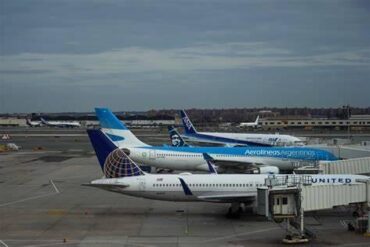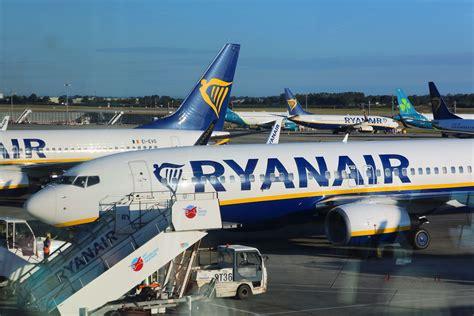
Ryanair has spent years proving that a ruthless focus on efficiency, fleet commonality, and ultra-low operating costs can reshape Europe’s aviation landscape. Today, the airline possesses aircraft capable of flying routes traditionally considered long-haul, yet it continues to concentrate almost exclusively on short- and medium-haul markets. The explanation is surprisingly simple. The biggest obstacle is not the capability of the aircraft or the economics of fuel burn. Instead, it is access to the world’s most valuable airport slots.
Rather than asking whether Boeing’s latest narrowbody aircraft can physically cross longer distances, the more important question is whether Ryanair could secure profitable access to airports where long-haul demand actually exists. Modern aircraft technology has removed many technical barriers, but the commercial realities surrounding airport infrastructure continue to determine who succeeds in intercontinental aviation.
Understanding this distinction reveals why Ryanair’s future growth strategy continues to emphasize Europe despite possessing aircraft with increasingly impressive range capabilities.
Modern Boeing 737 MAX Aircraft Have Already Changed the Rules
The introduction of the Boeing 737 MAX family has fundamentally altered what airlines can accomplish with single-aisle aircraft. Improved fuel efficiency, aerodynamic refinements, and more capable engines allow routes that would have been economically impossible only a decade ago.
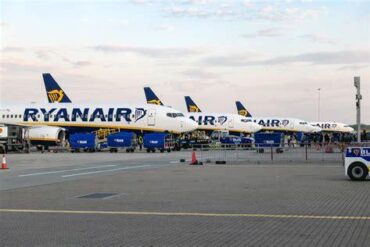
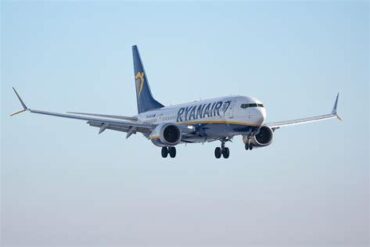
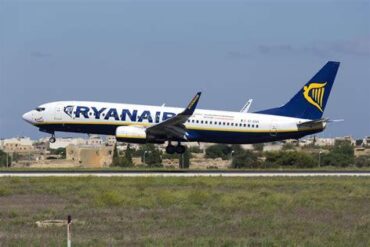
Ryanair currently operates hundreds of Boeing 737 MAX 8-200 aircraft, internally marketed as the “Gamechanger.” With an operational range approaching 3,500 nautical miles, these aircraft comfortably exceed the distance that several major airlines classify as long-haul operations.
Rather than purchasing entirely new aircraft families, Ryanair already owns equipment theoretically capable of serving destinations well beyond its traditional European network. Even its substantial order for the larger Boeing 737 MAX 10 demonstrates continued confidence in next-generation narrowbody technology.
However, possessing capable aircraft is only the first requirement. Operating them profitably is an entirely different challenge.
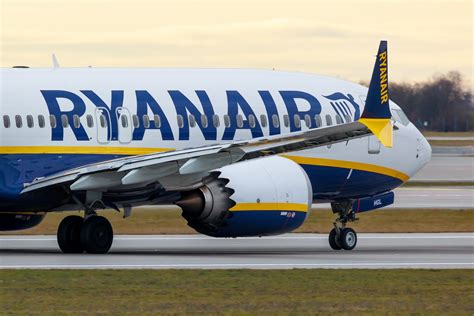
The airline already demonstrates these capabilities through several of its longest scheduled services. Routes connecting Central Europe with the Canary Islands regularly exceed five hours in duration, pushing narrowbody utilization well beyond what many travelers traditionally associate with European low-cost carriers.
These flights prove that range itself is no longer the limiting factor.
Aircraft Economics Alone Do Not Create a Successful Long-Haul Airline
A common misconception is that if an aircraft can physically complete a route, an airline simply needs sufficient passenger demand to make the service profitable.
Commercial aviation is considerably more complicated.
Long-haul profitability depends upon consistently filling aircraft with passengers willing to pay different fare levels. Premium business travelers, connecting passengers, cargo revenue, and optimized scheduling all contribute toward making intercontinental routes financially sustainable.
Traditional network airlines have spent decades constructing systems that maximize these advantages. Their long-haul operations rarely depend solely on passengers traveling between two cities. Instead, travelers connect from dozens or even hundreds of smaller destinations into major hubs before continuing on international services.
This network effect dramatically improves aircraft utilization while increasing average ticket revenue.
Ryanair’s business model was built around a completely different philosophy. It minimizes connections, reduces complexity, and emphasizes direct point-to-point travel using highly standardized operations.
Attempting to replicate legacy long-haul economics would require significant structural changes extending far beyond aircraft capability.
Heathrow Demonstrates Why Airport Slots Are Aviation’s Most Valuable Asset
If aircraft are no longer the primary limitation, airport access has become the defining competitive advantage.
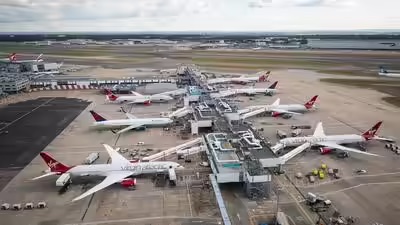
Few airports illustrate this reality better than London Heathrow.
Every takeoff and landing slot represents an extraordinarily scarce asset. Capacity restrictions, environmental limitations, and decades of growing passenger demand have transformed slots into commodities worth tens of millions of dollars.
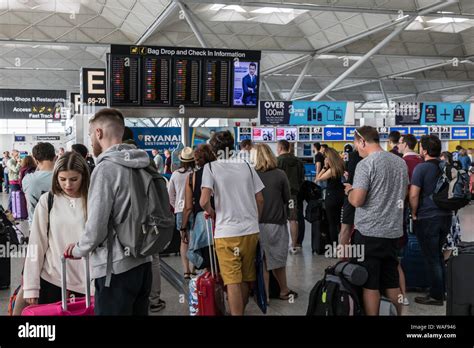
Historic transactions illustrate just how valuable these operating rights have become. Several slot pair sales have reached values approaching or exceeding $75 million, making them among the most expensive operational assets in commercial aviation.
The reasons are straightforward.
Heathrow cannot simply accommodate unlimited flights. Runway capacity remains constrained, hourly aircraft movements are tightly regulated, and virtually every desirable departure and arrival time is already occupied.
For incumbent airlines, these slots represent strategic advantages accumulated over generations.
For potential newcomers, they represent an enormous financial barrier before a single passenger ticket can even be sold.
Legacy Airlines Benefit From Decades of Entrenched Market Position
Airport slot systems were originally designed to provide operational stability.
Under grandfathering rules used throughout many congested airports, airlines retain valuable slots provided they continue operating them at required utilization thresholds.
While the framework encourages schedule consistency, it also creates significant competitive advantages for established carriers.
British Airways, Lufthansa, Air France, and other major network airlines have accumulated extensive slot portfolios over decades of continuous operation. Their dominant positions become increasingly difficult for new entrants to challenge because acquiring comparable capacity often requires purchasing slots directly from competitors.
For an ultra-low-cost airline focused on minimizing capital expenditure, spending tens of millions of dollars simply to gain airport access fundamentally contradicts its business philosophy.
Rather than investing in expensive infrastructure rights, Ryanair has historically preferred expanding into secondary airports where fees remain considerably lower and operational flexibility is greater.
That strategy has been remarkably successful.
Slot Scarcity Shapes Airline Strategy More Than Aircraft Technology
Many aviation discussions focus heavily on aircraft performance while overlooking the infrastructure required to deploy those aircraft effectively.
Airport slots influence nearly every strategic decision made by airlines.
A carrier cannot simply decide to launch profitable flights between major international gateways if suitable arrival and departure times are unavailable. Even possessing aircraft, crews, maintenance capability, and passenger demand becomes irrelevant without coordinated airport access.
This explains why technological progress frequently outpaces network expansion.
Aircraft manufacturers continue extending narrowbody range, improving fuel efficiency, and reducing operating costs, yet many airlines remain constrained by airport availability rather than engineering limitations.
Ryanair represents perhaps the clearest example of this disconnect.
Regulatory Changes Have Further Reduced Opportunities
Recent geopolitical uncertainty has complicated airport slot allocation even further.
Temporary regulatory adjustments introduced during periods of operational disruption have allowed incumbent airlines greater flexibility in retaining valuable airport slots despite schedule reductions.
Although these measures were designed to stabilize airline operations during extraordinary circumstances, they also reduced opportunities for competitors hoping to obtain newly available capacity.
Instead of valuable slots returning to open allocation, many remained under the control of established airlines.
For prospective market entrants, this effectively reinforced existing competitive dynamics.
Rather than creating openings for disruptive carriers, recent policy adjustments have largely preserved the status quo across some of Europe’s busiest airports.
Would Additional Runways Solve the Problem?
Airport expansion offers one potential solution.
Heathrow’s long-discussed third runway proposal would dramatically increase annual aircraft movements while accommodating millions of additional passengers.
Greater physical capacity could eventually create thousands of new slot opportunities, potentially lowering barriers for airlines currently excluded from the airport.
However, expanding major airports is rarely straightforward.
Large infrastructure projects face environmental concerns, community opposition, planning challenges, political debate, and enormous construction costs. Noise pollution, carbon emissions, road congestion, and public transportation capacity all become central considerations long before construction begins.
Consequently, additional runway capacity remains a long-term possibility rather than an immediate solution.
Alternative proposals advocate reforming slot allocation systems themselves. Competitive auctions, revised grandfathering rules, and increased market transparency have all been suggested as mechanisms for improving access without requiring massive infrastructure expansion.
Whether governments embrace such reforms remains uncertain.
Michael O’Leary’s Comments Reveal Ryanair’s True Priorities
Perhaps the strongest evidence against imminent long-haul expansion comes directly from Ryanair’s leadership.
Chief Executive Michael O’Leary continues emphasizing European growth rather than intercontinental ambitions.
His comments consistently highlight opportunities within Eastern Europe, where favorable aviation policies and lower taxation create attractive expansion prospects.
Instead of discussing North America, Asia, or Africa, Ryanair continues announcing new routes across existing European markets while taking delivery of additional Boeing 737 MAX aircraft.
The airline’s ambitious fleet growth plans are designed primarily to increase frequencies, expand market share, and serve additional European destinations.
Similarly, investments in maintenance infrastructure across Spain, Italy, Poland, Morocco, Northern Ireland, and the Baltic region reinforce the existing operational model rather than signaling preparation for global long-haul networks.
These strategic decisions collectively indicate continuity rather than transformation.
Passenger Experience Also Remains an Important Consideration
Even if airport access became significantly easier, another important question remains.
Would passengers embrace Ryanair’s traditional product on flights lasting six, seven, or even eight hours?
The airline’s reputation has been built around affordable fares rather than onboard comfort. Slimline seating, optional extras, and minimal cabin services work effectively on short European sectors where travelers prioritize price above all else.
Long-haul journeys create different expectations.
Passengers typically value greater seat comfort, enhanced meal options, additional baggage allowances, entertainment systems, and opportunities for rest during extended flights.
Providing these amenities increases operating costs while reducing seating density—precisely the opposite of Ryanair’s established commercial strategy.
Maintaining its ultra-low-cost identity while satisfying long-haul customer expectations would require difficult compromises.
The Real Barrier Is Strategic, Not Technical
Modern aviation has reached a fascinating point where engineering capability has advanced faster than commercial infrastructure.
Aircraft such as the Boeing 737 MAX have demonstrated that narrowbody jets can economically serve increasingly distant destinations. Fuel efficiency continues improving, operational costs continue falling, and technological limitations continue disappearing.
Yet airport access remains finite.
For Ryanair, the challenge has never been whether its aircraft could reach long-haul destinations.
The greater challenge is obtaining commercially viable access to the world’s busiest airports while preserving the ultra-low-cost model that transformed European aviation.
Until airport slots become more accessible—or the economics of acquiring them change dramatically—Ryanair’s growth will almost certainly continue focusing on expanding within Europe rather than challenging legacy airlines across global long-haul markets.
The airline possesses the aircraft. What it lacks is affordable access to the gateways where long-haul success begins. In today’s aviation industry, airport slots remain every bit as valuable as the aircraft themselves, making infrastructure—not technology—the decisive factor shaping Ryanair’s long-term ambitions.